Lagos, Nigeria — Nigeria’s 2026 Flooding Outlook: A Race Against Rising Waters As the 2026 rainy season approaches, Nigeria and neighboring countries in West and Central Africa face a daunting challenge: the threat of widespread flooding.
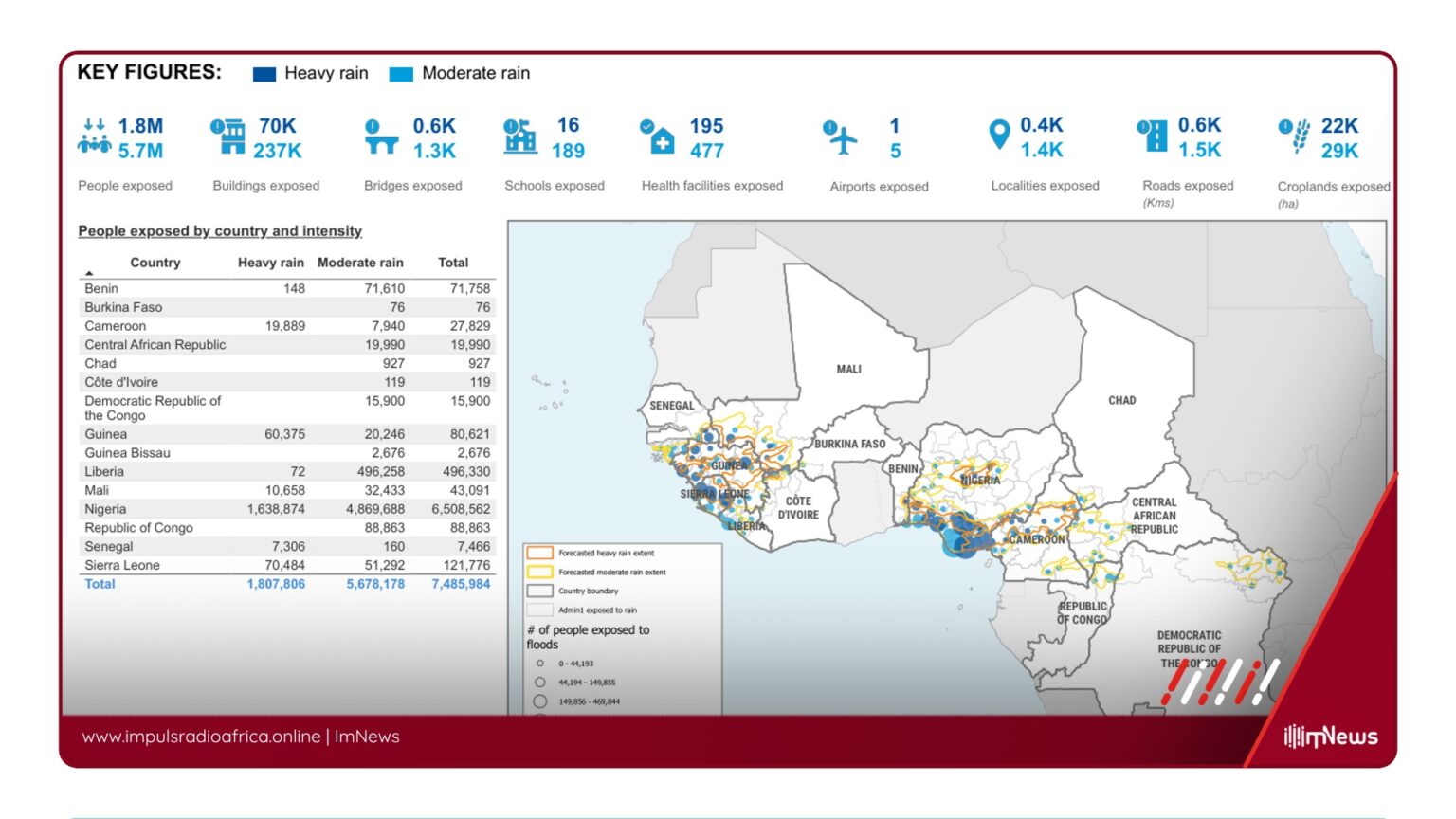
The UN Office for the Coordination of Humanitarian Affairs (OCHA) has released a 2026 Flooding Outlook, highlighting the potential for severe flooding in Nigeria, Benin, Cameroon, and other affected nations.
The OCHA report details the potential flooding scenarios, indicating that over 30,000 communities are at risk nationwide, with 14,118 classified as high-risk across 33 states and the Federal Capital Territory.
A further 15,597 fall within moderate-risk zones, while 923 communities are considered low risk. These statistics, while stark, are not without context. Nigeria’s diverse landscape, characterized by semi-arid Sahel regions, extensive coastlines, and vast tropical forests, makes the country particularly vulnerable to the impacts of climate change and extreme weather events.
The World Bank has been involved in projects aimed at addressing these challenges, including the scaling up of aquaculture in the Sahel to improve food security and employment opportunities. Officials commented on the matter. “
However, with the right approach, aquaculture can be a viable solution to feed and employ the Sahel. “.
In addition to the environmental factors, political and social developments in the region, as reported by the BTI Project, also play a significant role.
The BTI Project’s analysis highlights a range of contrasts from democratic backsliding to incremental democratization, which can further exacerbate the impact of natural disasters like flooding.
The National Emergency Management Agency (NEMA) has been at the forefront of efforts to prepare for the 2026 flood season.
In Edo State, NEMA flagged off the 2026 National Preparedness and Response Campaign (NPRC) on Flood Disaster and Related Hazards, emphasizing the need for strengthening disaster risk governance and enhancing resilience against climate-related hazards.
The World Bank’s focus on development projects and initiatives to improve living conditions and economic prospects in the region is a critical component of the broader response to the 2026 flooding outlook. OCHA’s reports provide insights into humanitarian concerns, such as the potential impact of flooding on vulnerable populations.
As Nigeria and its neighbors brace for the 2026 flood season, the need for coordinated efforts, robust preparedness, and resilience-building strategies is more urgent than ever.
The stakes are high, but so is the potential for success through collective action and innovation.
The 2026 Flooding Outlook serves as a stark reminder of the challenges faced by the region, but also as a call to action for governments, international organizations, and local communities to work together in the face of adversity.
The next few months will be a critical test of the region’s preparedness and resilience.
*Additional reporting by ImNews | Sources consulted: 5*
—
This original article was produced by the ImNews editorial team
Source: reliefweb
Source: UN Office for the Coordination of Humanitarian Affairs