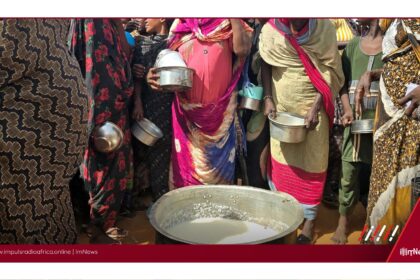
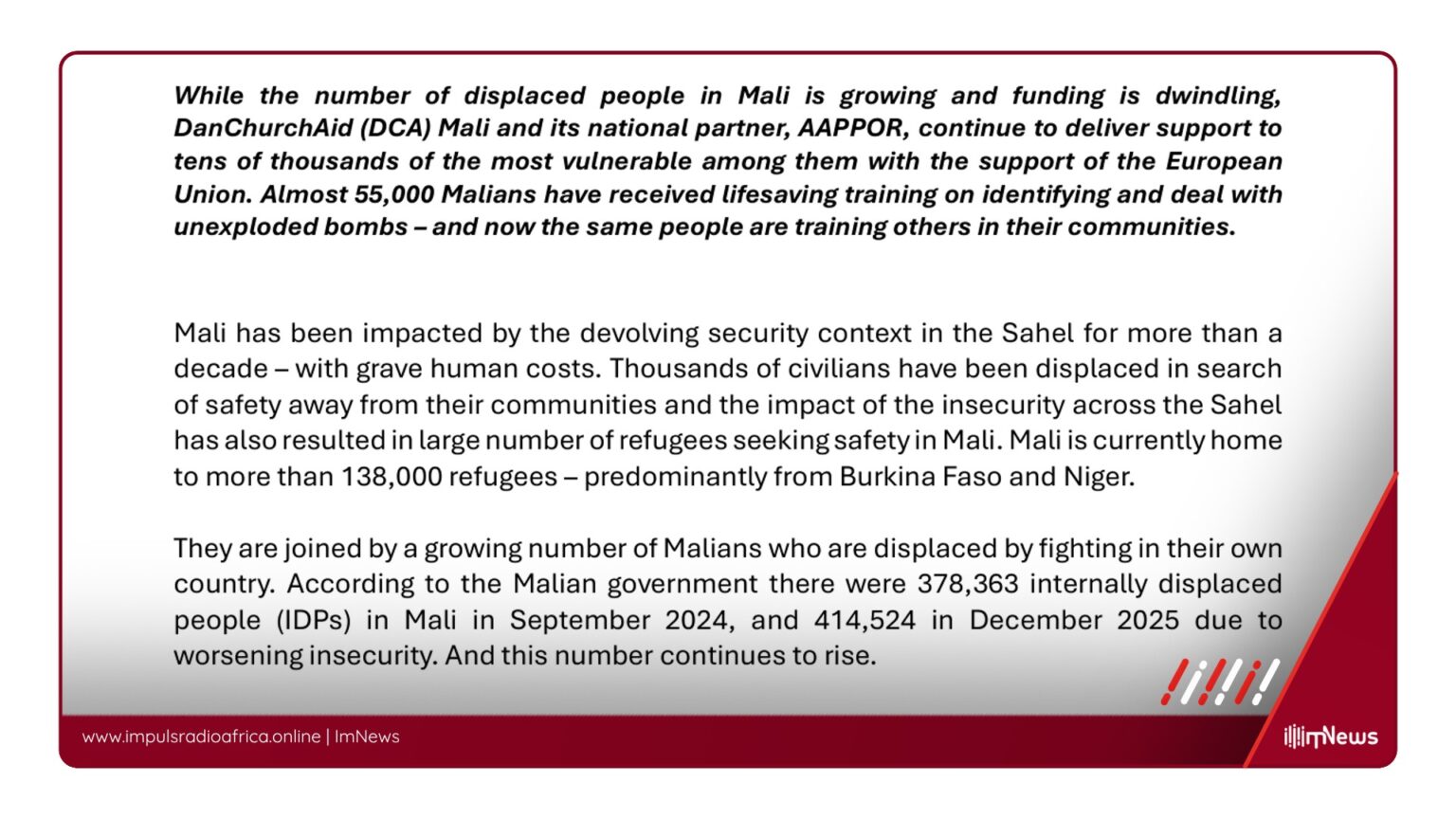
Bamako, Mali — In a region addressing insecurity and displacement, a critical initiative by DanChurchAid (DCA) Mali and its national partner, AAPPOR, has reached almost 55,000 Malians with lifesaving training on identifying and dealing with unexploded bombs. This training, supported by the European Union, is crucial for a population that faces significant risks as they move into unfamiliar areas, often displaced by the ongoing conflict in Mali. Mali has been a victim of the Sahel’s devolving security context for over a decade, resulting in thousands of civilians displaced and seeking safety.
The country currently hosts over 138,000 refugees, predominantly from Burkina Faso and Niger, as well as a growing number of internally displaced people (IDPs) due to domestic conflicts.
The Malian government reported that there were 378,363 IDPs in September 2024, rising to 414,524 by December 2025. Despite the increasing needs, funding for humanitarian assistance has been on the decline, affecting the ability of organizations like DCA to provide critical aid.
As of May 2026, only 16% of the $577. 9 million funding plan to assist 5. 1 million people in Mali had been secured, the lowest percentage in the last decade.
The DCA project, which is now in its first 24-month phase, has been instrumental in educating communities about the risks of unexploded bombs and small arms. Since its launch in April 2024, the project has reached 54,820 individuals, over half of whom are women and girls. This figure is 20% more than the projection at the start of the initiative.
The project has also strengthened local protection mechanisms by training 36 community focal points and 80 volunteers. It has provided logistical, medical, food, cash, and psychosocial assistance to 406 victims of explosive ordnance and small arms-related incidents. Innovative approaches, such as inclusive training for people with disabilities and the use of radio and sketches, have been vital in disseminating life-saving information in hard-to-access areas and among marginalized populations.
Joanna Olsen, Country Director for DCA in Mali, emphasizes the importance of community engagement: “We are working with our partners to support communities so they can continue to protect themselves and their families. They understand that this information saves lives. “Esmée de Jong, Head of EU Humanitarian Aid Operations in Mali, adds, “Long after the fighting moves on, explosive ordnance continues to kill and injure civilians.
The European Union is helping communities to protect themselves and ensuring explosive ordnance survivors receive the support they need. “DCA’s operations in Mali, spanning over a decade, focus on humanitarian mine action, food security and livelihoods, and support for victims of explosive ordnance and small arms.
*Additional reporting by ImNews | Sources consulted: 5*
—
This original article was produced by the ImNews editorial team
Source: reliefweb
Source: DanChurchAid