DATELINE: Kinshasa, DRC – July 16, 2026
LEAD: The Democratic Republic of Congo (DRC) is facing its 17th Ebola outbreak, with the response in the Ituri, Nord-Kivu, and Sud-Kivu regions hindered by violence, crime, and community skepticism.
NUT GRAF: In a challenging environment, the safety of response teams is at risk, as they face a multitude of incidents, with 51 out of 68 documented incidents targeting them directly.
BODY:
The Ebola response in the DRC is not just a public health challenge but also a security concern.
In the Ituri, Nord — Kivu, and Sud-Kivu regions, the response teams are the direct targets of the majority of incidents, with 51 out of 68 documented incidents involving them. This underscores the risk not only to the continuity of activities but also to the safety of those leading the response.
A significant source of friction is the handling of dignified and secure burials and the return of bodies, which accounted for 22 incidents, particularly concentrated in the health zone of Bunia.
Accusations against the response teams, mostly targeting the Ebola response itself, have also emerged, with ten out of fourteen incidents involving such allegations.
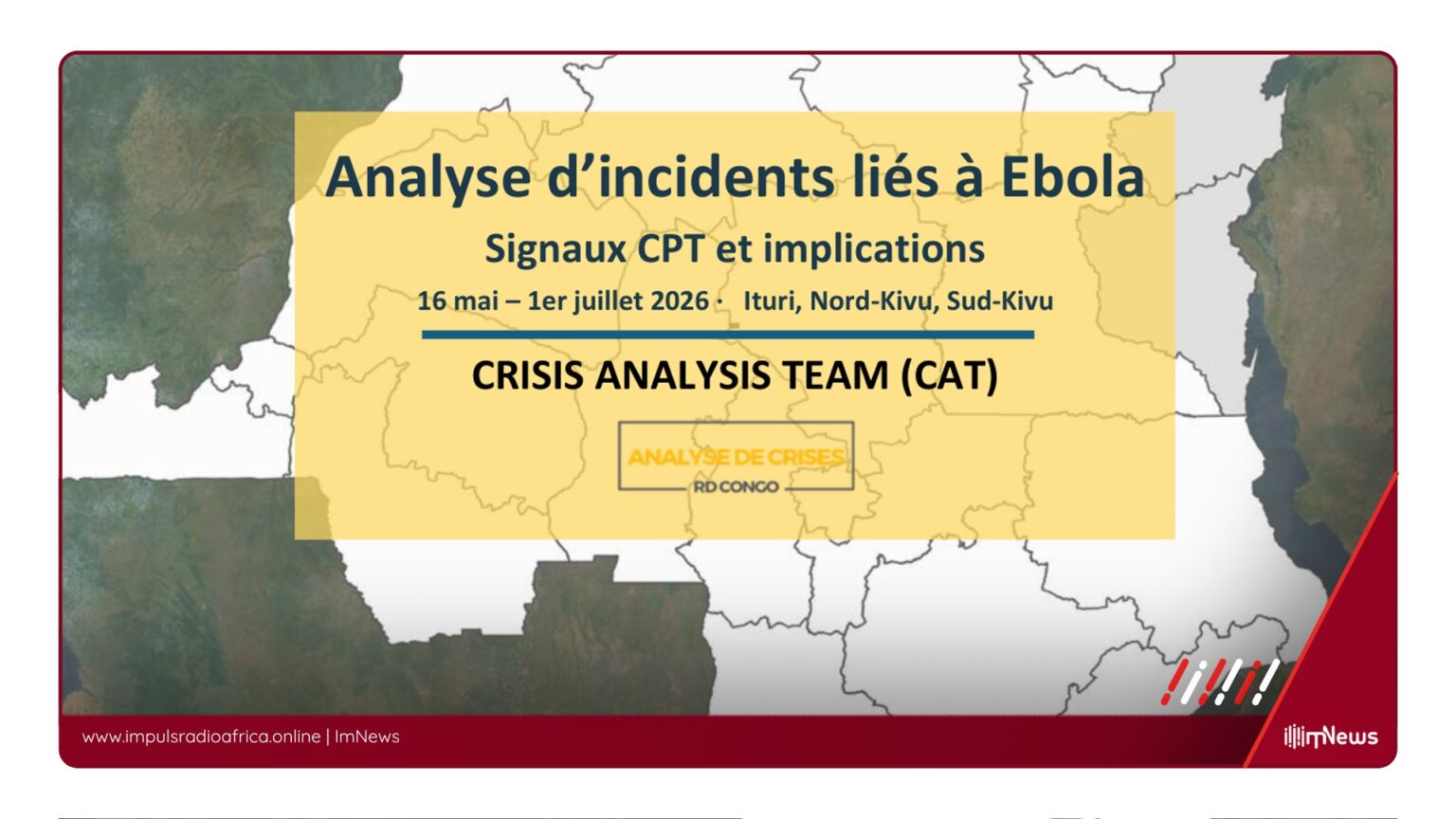
The analysis is based on 68 incidents documented over 47 days from May 16 to July 1, 2026, and identifies two health zones as focal points for the incidents, accounting for nearly 40% of the total.
The goal is to understand where and how friction is crystallizing to better target the response.
KICKER: The Ebola response in the DRC is contingent upon navigating a complex landscape of violence and skepticism, emphasizing the need for strategic community engagement and security measures to sustain the response on the ground.
*Additional reporting by ImNews | Sources consulted: 5*
—
This original article was produced by the ImNews editorial team
Source: reliefweb
Source: Mercy Corps