Libya’s Food Security Worsens Amid Weather, Economic Pressures TRIPOLI, Libya – Mixed weather conditions have taken a toll on Libya’s agricultural output, exacerbating food security challenges in the North African nation.
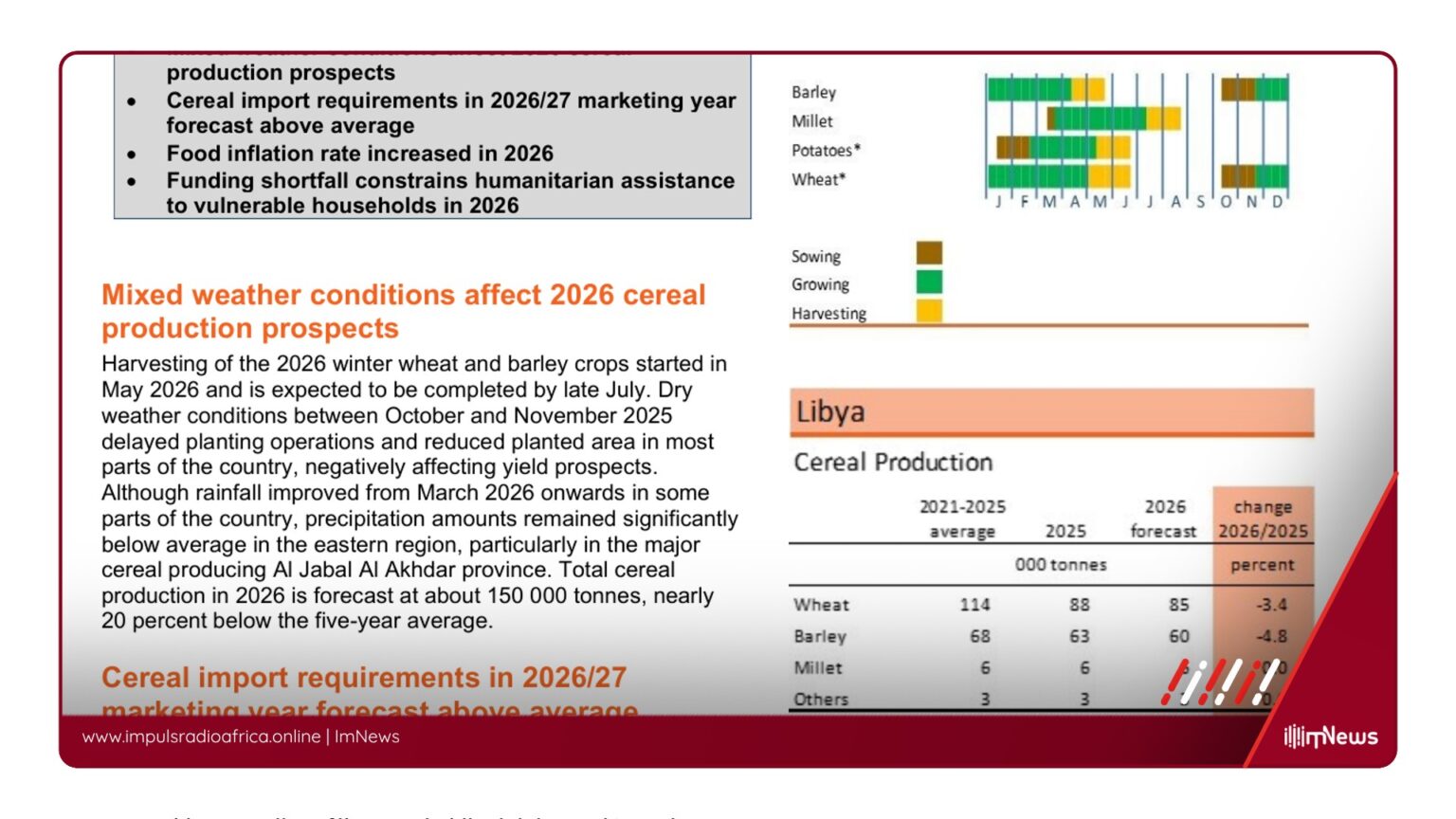
The Food and Agriculture Organization (FAO) reports that the 2026 winter wheat and barley harvests, which commenced in May, are facing delays and reduced yields due to dry conditions experienced between October and November 2025. This situation is expected to push cereal import requirements for the 2026/27 marketing year above the average, with wheat imports forecasted to be nearly 12 percent higher than usual.
The reliance on imports, coupled with the expected shortfall in domestic production, underscores the country’s vulnerability in meeting its food needs.
The FAO further indicates that food inflation has surged in Libya, with a year — on-year increase of about 18 percent in May 2026.
The depreciation of the Libyan dinar, which weakened by about 15 percent, has significantly contributed to the increased cost of imported food commodities. Amid these economic and food-related challenges, humanitarian assistance to vulnerable households is constrained by a funding shortfall.
The UN High Commissioner for Refugees (UNHCR) notes that over 110,000 refugees were registered in Libya as of April 2026, with many reliant on assistance to survive.
The World Food Programme (WFP) reports that over 803,000 people in Libya are in need of humanitarian assistance, with a total of 6. 9 million people affected by the food security crisis.
The political and economic instability has further complicated the situation, making it difficult for the government to address these challenges effectively.
The FAO has called for increased international support to mitigate the impact of adverse weather conditions and to address the funding shortfall for humanitarian assistance.
The Libyan government’s efforts to stabilize the food security situation and address the broader humanitarian crisis are being hindered by the ongoing instability.
The situation in Libya highlights the complex interplay between political instability, economic challenges, and food security.
As the country works towards stability and recovery, it is crucial that the international community remains engaged and supportive of efforts to improve food security and alleviate the suffering of the Libyan people.
*Additional reporting by ImNews | Sources consulted: 5*
—
This original article was produced by the ImNews editorial team
Source: reliefweb
Source: Food and Agriculture Organization of the United Nations