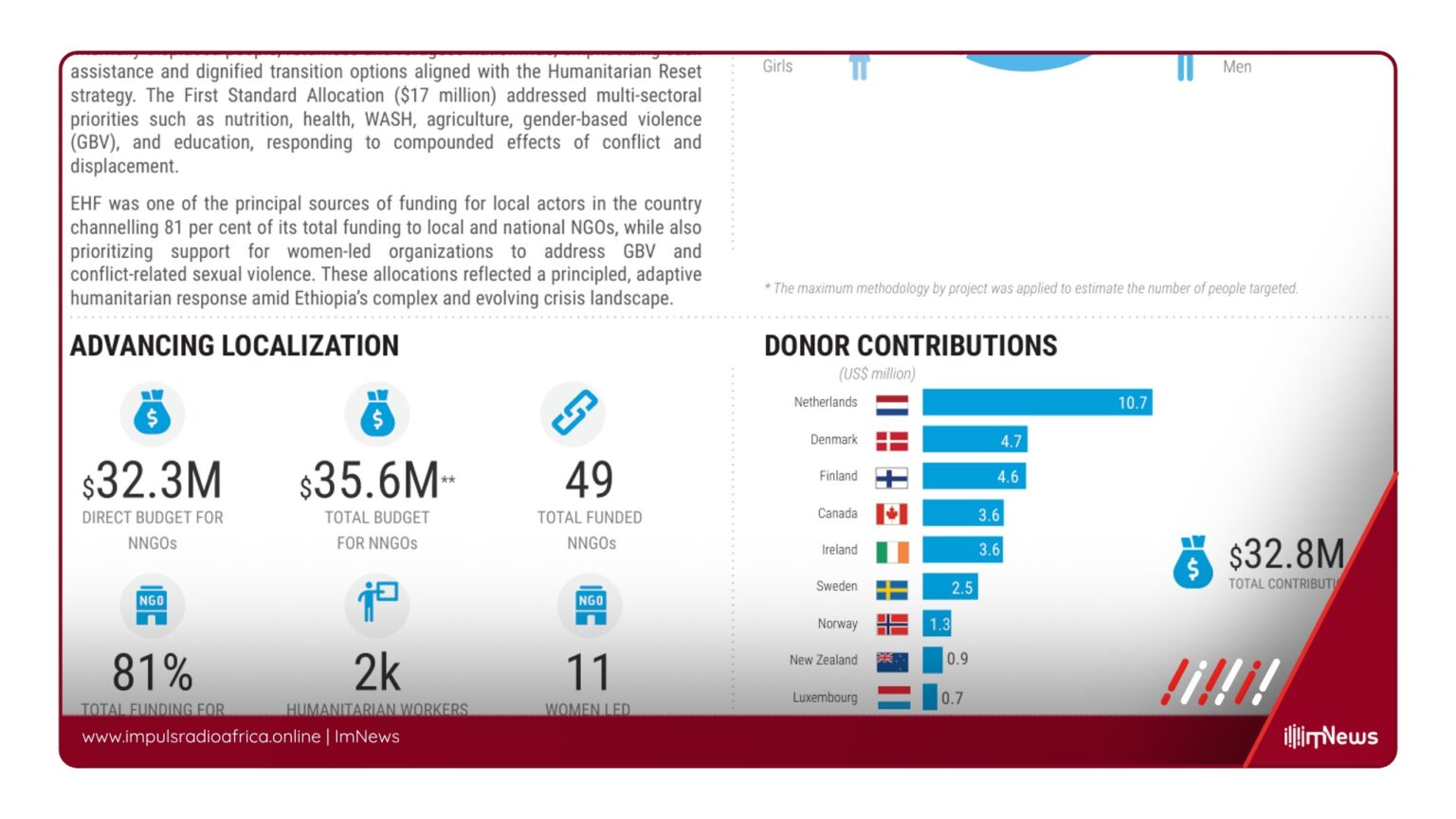
Addis Ababa, Ethiopia — In 2025, the Ethiopia Humanitarian Fund (EHF) allocated $44. 2 million to assist around 3. 2 million people impacted by disease outbreaks, conflict, and climate-induced crises across Ethiopia.
The fund’s distribution was focused on Amhara, Benishangul-Gumuz, Gambela, Oromia, Somali, Tigray, and contested areas.
The EHF strategically divided its funding into one standard allocation and three reserve allocations.
The First Reserve Allocation of $5. 2 million was dedicated to addressing cholera response, emergency health, and gender-based violence (GBV) case management.
The Second Reserve Allocation of $6 million targeted life-threatening needs in Tigray, while the Third Reserve Allocation of $16 million supported internally displaced people, returnees, and refugees nationwide, emphasizing cash assistance and dignified transition options. Established in 2006, the EHF serves as a rapid and flexible funding mechanism, primarily supporting national and international NGOs in responding to critical emergencies.
The Fund has been instrumental in ensuring the timely and principled allocation and disbursement of donor resources to address the most urgent humanitarian priorities set by the Humanitarian Country Team.
The UN Office for the Coordination of Humanitarian Affairs (OCHA) has highlighted the EHF’s catalytic role in advancing the localization of humanitarian response and its support to national and international NGOs.
The EHF’s Annual Report 2025 underscores the Fund’s focus on reaching vulnerable groups such as women and girls, and people living with disabilities.
As Ethiopia continues to face a challenging humanitarian landscape, the EHF’s allocation in 2025 underscores the critical need for sustained support and collaboration to ensure that vulnerable populations receive the assistance they require.
The Fund’s focus on cash-based interventions and reaching marginalized communities is indicative of its commitment to addressing the multifaceted nature of the crisis. Moving forward, the EHF’s ability to adapt to emerging needs and measure the effectiveness of its interventions will be crucial in shaping its future response strategies.
*Additional reporting by ImNews | Sources consulted: 2*
—
This original article was produced by the ImNews editorial team
Source: reliefweb
Source: UN Office for the Coordination of Humanitarian Affairs