Somalia’s Early Warning System Shows Rising Risk Factors in Alarm Phase Mogadishu, Somalia – In a significant development aimed at bolstering disaster resilience, the Federal Government of Somalia, in collaboration with the United Nations Development Programme (UNDP) and the Green Climate Fund (GCF), launched the Early Warning for All Initiative on June 1, 2026.
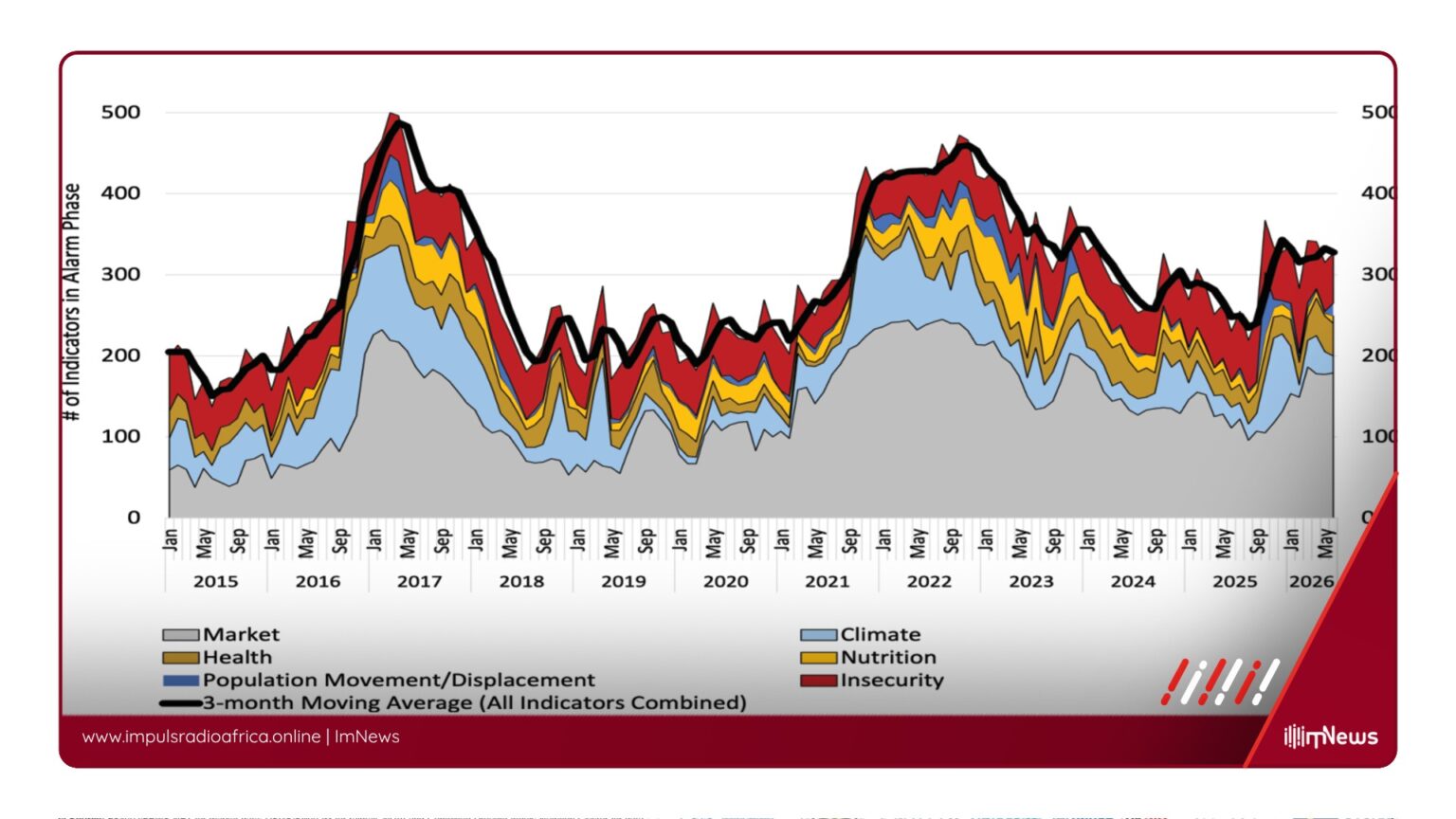
The initiative, which seeks to reduce disaster — related fatalities by 42% by 2030, has been underpinned by the Early Warning-Early Action Dashboard Time Series Chart, a critical tool that tracks the number of risk factors in alarm phase from January 2015 to June 2026.
The chart, sourced from the Food Security and Nutrition Analysis Unit (FSNAU), reveals a concerning trend.
In May 2026, there were 15 indicators in alarm phase, indicating a heightened risk of disasters such as droughts, floods, and other climate-induced hazards. This figure is a stark contrast to the 20% early warning coverage the initiative aims to achieve by 2030, underscoring the urgency of the situation.
The Early Warning for All Initiative is a proactive approach to disaster management, focusing on strengthening disaster preparedness, early warning dissemination, and anticipatory action.
It represents a collaborative effort to mitigate the impacts of recurrent droughts, floods, and other climate — induced hazards that have plagued Somalia, a country with fragile infrastructure and social systems.
The UNDP and GCF’s partnership with the Somali government signifies a commitment to improving resilience and disaster preparedness.
The inclusion of anticipatory action in the initiative is particularly noteworthy, as it suggests a strategic move to mitigate the impacts of future disasters before they occur.
The Early Warning — Early Action Dashboard Time Series Chart is a testament to the initiative’s dedication to transparency and accountability. It provides a clear, data-driven picture of the evolving risk landscape in Somalia, allowing stakeholders to make informed decisions and allocate resources effectively.
The initiative’s goal to reduce disaster-related fatalities by 42% by 2030 is ambitious but achievable.
With continued support from international partners and a robust early warning system, Somalia can build a more resilient future, one that is better equipped to withstand the challenges posed by climate change and other natural hazards.
As Somalia grapples with the increasing frequency and severity of climate — induced disasters, the Early Warning for All Initiative serves as a beacon of hope. It is a testament to the power of collaboration, innovation, and a commitment to the well-being of the Somali people.
The initiative’s success will depend on several factors, including the effectiveness of early warning systems, the ability to disseminate information to all affected communities, and the implementation of anticipatory actions that can mitigate the impacts of disasters before they strike.
As Somalia moves forward, the Early Warning for All Initiative will play a crucial role in shaping the country’s future. By prioritizing disaster resilience and preparedness, Somalia can build a more secure and prosperous society, one that is better equipped to face the challenges of the 21st century.
*Additional reporting by ImNews | Sources consulted: 5*
—
This original article was produced by the ImNews editorial team
Source: reliefweb
Source: Food Security and Nutrition Analysis Unit – Somalia