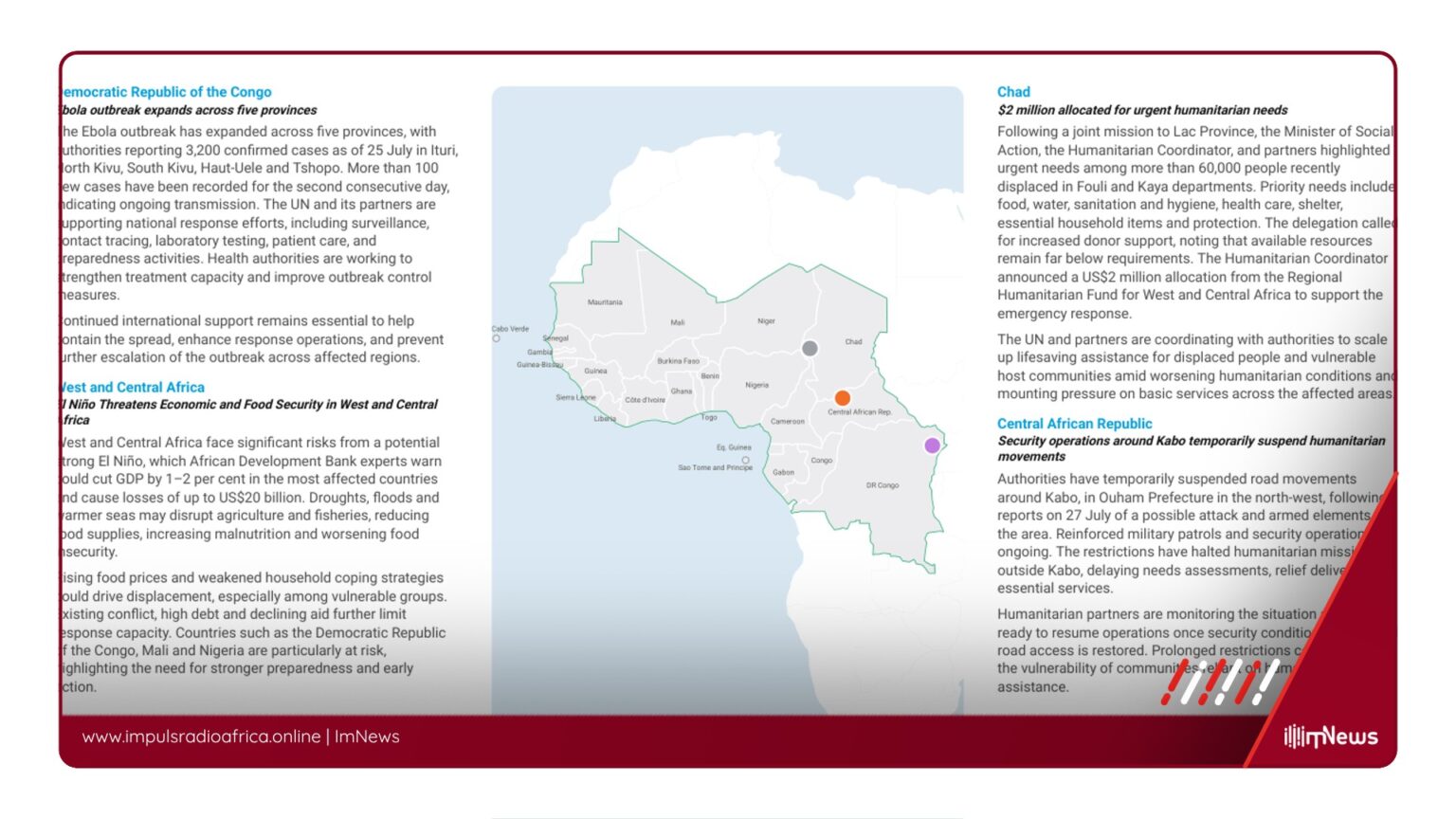
Lagos, Nigeria — The Democratic Republic of Congo (DRC) is addressing a severe Ebola outbreak, while West and Central Africa brace for the potential impacts of El Niño.
In the DRC, the Ebola virus has expanded across five provinces, with over 3,200 confirmed cases reported as of July 25.
The situation is particularly critical in Ituri, North Kivu, South Kivu, Haut — Uele, and Tshopo provinces, where the disease is spreading rapidly.
The UN and its partners are supporting national efforts to contain the outbreak, including surveillance, contact tracing, laboratory testing, and patient care.
The international community is urged to provide continued support to strengthen treatment capacity and control measures.
In West and Central Africa, the potential strong El Niño is threatening economic and food security. Experts from the African Development Bank warn that this could cut GDP by 1-2% in the most affected countries and lead to losses of up to $20 billion. Droughts, floods, and warmer seas may disrupt agriculture and fisheries, exacerbating food insecurity and malnutrition.
Countries like the DRC, Mali, and Nigeria are particularly at risk, emphasizing the need for stronger preparedness and early action.
In Chad, $2 million has been allocated for urgent humanitarian needs in the wake of a joint mission to Lac Province.
The delegation highlighted the plight of over 60,000 people displaced in Fouli and Kaya departments, with priority needs including food, water, sanitation, health care, shelter, and protection.
The Humanitarian Coordinator announced the allocation from the Regional Humanitarian Fund for West and Central Africa, while calling for increased donor support.
In the Central African Republic, security operations around Kabo in Ouham Prefecture have temporarily suspended humanitarian movements following reports of a possible attack and armed elements.
The restrictions have halted needs assessments, relief deliveries, and essential services, raising concerns about the vulnerability of communities reliant on humanitarian assistance.
As these crises unfold, the international community remains vigilant, providing support and coordination to address the complex challenges in the region.
*Additional reporting by ImNews | Sources consulted: 5*
—
This original article was produced by the ImNews editorial team
Source: reliefweb
Source: UN Office for the Coordination of Humanitarian Affairs