New York, NY — April 13, 2026 – The International Rescue Committee (IRC) has sounded the alarm on a critical humanitarian crisis, revealing a widening gap between the soaring global need for aid and the diminishing resources available. The IRC’s policy paper, “The New World Disorder: Rethinking Aid in an Era of Scarcity, “underscores the severity of this “life-and-death “situation.
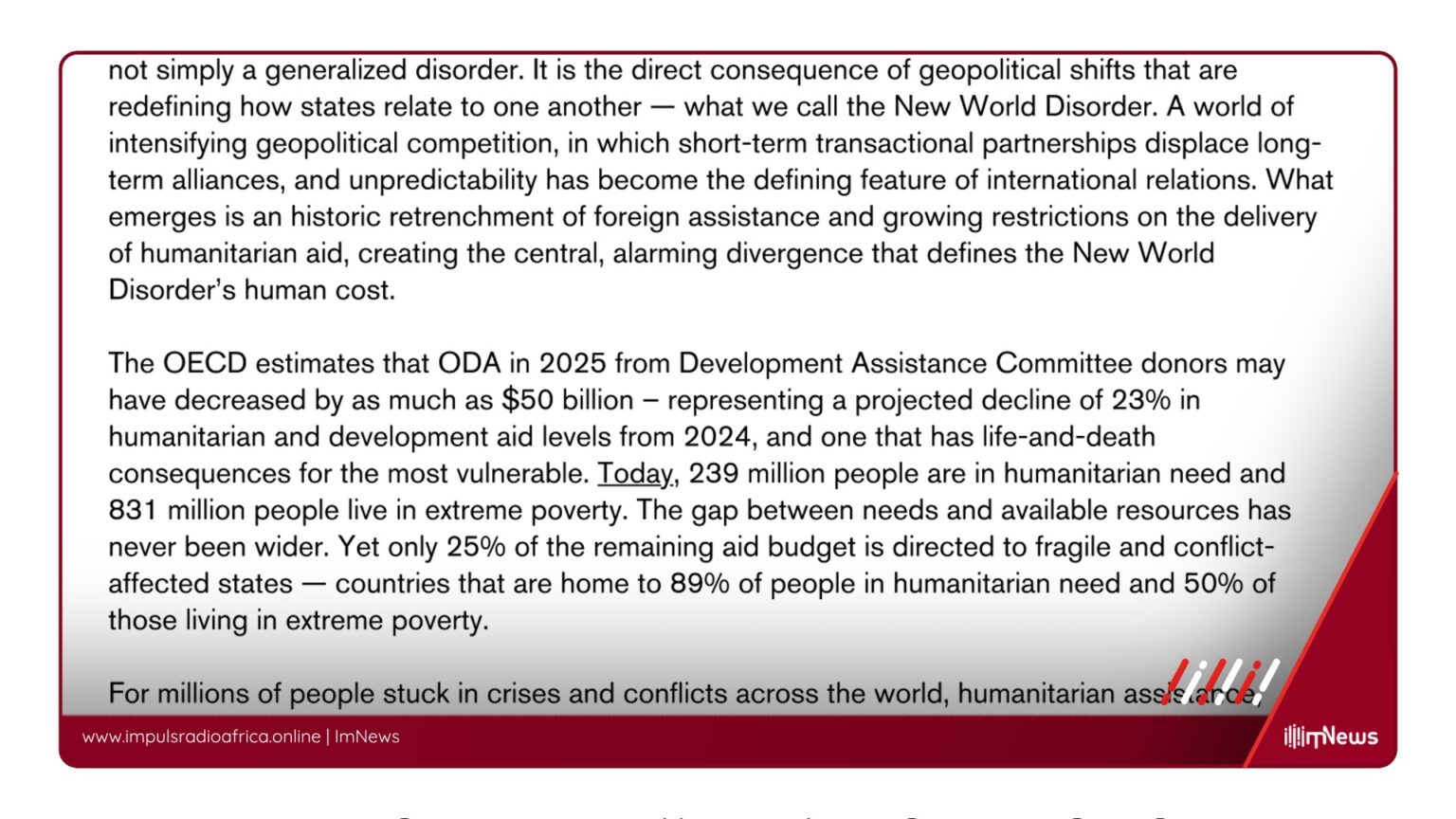
The report highlights that the global aid landscape has contracted sharply, with funding potentially dropping by $50 billion, or 23%, in 2025. This reduction is attributed to a structural shift in global dynamics, characterized by intensifying geopolitical competition and a retreat from long-term international commitments.
Currently, 239 million people require humanitarian assistance, and 831 million live in extreme poverty. The report indicates that only 25% of aid is directed towards fragile and conflict-affected states, where nearly 90% of global need and 50% of global extreme poverty are concentrated.
The IRC’s President and CEO, David Miliband, emphasizes the urgency of addressing this crisis. “The future of international aid must prioritize saving lives, alleviating suffering, and preserving dignity, “he states. “This necessitates a focus on conflict-affected populations and proven, cost-effective programs that can break the cycle of disorder.”.
Despite the challenges, the IRC points to successful interventions like the REACH immunization program, which has delivered 30 million vaccine doses to nearly 2 million children since 2022. However, these interventions are often underutilized due to donor preferences for government-led delivery models over those that can effectively reach crisis-affected communities.
The report calls for an urgent reset of the aid funding and delivery process, advocating for measures such as shifting funding to ensure at least 60% reaches fragile and conflict-affected states, expanding partnerships with local actors, prioritizing humanitarian access, investing in scalable innovations, and embedding cost-effectiveness and multi-year funding. These steps aim to maximize the impact of limited resources and ensure they are directed to where they can do the most good.
As the humanitarian crisis deepens, the Spring Meetings of the World Bank and International Monetary Fund (IMF) are poised to become a pivotal platform for international action, demanding a transformative approach to aid.
Source: reliefweb
Original author: International Rescue Committee