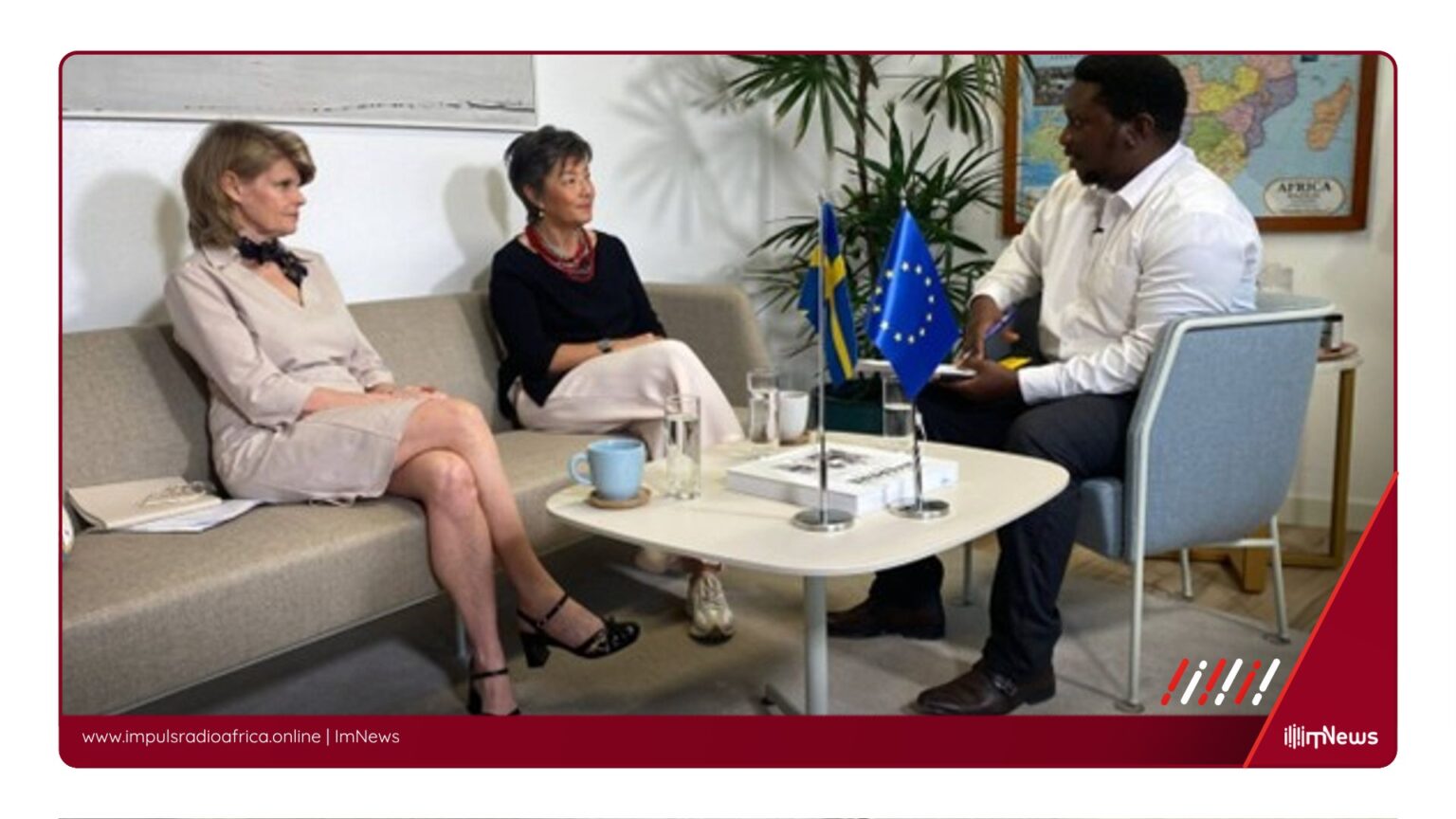
Dar es Salaam, Tanzania — A pivotal shift in Sweden’s engagement with Tanzania is underway, as the Scandinavian nation transitions from a traditional aid-based partnership to one centered on trade, investment, and export finance. This strategic realignment, set to take effect by August 31, 2026, marks the culmination of a 63-year relationship that has been foundational to Sweden’s commitment to Africa.
The announcement of this change was made by the Swedish Government on December 4, 2025, and was further discussed during a meeting between Ambassador Charlotta Ozaki Macias and Lena Bertilsson of Sweden’s Export Credit Agency (EKN) with a team from The Chanzo, a Tanzanian digital newspaper, on April 29, 2026. Ambassador Ozaki Macias and Lena Bertilsson characterized the shift as a “graduation, “signifying a natural evolution in the partnership rather than a severance. They emphasized the continuation of Sweden’s support through multilateral channels and a sustained embassy presence.
This transition, which aligns with Sweden’s foreign policy priorities focused on sustainable development and economic growth, has sparked a wave of questions regarding the future of development cooperation in Tanzania.
The specifics of the new partnership are yet to be finalized, but it is anticipated to focus on infrastructure development, renewable energy, and trade facilitation. Tanzania, a significant recipient of Swedish aid, is now navigating the complexities of this new phase of engagement.
The government has expressed its readiness to engage in constructive dialogue and explore new avenues of cooperation, aiming to leverage the new partnership to its advantage.
The shift from aid to trade is part of a broader trend in the international community, where traditional aid models are being reassessed in favor of more sustainable and mutually beneficial partnerships. This evolution is seen as a means to ensure that development assistance is more effective and aligned with recipient countries’priorities.
As Tanzania prepares for this new era of partnership with Sweden, it is also seeking to diversify its sources of funding and strengthen its position in the global economy.
The implications of this transition are significant, with potential long — term effects on both Sweden and Tanzania’s development trajectories.
*Additional reporting by ImNews | Sources consulted: 5*
—
This original article was produced by the ImNews editorial team
Source: Panafricanvisions
Source: Pan African Visions