


Refugee Relocation Efforts in Chad: UNHCR’s Recent Developments DATELINE: N’Djamena, Chad – May 11, 2026 LEAD: The United Nations High Commissioner for Refugees (UNHCR) has reported significant progress in its efforts to relocate refugees from border areas within Chad, as part of a broader strategy to improve safety and access to services in the country. NUT GRAF: Chad, facing a complex humanitarian crisis, hosts over 1. 5 million refugees, including internally displaced persons (IDPs) and returnees.
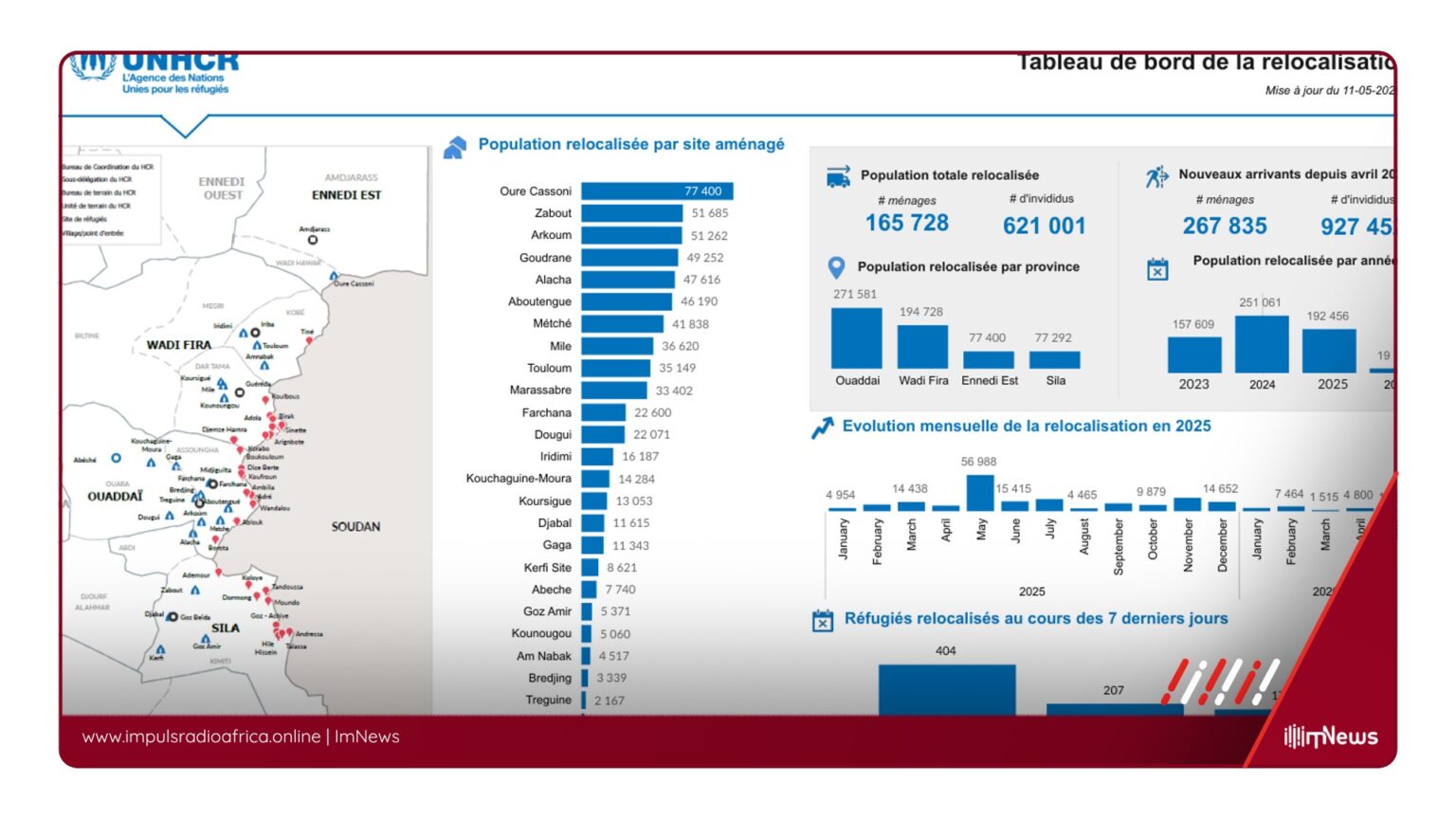
The recent relocation efforts by UNHCR and its partners have been instrumental in providing more secure living conditions for the displaced population. Since April 2023, the influx of Sudanese refugees has surged, with 927,452 individuals fleeing to Chad amidst the conflict between the government and the Rapid Support Forces (RSF). This has placed an immense strain on the resources and infrastructure of the host country, leading to the creation of over 25 secure sites for displaced persons.
According to the latest data from UNHCR, as of May 4, 2026, Chad is home to 1,530,376 refugees, 219,595 IDPs, and 77,650 Chadian returnees from the Central African Republic (CAR) and Lake Chad Basin.
The relocations have been critical in moving 165,728 households, totaling 621,001 individuals, from border areas to these secure sites.
The UNHCR’s infographic released on May 11, 2026, highlights the complexities of camp coordination and management, protection, and human rights in Chad.
It underscores the importance of these relocations in improving the overall humanitarian situation.
The ongoing situation near the Sudan border, as captured in a photo from OCHA, underscores the regional implications of the crisis. It depicts the ongoing humanitarian situation in Adre, Chad, reflecting the challenges faced by both the host community and the displaced persons.
The UNHCR’s focus on relocating refugees to secure sites is part of a broader strategy to enhance the living conditions of the displaced population. This includes improving access to essential services such as healthcare, education, and economic opportunities. Chad’s National Education System has been instrumental in addressing the educational needs of displaced populations.
This has been achieved through coordination with various bilateral partners, including the World Bank and UN agencies.
The international community has been actively involved in supporting Chad’s response to the humanitarian crisis. This includes financial contributions, technical assistance, and the deployment of personnel to support the relief efforts.
The UNHCR’s recent developments in Chad demonstrate a commitment to providing protection and assistance to displaced persons.
However, the challenges remain significant, and continued support from the international community is essential to address the needs of the affected population. KICKER: As the humanitarian situation in Chad evolves, the UNHCR and its partners continue to work tirelessly to provide safety and support to the displaced population.
The recent relocation efforts are a testament to this commitment, but the challenges ahead are substantial.
*Additional reporting by ImNews | Sources consulted: 5*
—
This original article was produced by the ImNews editorial team
Source: reliefweb
Source: UN High Commissioner for Refugees


