KAMPALA, UGANDA — An escalating Ebola outbreak has hit the Democratic Republic of Congo (DRC), with confirmed cases spiking across the country and the first cross-border case reported in neighboring Uganda.
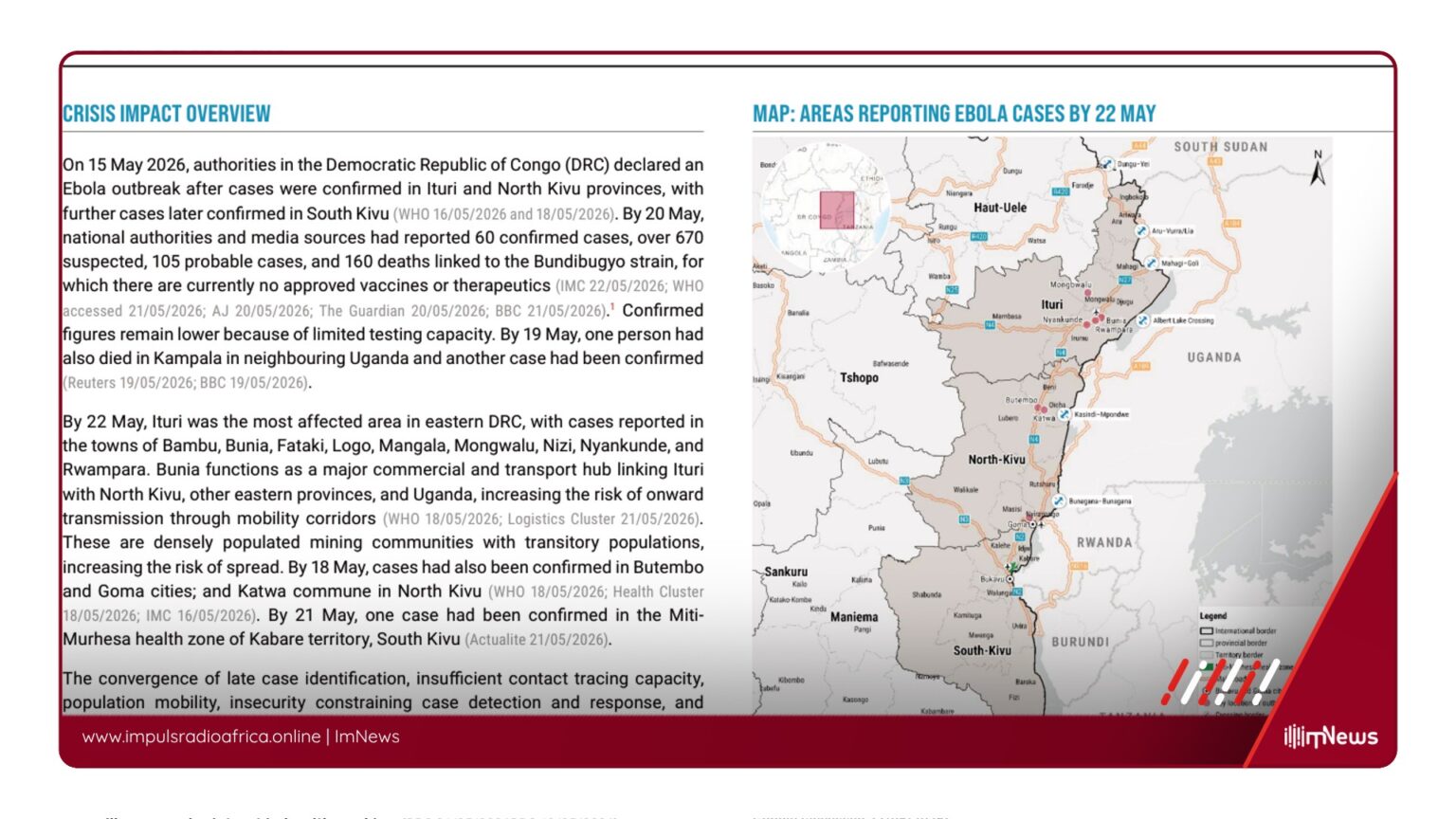
The Bundibugyo strain of Ebola is responsible, with authorities reporting 60 confirmed cases, over 670 suspected cases, 105 probable cases, and 160 deaths as of 20 May 2026.
The outbreak has been exacerbated by the DRC’s complex humanitarian situation, marked by ongoing insecurity, displacement, and a weakened healthcare system. Multiple armed groups, including the M23 Movement and various militia groups, have complicated the situation, leading to the displacement of millions and hindering the provision of basic social services and health care. Ituri province has been the most affected, with cases reported in towns like Bambu, Bunia, and Mongwalu.
Bunia, a major transport hub, increases the risk of onward transmission through mobility corridors. Cases have also been confirmed in Butembo, Goma, and Katwa cities, and in the MitiMurhesa health zone of Kabare territory in South Kivu.
The convergence of late case identification, insufficient contact tracing, population mobility, insecurity, and limited access to healthcare suggests that actual transmission levels likely exceed confirmed case counts.
The Centre for Global Infectious Disease Analysis estimates 1,000 potential cases, but the uncertainty surrounding contract tracing, surveillance, and mistrust in health seeking means this number is not certain.
The international community is responding to the crisis, with efforts focused on containing the spread of the virus.
However, challenges such as limited testing capacity and the need for robust community engagement are immense. Building trust with local communities is crucial, particularly in the DRC, where there is a history of distrust towards health authorities due to past disease outbreak responses.
As the situation unfolds, the coming weeks will be critical in determining the effectiveness of the response and the ability to prevent further spread of the virus.
*Additional reporting by ImNews | Sources consulted: 5*
—
This original article was produced by the ImNews editorial team
Source: reliefweb
Source: ACAPS