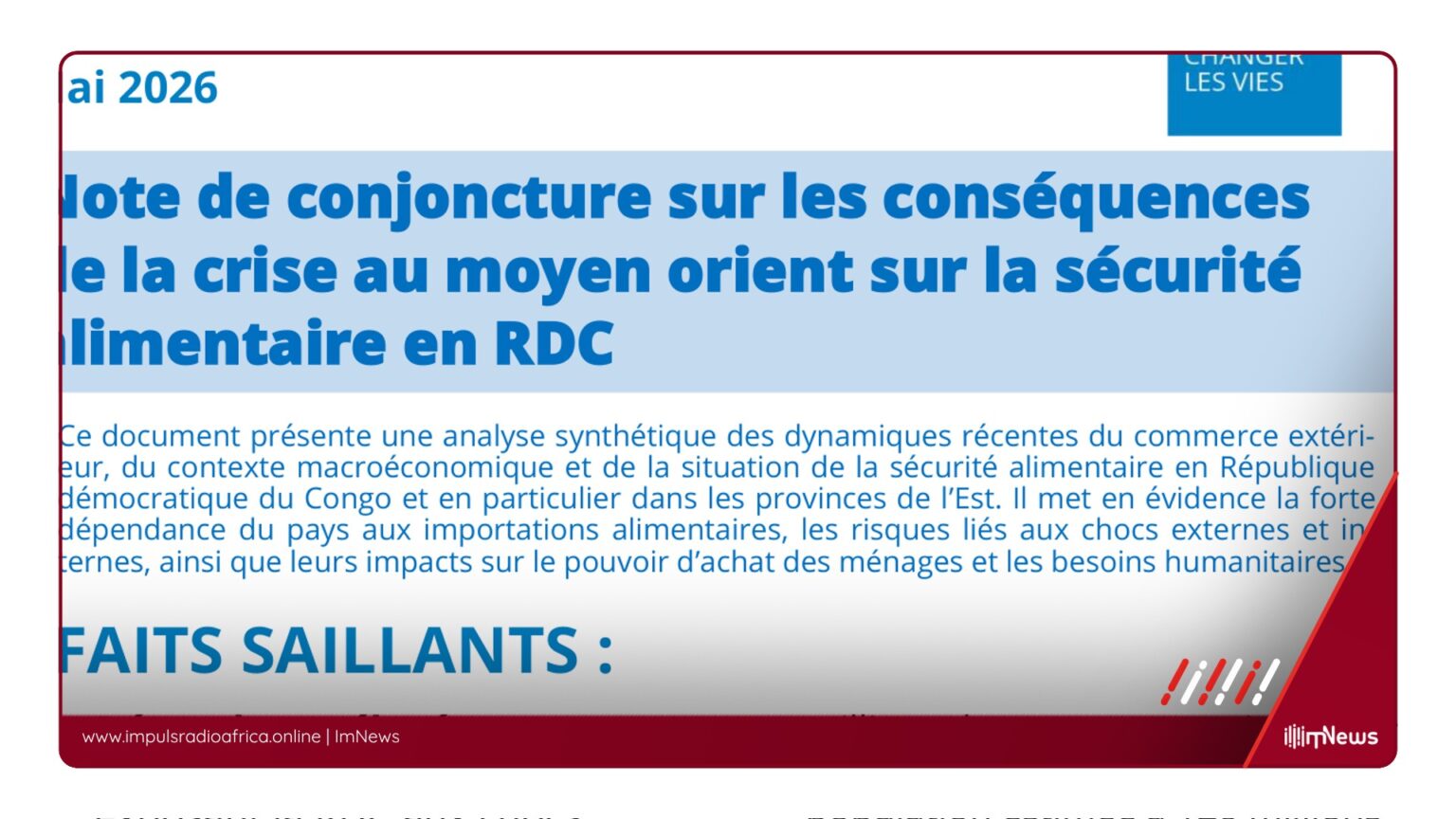
KINSHASA, Democratic Republic of the Congo — The Democratic Republic of the Congo (DRC) faces a dual crisis of food insecurity exacerbated by the Middle East’s ongoing instability and the Ebola outbreak.
The country’s heavy reliance on imported food, coupled with the impact of geopolitical and logistical shocks, has left millions at risk of acute food insecurity. Despite a recent slowdown in inflation, persistent pressures on the purchasing power of households remain, driven by soaring fuel and transportation costs. This has further strained the country’s ability to meet the food needs of its population, which is estimated at 120 million.
The situation is dire, with over 26. 5 million people suffering from acute food insecurity.
In the eastern provinces of Nord Kivu, Sud Kivu, Ituri, and Tanganyika, the need for increased humanitarian funding is critical, with 9. 9 million people requiring urgent assistance.
The Ebola outbreak has compounded the vulnerability of households, imposing mobility restrictions, reducing incomes, and driving up prices. These factors have created a perfect storm that is pushing the DRC closer to a humanitarian crisis.
The World Food Programme’s analysis underscores the country’s dependence on imported food and the risks associated with external shocks.
The situation is further complicated by the DRC’s economic challenges, including its heavy reliance on primary commodity exports, which are sensitive to global market fluctuations.
The need for a robust and diversified economic strategy is more evident than ever, as the DRC navigates the current global economic landscape. Ensuring food security and sustainable development will require a coordinated effort from all stakeholders, including the international community, to mitigate the impact of these crises.
*Additional reporting by ImNews | Sources consulted: 5*
—
This original article was produced by the ImNews editorial team
Source: reliefweb
Source: World Food Programme