Burundi’s Food Security Strained by High Prices and Crop Losses BODY: Nairobi, Kenya – Burundi’s efforts to improve seasonal food security are being hampered by a combination of high food prices and significant losses in the bean crop, according to the Famine Early Warning System Network (FEWS NET).
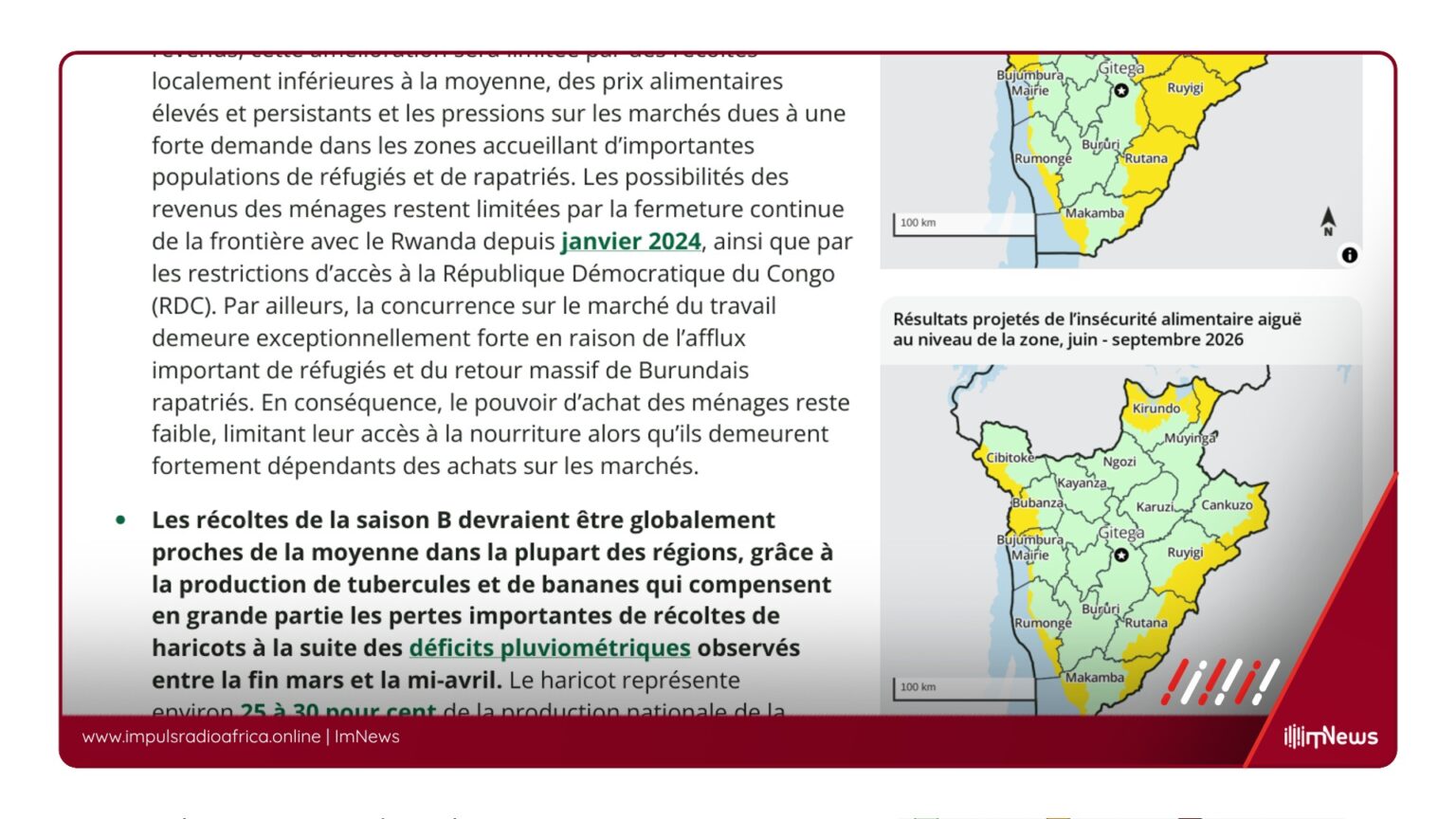
The Eastern and Northern Lowlands, Eastern Dry Plateaus, and Imbo Plains in Burundi are projected to remain in Stressed (IPC Phase 2) conditions until September 2026.
The arrival of Season B harvests in June 2026 is expected to provide some relief, but this temporary improvement will be limited by the expected below-average harvests and sustained high food prices.
The FEWS NET report highlights that while household income — earning opportunities in Burundi are limited, the continued closure of the Rwanda border since January 2024 and restricted access to the Democratic Republic of Congo (DRC) have further exacerbated the situation.
As of May 2026, there were 188,297 Burundian refugees covered by the Burundi Regional Refugee Response Plan, with an additional 16,000 in Kenya and 8,700 in Mozambique. This large refugee population, coupled with the country’s own food security challenges, has put a significant strain on resources.
The high food prices are not only affecting the local population but also the refugees hosted by Burundi. ReliefWeb reports that while the arrival of Season B harvests will temporarily improve food access, this improvement will be limited by the expected below-average harvests and sustained high food prices.
The bean crop losses are also a major concern.
The FEWS NET report indicates that the dual impact of high food prices and crop losses is putting significant pressure on food security in Burundi.
The country relies heavily on agriculture for its food supply, and the losses in the bean crop will undoubtedly affect the overall food availability.
The United Nations High Commissioner for Refugees (UNHCR) has expressed concern over the situation, noting that the combination of these factors is leading to increased vulnerability among the population.
The UNHCR has called for urgent funding to scale up lifesaving aid in Burundi. Despite these challenges, there is hope that the situation can improve.
The FEWS NET report suggests that with appropriate interventions and support, it may be possible to mitigate the impact of the high food prices and crop losses.
This would require coordinated efforts from the government, humanitarian organizations, and the international community.
As Burundi continues to face these food security challenges, it is crucial that all stakeholders work together to find sustainable solutions.
The situation in Burundi serves as a reminder of the interconnectedness of food security and political stability, and the need for ongoing support and assistance to ensure that all individuals have access to adequate food.
*Additional reporting by ImNews | Sources consulted: 5*
—
This original article was produced by the ImNews editorial team
Source: reliefweb
Source: Famine Early Warning System Network