Somalia’s Humanitarian Emergency Intensified by Drought and Fuel Shortages BODY: Mogadishu, Somalia – Somalia is addressing a deepening humanitarian crisis, exacerbated by consecutive failed rainy seasons, a prolonged dry period, and soaring fuel prices, according to recent reports from the Logistics Cluster and the World Food Programme.
The situation is particularly dire in Puntland and central and southern regions, where light to moderate rainfall in May 2026 did little to alleviate the conditions.
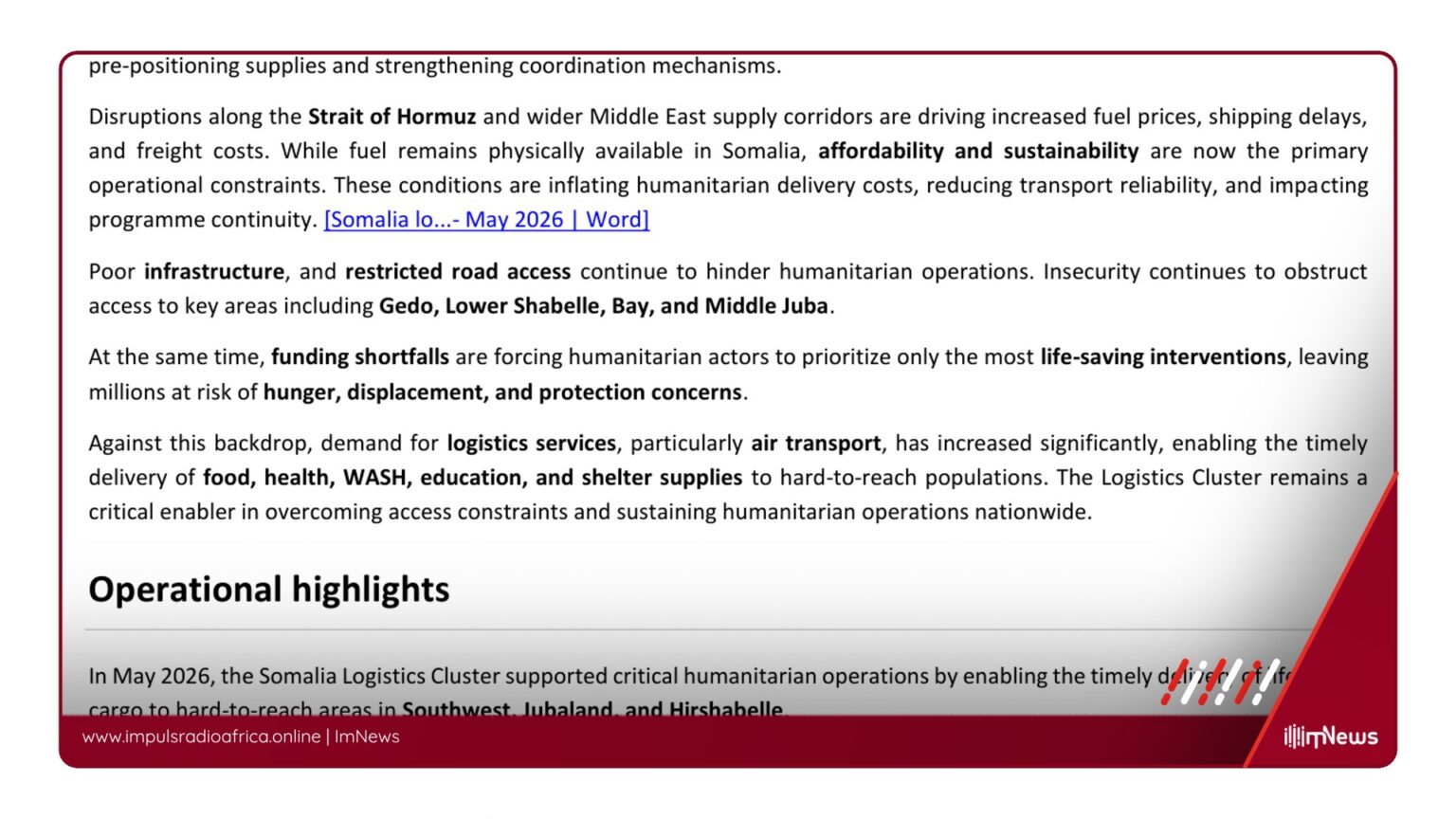
The Food and Agriculture Organization (FAO) predicts a continued dry period until October, followed by an elevated risk of flooding during the October–December Deyr season, potentially linked to an El Niño event. Fuel prices have surged due to disruptions along the Strait of Hormuz and wider Middle East supply corridors, impacting the affordability and sustainability of aid operations. Despite fuel availability, the increased costs are inflating humanitarian delivery expenses, reducing transport reliability, and affecting programme continuity.
Poor infrastructure and restricted road access further complicate humanitarian efforts, while insecurity continues to hinder access to key areas such as Gedo, Lower Shabelle, Bay, and Middle Juba. Funding shortfalls are compelling humanitarian actors to prioritize life-saving interventions, leaving millions at risk of hunger, displacement, and protection concerns.
The Logistics Cluster has become a crucial facilitator in overcoming access constraints and sustaining operations across the nation. Despite these challenges, the demand for logistics services, especially air transport, has surged, ensuring the timely delivery of critical supplies to hard-to-reach populations.
*Additional reporting by ImNews | Sources consulted: 5*
—
This original article was produced by the ImNews editorial team
Source: reliefweb
Source: Logistics Cluster