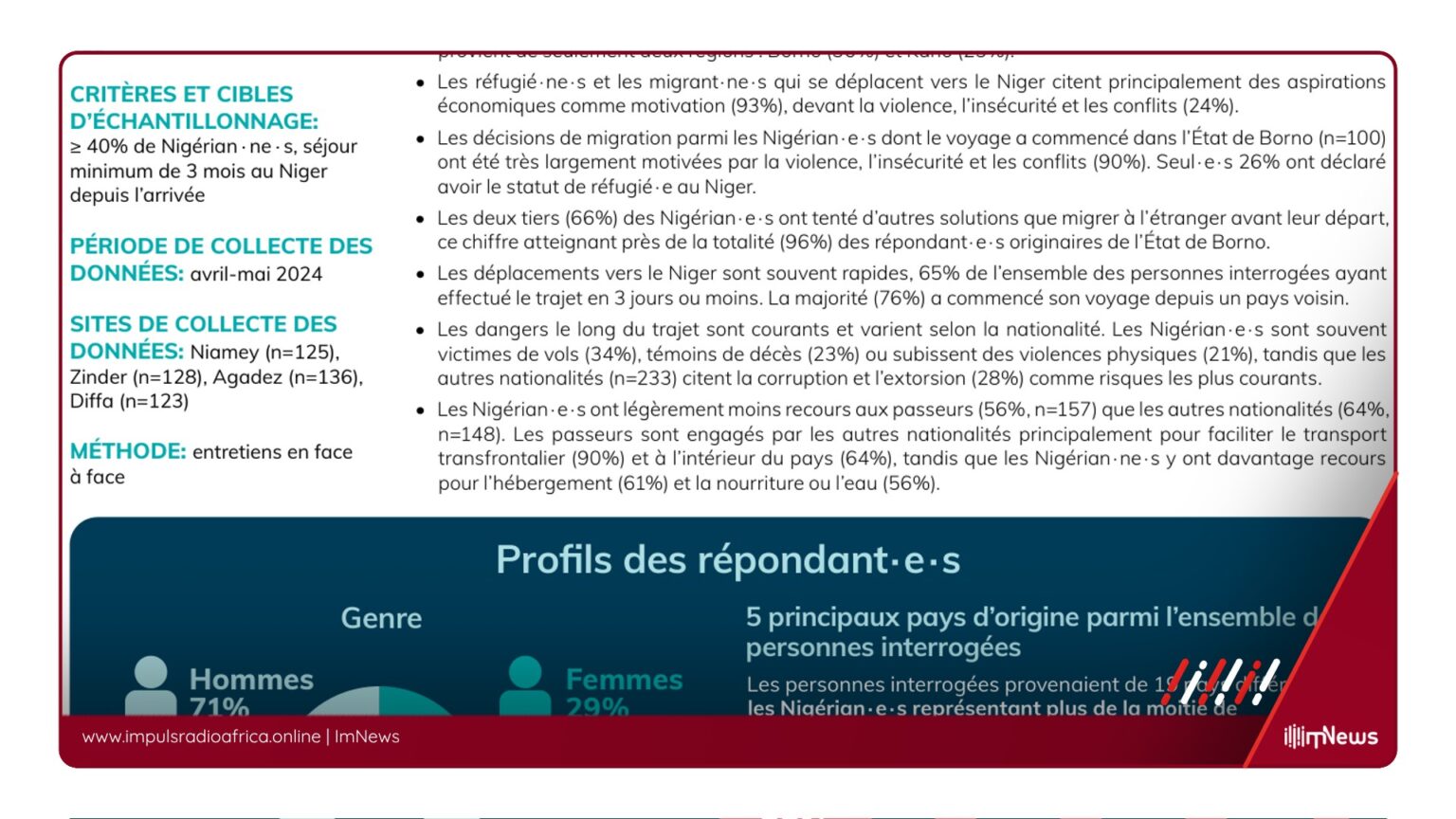
Niger’s Migration Landscape: Economic Aspirations Drive Nigerian Flows BODY: CITY, Niger – Economic aspirations are the driving force behind the migration of a significant number of Nigerians to Niger, according to the latest data from the Mixed Migration Centre. More than half of the migrating population in Niger consists of Nigerians, predominantly from the Borno and Kano regions.
The migration trends reveal a complex narrative of conflict, displacement, and the relentless pursuit of a better life. While economic motivations are the primary reason for the migration, violence and insecurity also play a significant role, particularly in the Borno region where 90% of Nigerians starting their journey are motivated by such factors.
The journey to Niger is often rapid, with 65% of those surveyed completing the trip in three days or less.
The majority of migrants begin their journey from a neighboring country, and the dangers they face along the way vary based on nationality. Nigerians are frequently victims of theft, witnessing deaths, or experiencing physical violence, while others cite corruption and extortion as common risks. Despite the dangers, only 26% of those from Borno who reached Niger declared having refugee status, reflecting the complex nature of their migration experiences.
Nigerians are also less likely to use smugglers compared to other nationalities, but they rely on them more for shelter and sustenance.
The Niger government’s National Migration Policy aims to provide a framework for managing migration, emphasizing the need for harnessing local economic potential, protecting migrants and host communities, and strengthening resilience against climate change impacts.
The International Organization for Migration (IOM) and the International Rescue Committee (IRC) are among the organizations working to create an environment where migration is safe, orderly, and contributes to stability and development.
The migration crisis in Niger’s Borno region is a multifaceted challenge that requires a coordinated effort from local and international stakeholders to ensure assistance to those in need while creating sustainable pathways for a future where migration is a force for good.
*Additional reporting by ImNews | Sources consulted: 5*
—
This original article was produced by the ImNews editorial team
Source: reliefweb
Source: Mixed Migration Centre