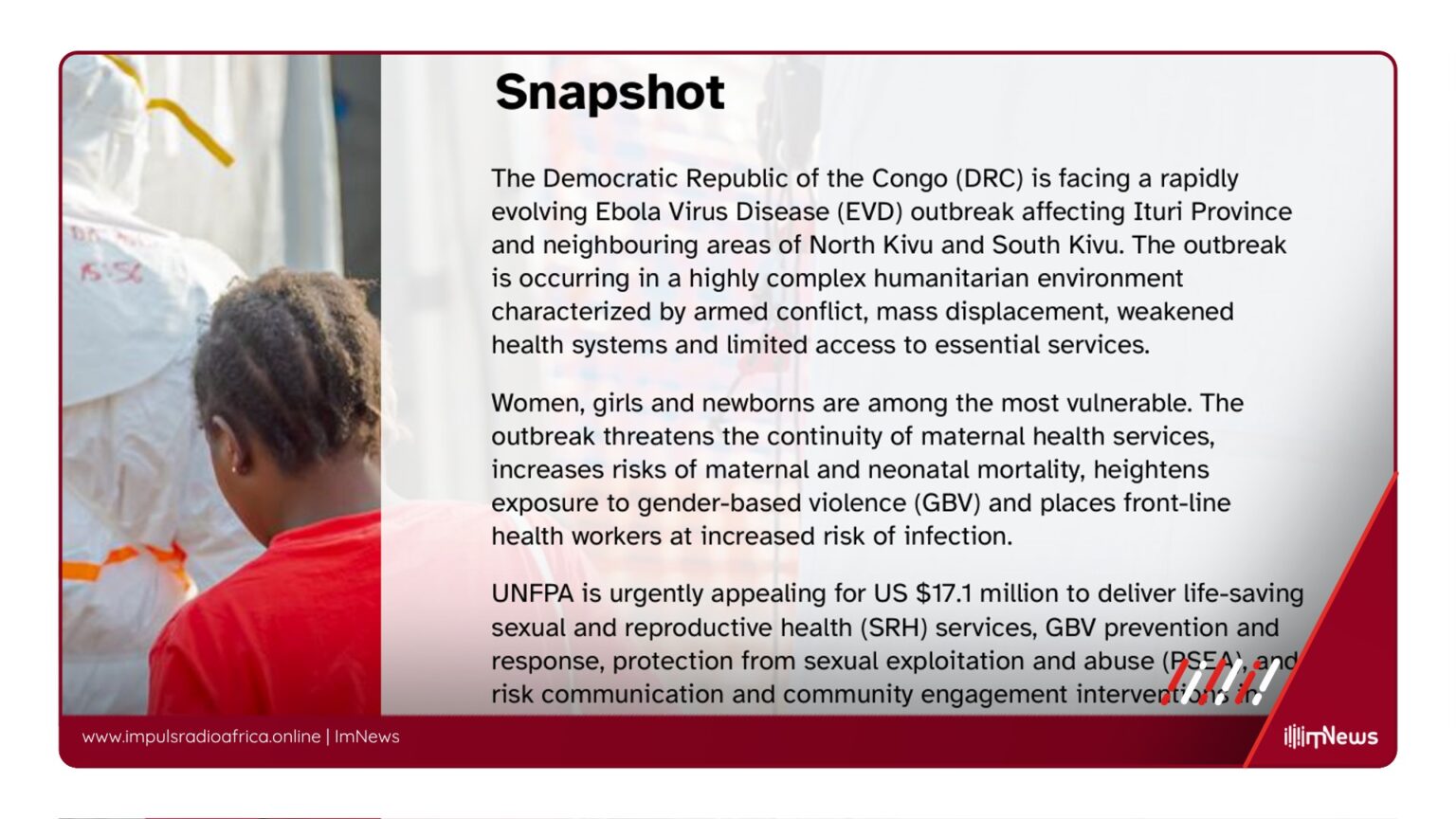
CITY, DRC — The Democratic Republic of the Congo (DRC) is addressing a severe Ebola outbreak, primarily affecting Ituri Province and neighboring regions in North and South Kivu. This outbreak is occurring in a volatile environment characterized by ongoing armed conflict, mass displacement of populations, attacks on health facilities, and significant constraints on humanitarian access.
The situation is dire, with an estimated 7. 7 million people impacted by the outbreak and its secondary effects on health systems and essential services. Women, girls, and newborns are identified as the most vulnerable groups, facing increased risks of preventable maternal and neonatal mortality due to disruptions in maternal health services.
Frontline health workers are also at heightened risk of infection, while weakened community protection mechanisms are exacerbating the risk of gender — based violence (GBV) against women and girls.
In response to these challenges, the United Nations Population Fund (UNFPA) is committed to supporting national and provincial authorities in sustaining access to essential sexual and reproductive health services. This includes maternal and newborn care, family planning, emergency obstetric services, and the clinical management of rape.
Additionally, UNFPA is reinforcing infection prevention and control measures in health facilities and communities within the Ebola — affected areas. To address the escalating protection concerns, UNFPA is reinforcing GBV prevention and response systems by adapting service delivery modalities to ensure continued access to psychosocial support, case management, women’s and girls’ safe spaces, and community-based protection services.
The organization is also strengthening mechanisms to protect against sexual exploitation and abuse and supporting community awareness — raising on reporting channels and survivor-centered services.
In an urgent appeal, UNFPA is seeking US$17. 1 million to provide life-saving sexual and reproductive health services, GBV prevention and response interventions, protection from sexual exploitation and abuse, and risk communication and community engagement activities. To date, only 9 per cent of the appeal has been funded, emphasizing the critical need for rapid and flexible funding to prevent excess maternal and neonatal mortality, strengthen community resilience, and contain the outbreak before it worsens.
The outbreak in the DRC underscores the complex interplay between public health crises and armed conflict, highlighting the need for a coordinated and comprehensive response to address the multifaceted challenges presented by the Ebola epidemic.
*Additional reporting by ImNews | Sources consulted: 5*
—
This original article was produced by the ImNews editorial team
Source: reliefweb
Source: United Nations Population Fund