Kinshasa, DRC — The Democratic Republic of Congo (DRC) has been addressing a significant health crisis, particularly with the threat of cholera outbreaks.
In a bid to combat this challenge, the country has recently implemented an anticipatory action framework, bolstered by support from international organizations.
The strategy focuses on early warning systems and preparedness measures to mitigate the impact of cholera and other climate — related health risks.
This funding, which was aimed at preventing and controlling the spread of the disease, was part of a broader effort to enhance disaster resilience in the country. Officials commented on the matter.
The initiative, which responds to the urgent need to protect people and economic assets from increasing climate and disaster risks, includes seasonal flooding, landslides, droughts, and storms.
The DRC’s land area is significant, with one-third lying to the north and two-thirds to the south of the equator, making it vulnerable to various climate-related disasters. Since 2000, the escalating climate crisis has led to an eightfold increase in funding requirements for United Nations humanitarian appeals linked to extreme weather, underlining the need for such anticipatory actions.
The UN Office for the Coordination of Humanitarian Affairs (OCHA) and the UN Global Emergency Fund have been involved in early action projects to help communities facing the risk of severe impact from climate-related disasters.
These projects are crucial in identifying early signs of potential outbreaks and enabling swift responses to prevent larger — scale health crises.
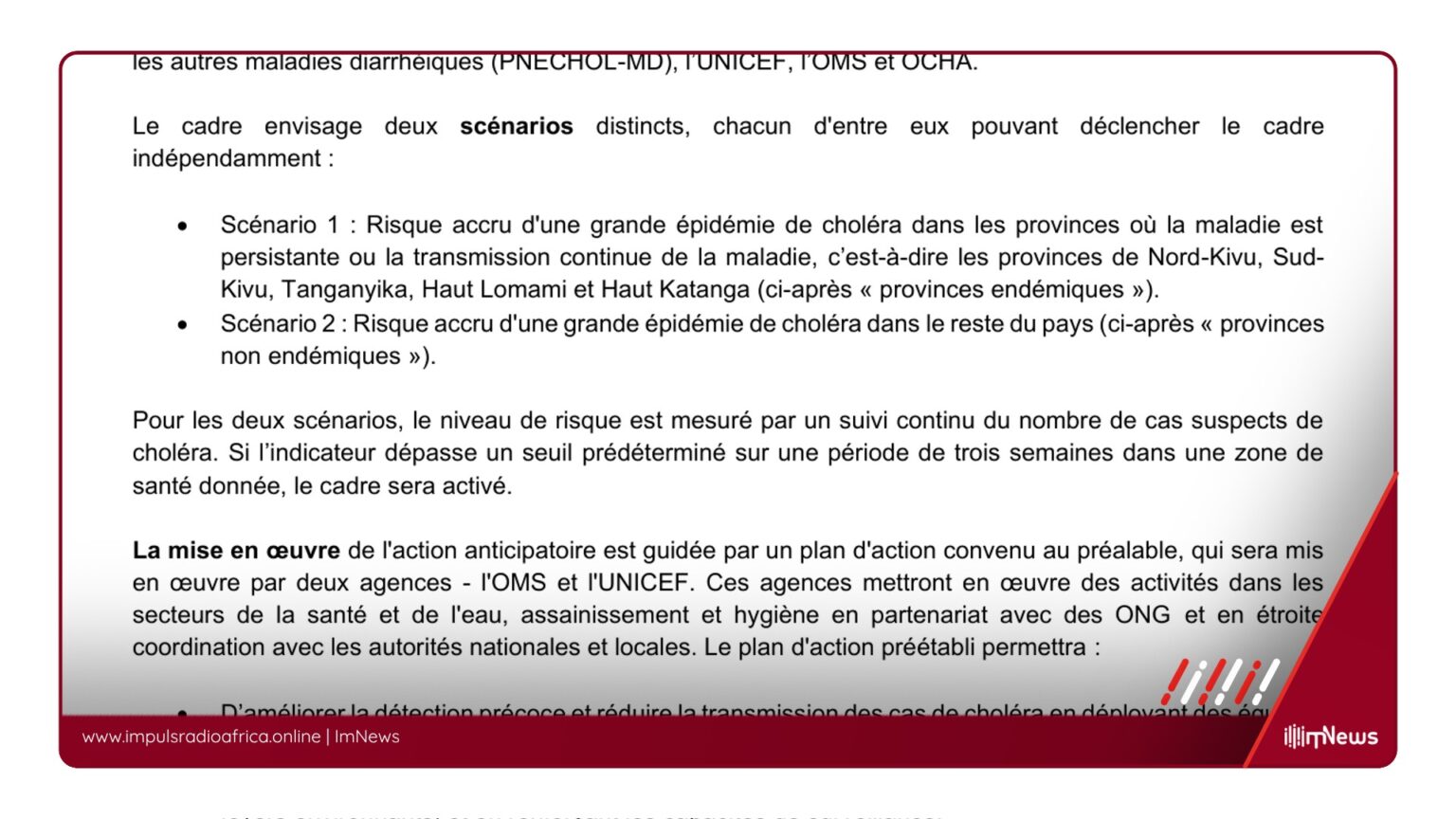
The anticipatory action framework includes measures such as the rapid detection of cases, ensuring access to safe water and sanitation for communities at risk, providing medical care, and promoting safe hygiene practices to reduce the spread of cholera. While the exact number of anticipatory actions taken is not specified, the initiative’s objectives are clear: to contain the outbreak, save lives, and maximize the impact of limited resources.
The effectiveness of these anticipatory actions in reducing the incidence of cholera outbreaks remains a topic of interest.
However, the fact that the DRC has been actively working to strengthen its disaster resilience and early warning systems is a positive step in addressing the health risks associated with climate change.
The DRC’s efforts in implementing an anticipatory action framework for cholera are part of a larger global movement towards building resilience in the face of increasing climate-related health risks.
By investing in early warning systems and preparedness, the DRC aims to mitigate the impact of cholera outbreaks and other health emergencies, ultimately protecting its citizens and promoting a healthier future.
In conclusion, the DRC’s approach to cholera prevention through anticipatory action demonstrates a proactive stance against health risks exacerbated by climate change.
The support from international organizations such as CERF and the collaboration with UN bodies are crucial in implementing these measures effectively.
As the country continues to implement these strategies, it is hoped that they will contribute to a reduction in the incidence of cholera outbreaks and the overall improvement of public health in the DRC.
*Additional reporting by ImNews | Sources consulted: 5*
—
This original article was produced by the ImNews editorial team
Source: reliefweb
Source: UN Office for the Coordination of Humanitarian Affairs