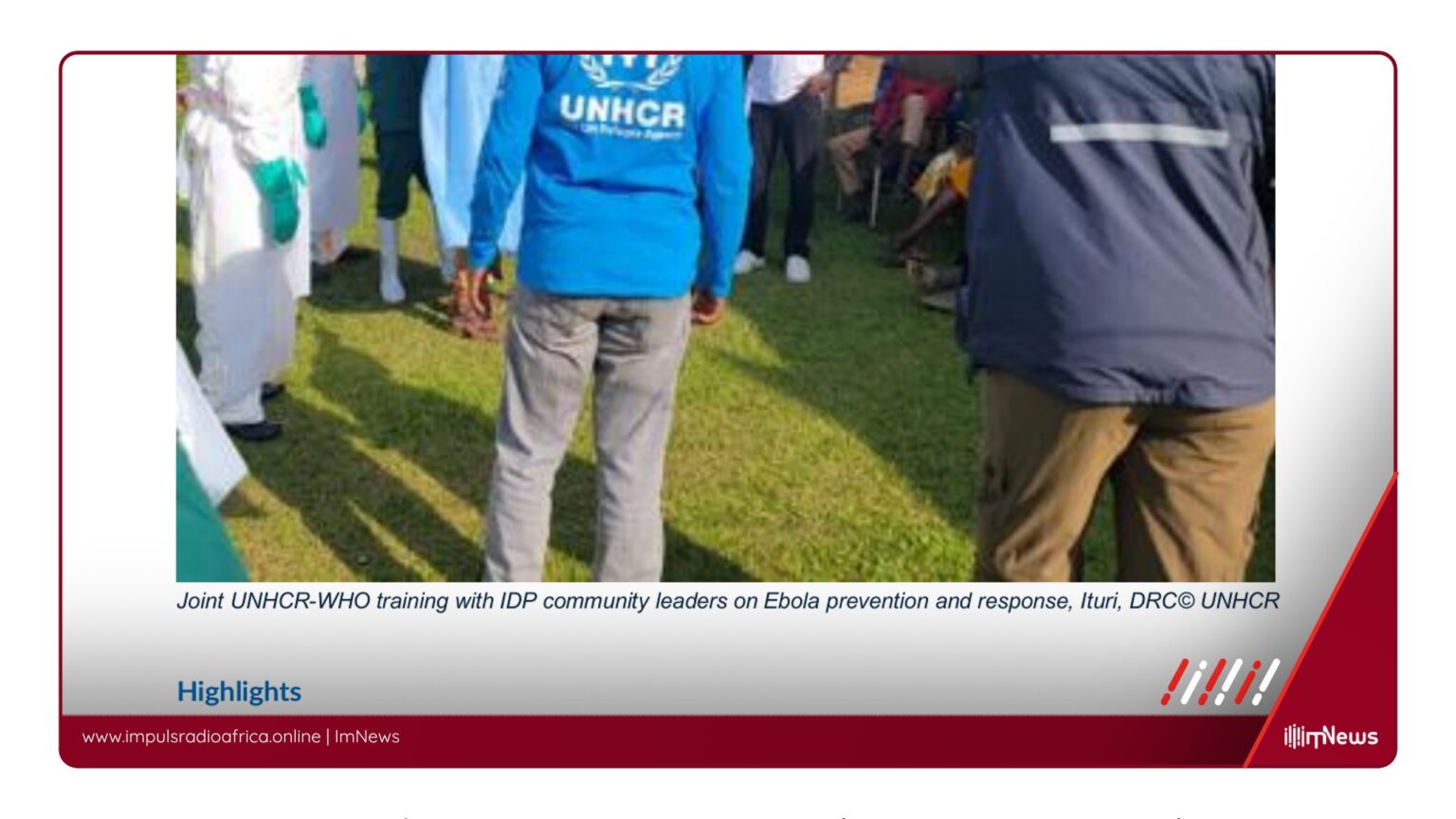
Kampala, Uganda — The Democratic Republic of the Congo (DRC) is experiencing its seventeenth Ebola virus disease (EVD) outbreak, with the virus spreading across 37 health zones in Ituri, North Kivu, and South Kivu.
As of 8 July 2026, there have been 1,792 confirmed cases, including 625 deaths and 295 recoveries.
Additionally, the government has reported two cases in Kisangani, Tshopo Province. This outbreak is occurring in a volatile environment characterized by persistent insecurity and displacement due to armed clashes, which severely limits humanitarian access and complicates prevention, surveillance, and response efforts. Ituri remains the epicentre, accounting for the majority of confirmed cases and deaths.
While no Ebola cases have been reported among refugees in the DRC, 19 internally displaced persons (IDPs) from Ituri sites are among the confirmed cases. Over two million forcibly displaced people live in Ebola-affected or high-risk areas, emphasizing the need for inclusive preparedness and access to national response systems.
In neighboring Uganda, the outbreak has been relatively contained with 20 confirmed cases as of 9 July, including two deaths, 17 recoveries, and one patient currently admitted for care.
The United Nations High Commissioner for Refugees (UNHCR), alongside the World Health Organization (WHO) and other United Nations agencies, is supporting the Governments of the DRC and Uganda in their efforts to strengthen prevention and response measures. This includes ensuring that refugees, asylum-seekers, IDPs, and host communities have access to information, surveillance, and essential services.
The WHO has declared the outbreak a Public Health Emergency of International Concern (PHEIC), emphasizing the global importance of the situation.
The organization is actively involved in scaling up support, enhancing surveillance, contact tracing, and community engagement to help save lives and contain the spread of the disease.
The international community remains vigilant, with efforts to accelerate testing and identify effective treatment options.
The coordinated and comprehensive response is critical not only for the affected regions but also for global health security.
*Additional reporting by ImNews | Sources consulted: 5*
—
This original article was produced by the ImNews editorial team
Source: reliefweb
Source: UN High Commissioner for Refugees