Harare, Zimbabwe — Zimbabwe’s Struggle with Extreme Poverty and Food Insecurity Intensifies Harare, Zimbabwe — As of July 2026, the situation in Zimbabwe remains dire, with 42% of the population living in extreme poverty and 26. 7% of children suffering from stunted growth due to malnutrition.
The World Food Programme (WFP) has been working tirelessly to alleviate the suffering, but challenges persist as the country grapples with economic pressures, climate shocks, and structural inequalities.
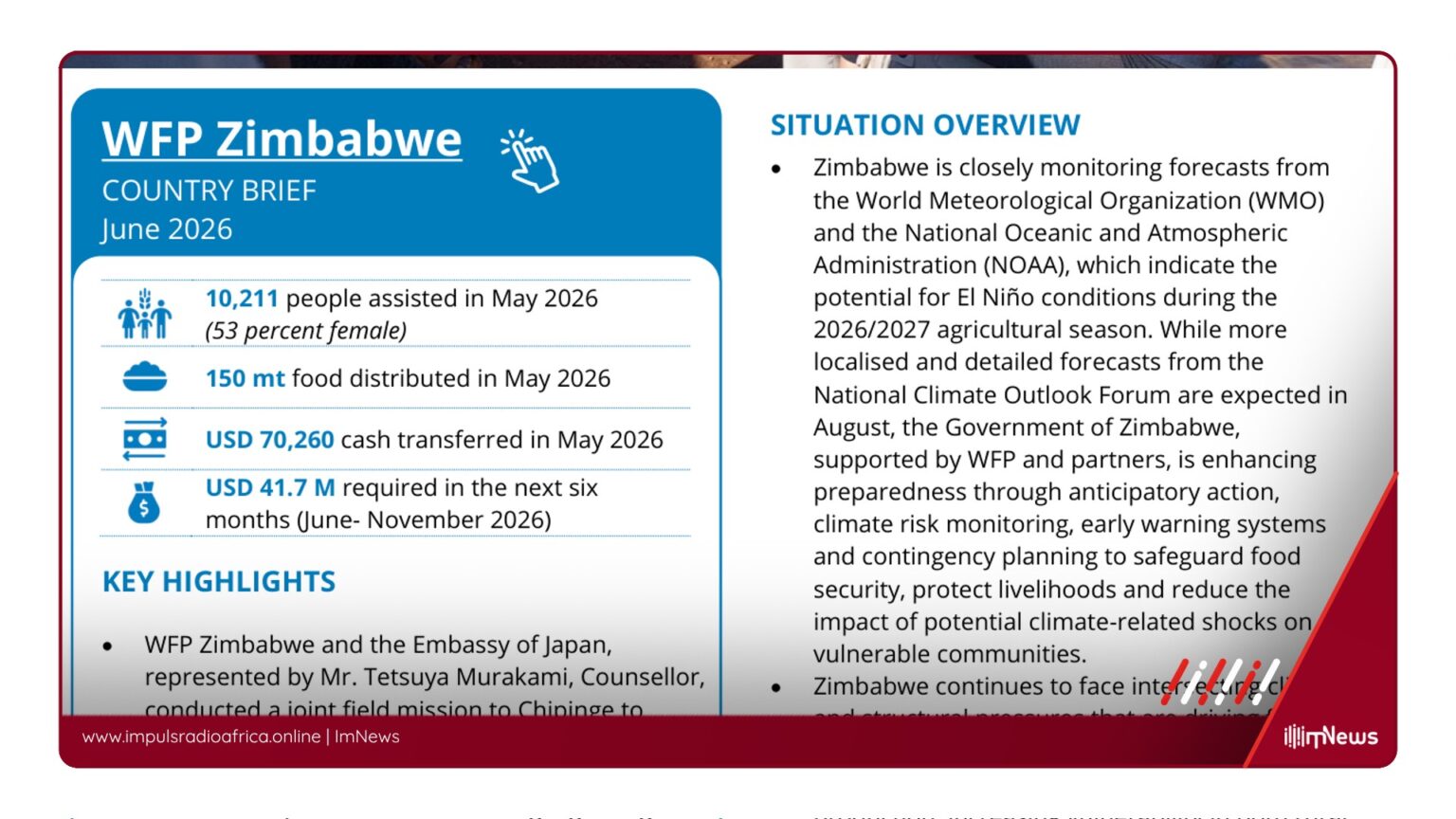
The WFP conducted Lean Season Assistance in 2025/26, which concluded in April and was extended by one month, assisting 199,000 people across four districts. Despite the 2025/26 agricultural season recording an overall cereal production surplus, localized deficits in several districts indicate emerging vulnerabilities.
The Stressed (IPC Phase 2) outcomes are expected to deteriorate to Crisis (IPC Phase 3) in several areas, including the south, east, west, and extreme north, persisting through January 2027.
Zimbabwe’s economic challenges are compounded by political and social unrest. Human Rights Watch reports that the government’s crackdown on dissent has hindered the population’s ability to voice concerns or seek help amidst food insecurity.
The situation is further exacerbated by climate change, which has led to unpredictable weather patterns and reduced agricultural productivity.
Officials commented on the matter. “Thanks to a recent training, our work will be more effective than before. “
The WFP’s country briefs and reliefweb reports emphasize the need for continued support to address the ongoing food and nutrition insecurity in Zimbabwe.
The organization is working on scaling up resilience — building efforts and strengthening early warning and social protection systems.
Additionally, the WFP is investing in government capacity to lead and ultimately take full ownership of programme delivery, while partnering with the private sector to enhance food security. Despite these efforts, the road to recovery remains long and fraught with challenges.
As Zimbabwe continues to face extreme poverty and food insecurity, the international community must remain vigilant and supportive in its efforts to provide aid and promote sustainable development. ### Forward-Looking Implications As the situation in Zimbabwe evolves, it is crucial to monitor the following developments: – The impact of the Stressed (IPC Phase 2) outcomes in the south, east, west, and extreme north, as they are expected to deteriorate to Crisis (IPC Phase 3) through January 2027. – The effectiveness of the WFP’s efforts to scale up resilience-building efforts and strengthen early warning and social protection systems.
– The potential for the government’s crackdown on dissent to further exacerbate the food insecurity situation.
The situation in Zimbabwe underscores the need for a comprehensive approach to addressing food and nutrition insecurity, which includes economic stabilization, political and social reforms, and climate change adaptation measures.
As the country continues to face extreme challenges, the international community must remain committed to supporting the people of Zimbabwe in their quest for a better future.
*Additional reporting by ImNews | Sources consulted: 5*
—
This original article was produced by the ImNews editorial team
Source: reliefweb
Source: World Food Programme