Kinshasa, DRC — The Democratic Republic of Congo (DRC) faces an escalating humanitarian crisis, with ongoing armed conflicts exacerbating an already dire situation.
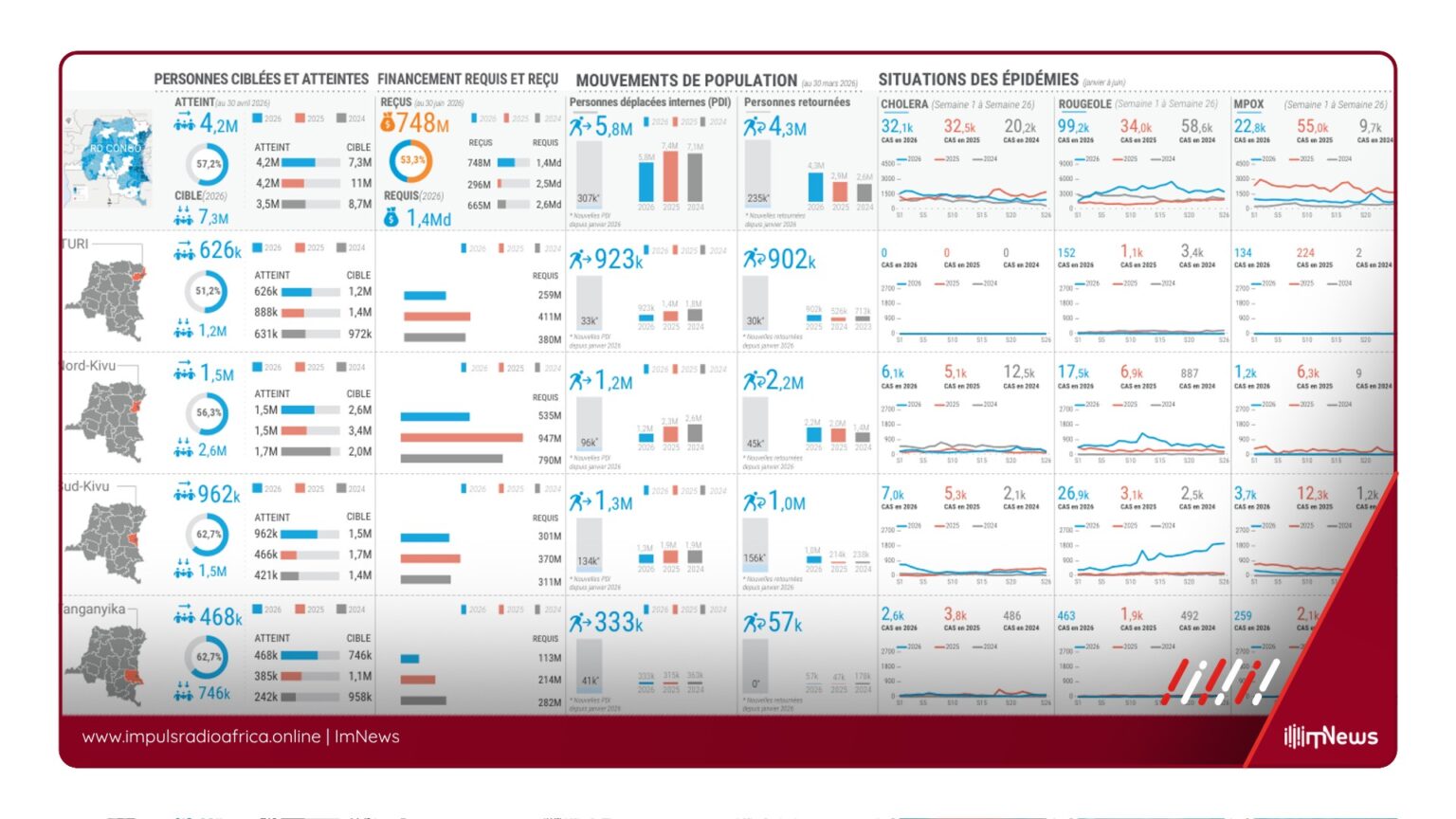
As of March 2026, the humanitarian response in the DRC reached approximately 3. 6 million people, representing nearly 38% of the targeted individuals under the Humanitarian Response Plan (HRP) 2026.
The crisis, driven by the expansion of conflicts across North Kivu, South Kivu, and Ituri, has led to massive displacement and increased protection risks for civilians.
The Global Humanitarian Overview 2026 reports that the ongoing armed conflict in the DRC remains the primary driver of humanitarian needs, despite the country’s rich natural resources.
The situation is further compounded by massive displacement, recurrent epidemics, and climate shocks, all of which contribute to the country’s high poverty and vulnerability levels.
The Alliance for International Medical Action, an NGO, has taken steps to address the crisis by training community members in malnutrition screening techniques in South Kivu. This initiative, supported by the DRC Humanitarian Fund, aims to combat the malnutrition crisis affecting the region’s most vulnerable populations.
However, the situation on the ground remains fluid.
According to reports, the M23 movement and other armed groups have committed severe human rights violations, including summary executions, inhumane treatment of detainees, and other forms of abuse. These actions have not only increased the risk for civilians but have also hindered the delivery of humanitarian aid.
The UN Office for the Coordination of Humanitarian Affairs (OCHA) has highlighted the urgent need for humanitarian assistance, noting that the situation is critical.
Amnesty International has also reported on the human rights violations, emphasizing the need for accountability and a cessation of hostilities. Despite these challenges, there are signs of hope.
The DRC Humanitarian Fund has been instrumental in supporting various initiatives aimed at providing assistance to those in need.
However, the scale of the crisis requires a coordinated and sustained effort from the international community.
As the humanitarian situation in the DRC continues to deteriorate, the international community must remain vigilant and committed to finding solutions.
The future of millions of Congolese civilians depends on the effectiveness of the humanitarian response and the ability of the country’s leadership to address the root causes of the conflict.
What happens next remains uncertain.
The path to peace and stability in the DRC is fraught with obstacles, but the need for action is clear.
The international community must continue to support the DRC’s efforts to provide assistance to those affected by the crisis and to work towards a sustainable resolution to the conflict.
*Additional reporting by ImNews | Sources consulted: 5*
—
This original article was produced by the ImNews editorial team
Source: reliefweb
Source: UN Office for the Coordination of Humanitarian Affairs