In Djibouti, the World Food Programme (WFP) has completed a comprehensive Integrated Food Security Phase Classification (IPC) analysis, offering a detailed look into the food insecurity facing urban, rural, and refugee populations.
The findings, which are set to be released in the coming weeks, come as the Regional Director of WFP’s Regional Bureau for Eastern Africa engaged with senior Government officials on the decommissioning and handover of the Humanitarian Logistics Base (HLB), while reinforcing WFP’s commitment to Djibouti’s food security, resilience, and social protection efforts. Recent rainfall forecasts suggest that Djibouti no longer meets the activation thresholds for an anticipatory drought response as outlined in the country’s Anticipatory Action Plan. This development, however, does not diminish the ongoing challenges of food insecurity in the region.
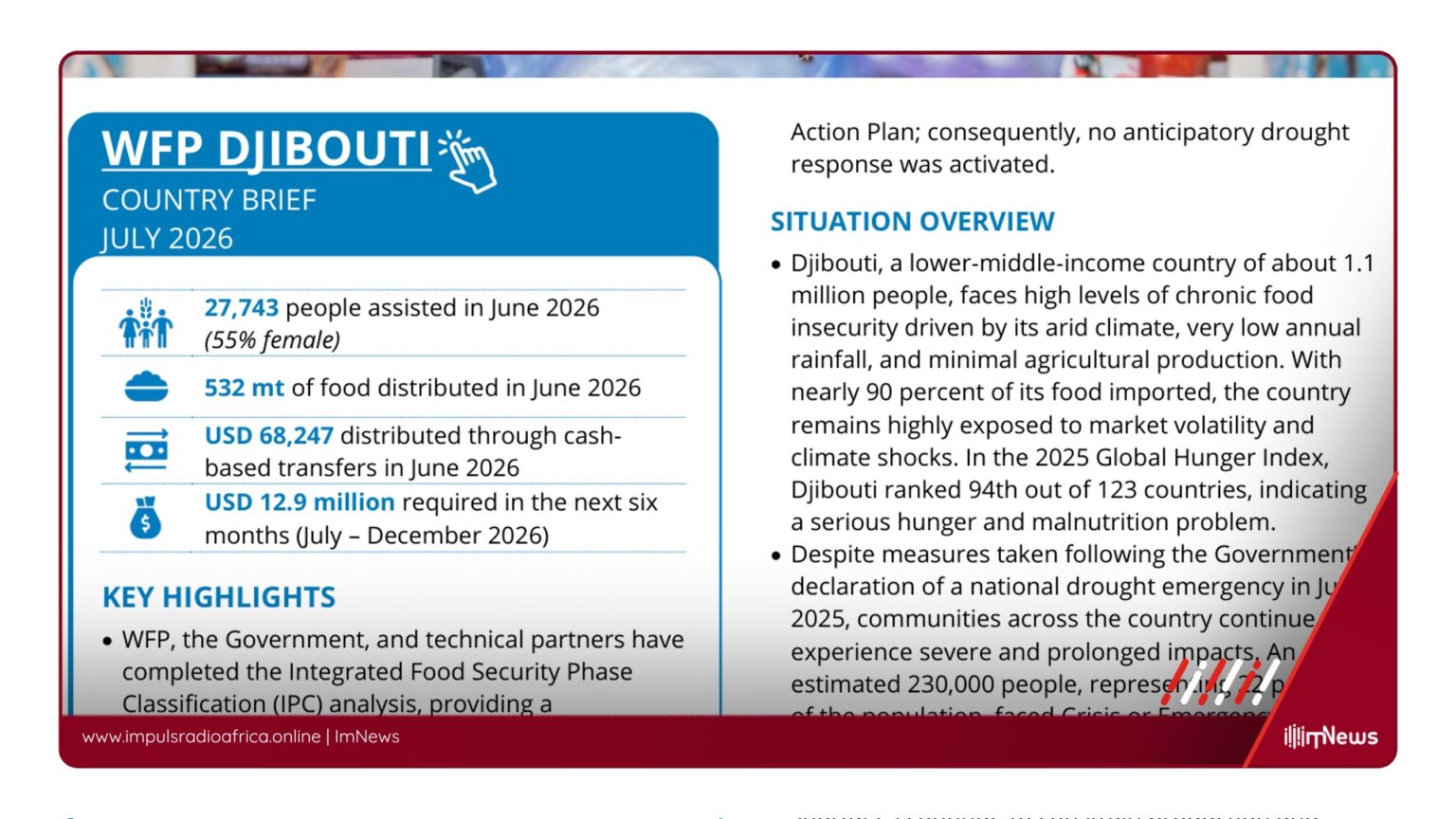
Djibouti, a middle — income country with a population of 1. 1 million, ranks 93 out of 125 countries in the 2023 Global Hunger Index, reflecting a ‘serious’severity score.
The nation’s reliance on food imports, with 90% of its food coming from abroad, makes it particularly susceptible to price fluctuations and supply chain disruptions.
The WFP’s IPC analysis, conducted in collaboration with the Government and technical partners, indicates a concerning scenario, with an upcoming pipeline break for Djibouti’s refugee, resilience, and emergency preparedness & response programs projected for July 2026. This coincides with a USD 7. 7 million funding shortfall for the six-month period of June to November 2026.
While some households have benefited from initiatives like fresh food vouchers, the overall situation remains critical.
The WFP’s reports emphasize the need for immediate international support and additional funding to prevent the situation from worsening significantly.
The WFP’s Country Strategic Plan for Djibouti has been extended through December 2026, pending ongoing consultations and review.
However, the projected pipeline break and funding shortfall raise concerns about the sustainability of lifesaving assistance for refugees, migrants, and vulnerable populations.
The situation in Djibouti is part of a wider trend of increasing food insecurity globally, driven by factors such as climate change, rising food prices, and economic instability.
The WFP’s warnings about the potential for millions to face severe hunger highlight the urgency of addressing these challenges at both the national and international levels.
As Djibouti grapples with these challenges, the international community’s response will be crucial in determining the outcome of the ongoing crisis.
The WFP’s appeals for funding and support underscore the need for immediate and sustained action to avert a humanitarian disaster in this vulnerable region.
*Additional reporting by ImNews | Sources consulted: 5*
—
This original article was produced by the ImNews editorial team
Source: reliefweb
Source: World Food Programme