
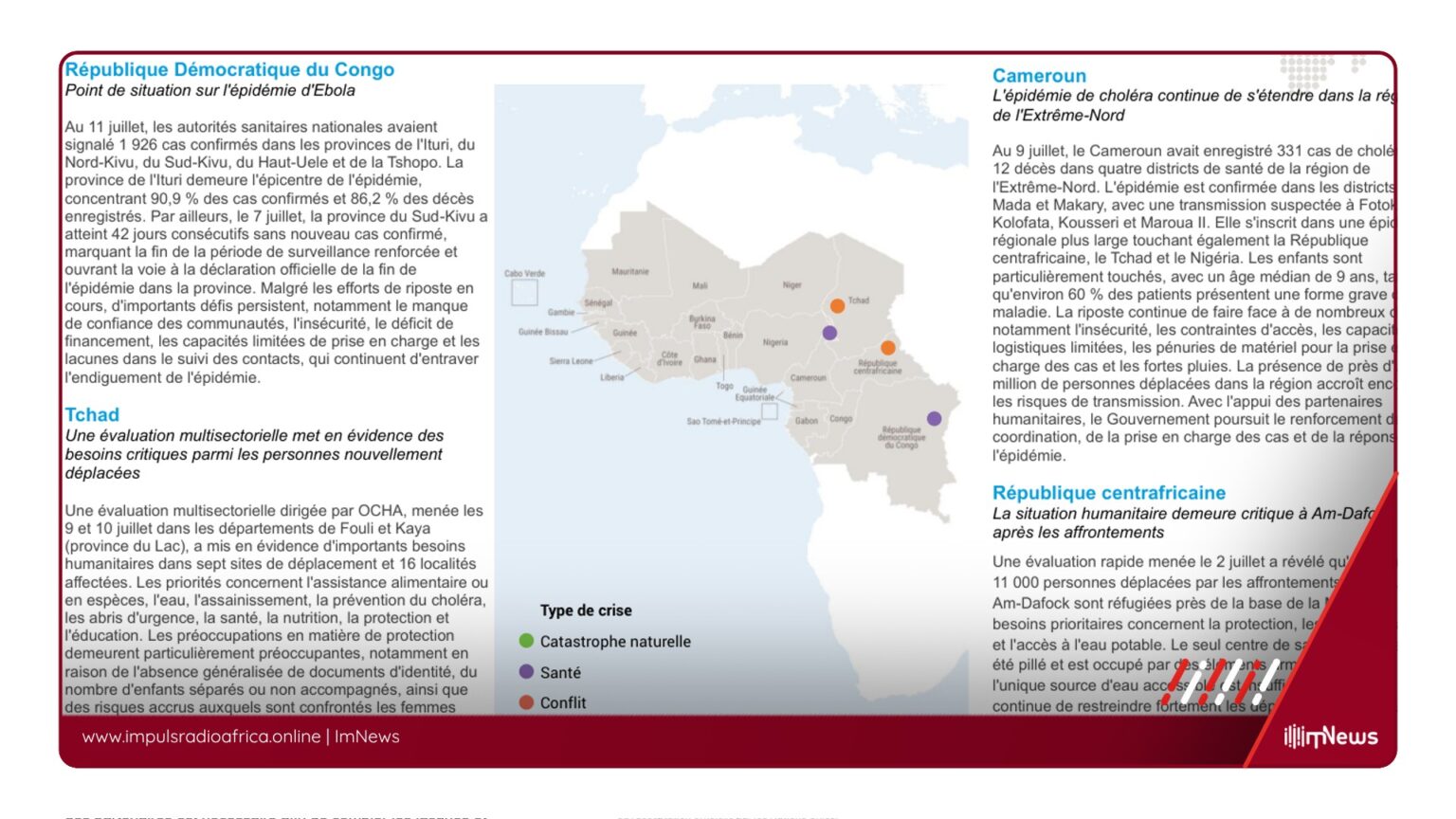
Kinshasa, DRC — A severe Ebola outbreak continues to affect the Democratic Republic of Congo (DRC), with health authorities reporting 1,926 confirmed cases across the provinces of Ituri, Nord-Kivu, Sud-Kivu, Haut-Uele, and Tshopo as of July 11, 2026.
The province of Ituri remains the epicenter, accounting for 90. 9% of confirmed cases and 86. 2% of recorded deaths.
Optimism Amidst Challenges: Despite the grim statistics, there is some optimism as the province of Sud-Kivu reached 42 consecutive days without a new confirmed case of Ebola as of July 7, 2026. This marks the end of the enhanced surveillance period and paves the way for an official declaration of the end of the epidemic in the province. Armed Conflict and Humanitarian Needs: The ongoing health crisis is complicated by the presence of armed groups, including the Allied Democratic Forces (ADF) rebels.
On January 2, 2026, the ADF rebels killed at least 16 people during overnight attacks in Lubero Territory, North Kivu, displacing thousands of civilians and exacerbating the humanitarian situation. Multisectorial Assessment in Chad: In neighboring Chad, a multisectorial assessment conducted by the UN Office for the Coordination of Humanitarian Affairs (OCHA) on July 9-10, 2026, identified critical humanitarian needs among newly displaced persons in the departments of Fouli and Kaya.
The assessment highlighted the need for assistance in food, water, sanitation, health, and education, among others. Cholera Outbreak in Cameroon: In Cameroon, the cholera outbreak in the region of the Extrême-Nord has expanded, with 331 cases and 12 deaths recorded as of July 9, 2026.
The disease is confirmed in multiple districts, with a median age of 9 years among affected children and a significant number presenting severe forms of the illness. Humanitarian Situation in Central African Republic: In the Central African Republic, the humanitarian situation remains critical following recent clashes in Am-Dafock.
An assessment on July 2 revealed that at least 11,000 people have been displaced, with urgent needs for protection, health care, and access to clean water. Response and International Support: As the situation evolves, the international community remains vigilant and continues to provide support to the affected populations.
The challenges faced by the DRC and neighboring countries underscore the need for a coordinated and comprehensive approach to managing health emergencies and humanitarian crises in the region.
*Additional reporting by ImNews | Sources consulted: 5*
—
This original article was produced by the ImNews editorial team
Source: reliefweb
Source: UN Office for the Coordination of Humanitarian Affairs