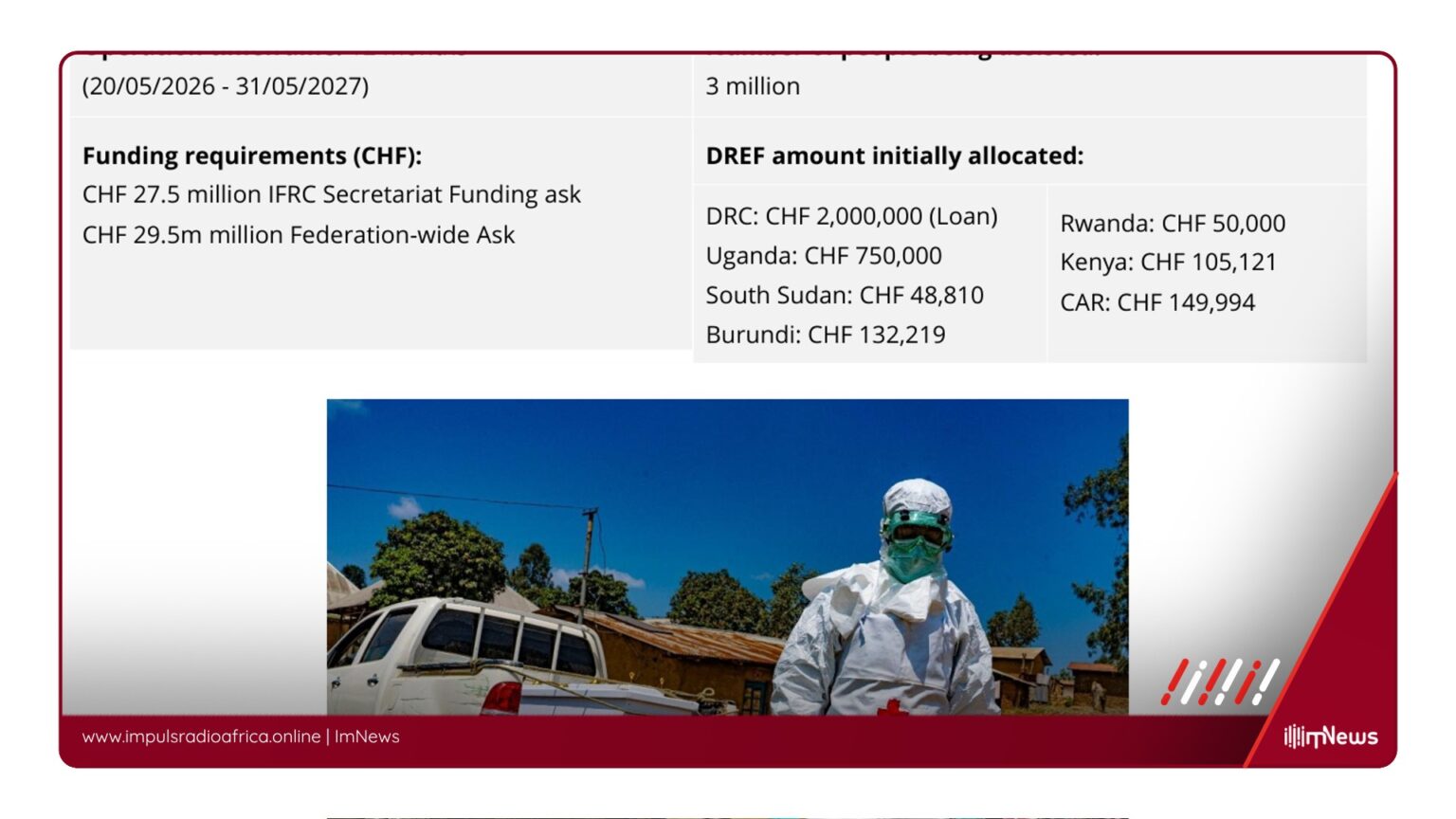
Congo, Democratic Republic of the Congo — As of 10 July 2026, the Bundibugyo Virus Disease (BVD) epidemic declared on 15 May 2026, has seen a concerning rise in confirmed cases in the Democratic Republic of the Congo (DRC).
The DRC has reported 1,873 confirmed cases and 672 fatalities, with a case fatality ratio of 35. 9%.
The virus has impacted 41 out of 140 health zones across Ituri, North Kivu, South Kivu, Haut-Uele, and Tshopo provinces. Neighboring countries, including Uganda, have also reported cases.
The situation in Ituri Province remains critical, with 1,705 cases and 577 fatalities, accounting for nearly 65% of all confirmed cases. Bunia, Mongbwalu, and Rwampara Health Zones are the primary transmission hubs. North Kivu Province has seen a significant increase in cases, with a case fatality ratio of 57%, more than double the national rate.
Despite a reduction in weekly incidence in North Kivu Province, there has been an escalation in cases in the Katwa Health Zone. South Kivu Province has reported three cases and one fatality since 26 May, with a low alert-investigation performance reported, suggesting that the absence of recently confirmed cases should be interpreted cautiously.
The World Health Organization (WHO) and the Africa Centres for Disease Control and Prevention (Africa CDC) have forecasted that the cumulative confirmed cases in the DRC are expected to continue increasing, reflecting ongoing transmission. There is currently no evidence of a sustained decline in transmission, indicating that the outbreak has not yet reached its peak.
The crisis is further complicated by armed conflicts, violence, and heightened insecurity, which have constrained contact tracing and increased the risk of undetected transmission. Community aggression, driven by mistrust and misinformation, has also impacted humanitarian and public health operations, including attacks on Ebola treatment centers and threats against volunteers.
The DRC Red Cross has reported 19 serious security incidents involving volunteers in the East of DRC since the beginning of 2026, including the tragic killing of two Red Cross volunteers in Walungu Territory in June. Efforts to contain the outbreak include increased ambulance capacity, strengthened surveillance, community engagement, risk communication, infection prevention and control, and cross-border coordination. Despite these efforts, the ongoing transmission and complex security context pose significant challenges to controlling the spread of the virus.
*Additional reporting by ImNews | Sources consulted: 5*
—
This original article was produced by the ImNews editorial team
Source: reliefweb
Source: International Federation of Red Cross and Red Crescent Societies