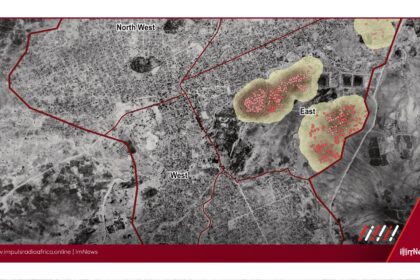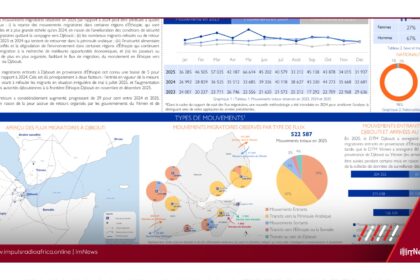
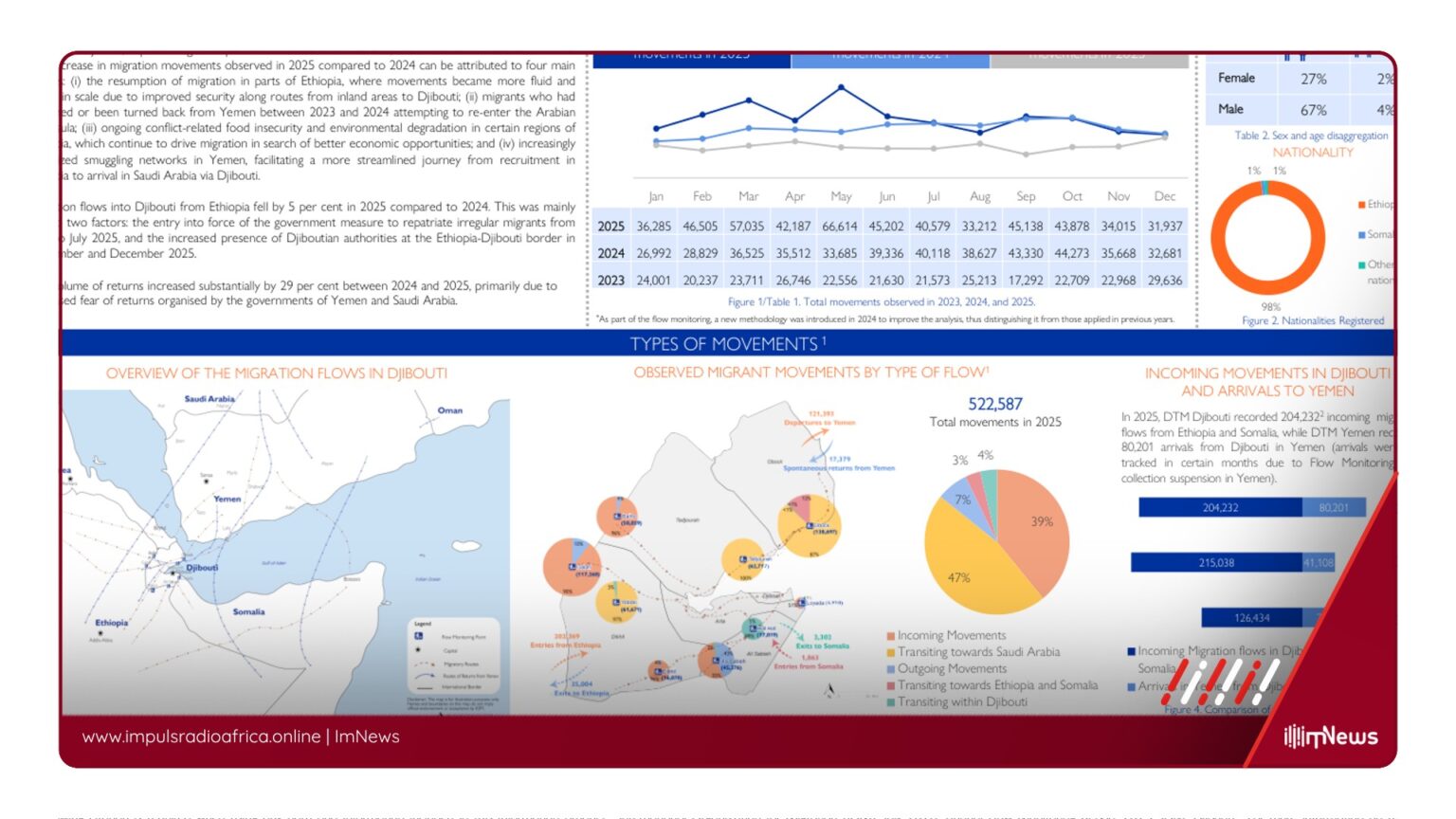
In Djibouti, the year 2025 witnessed a significant increase in migratory movements, with a total of 522,587 recorded across the country’s nine Flow Monitoring Points (FMPs). This figure represents a 20% rise from the 435,576 movements observed in 2024.
The surge in migration can be attributed to several factors, including the resumption of migration in parts of Ethiopia, where improved security along routes to Djibouti has led to more fluid and larger — scale movements.
Additionally, migrants who had returned or been turned back from Yemen between 2023 and 2024 are attempting to re-enter the Arabian Peninsula. Conflict-related food insecurity and environmental degradation in certain regions of Ethiopia are also driving individuals in search of better economic opportunities.
Furthermore, the rise of organized smuggling networks in Yemen has streamlined the journey from recruitment in Ethiopia to arrival in Saudi Arabia via Djibouti. Despite the overall increase, migration flows into Djibouti from Ethiopia actually fell by 5% in 2025 compared to 2024. This decline is attributed to the implementation of government measures to repatriate irregular migrants from May to July 2025, as well as the enhanced presence of Djiboutian authorities at the Ethiopia-Djibouti border in November and December of the same year.
The volume of returns saw a substantial increase of 29% between 2024 and 2025, primarily due to the heightened fear of returns organized by the governments of Yemen and Saudi Arabia.
*Additional reporting by ImNews | Sources consulted: 5*
—
This original article was produced by the ImNews editorial team
Source: reliefweb
Source: International Organization for Migration