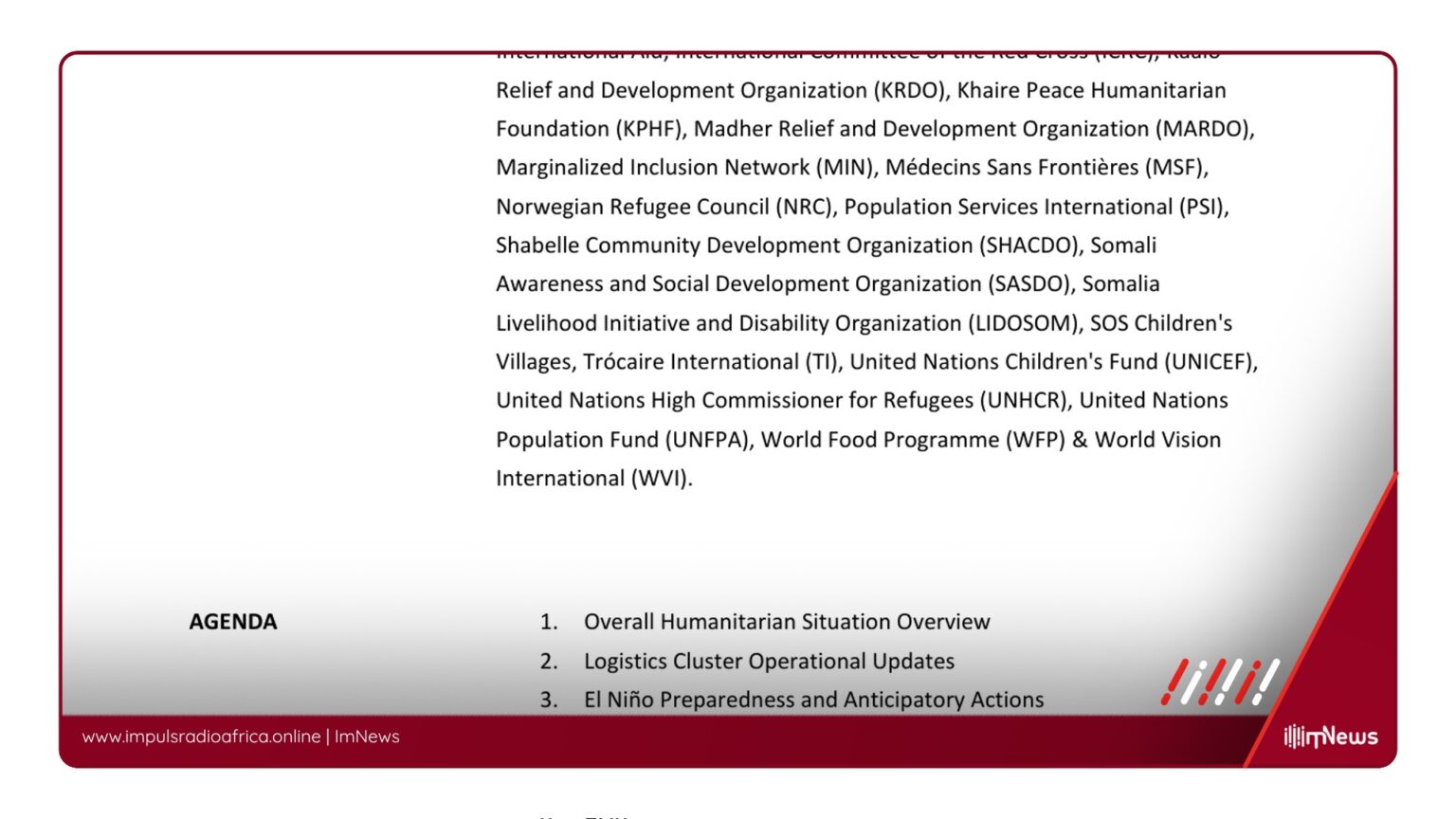
Mogadishu, Somalia — Somalia Logistics Cluster Meeting Highlights Coordination Efforts Mogadishu, Somalia – The Somalia Logistics Cluster convened a national coordination meeting in Mogadishu on 23 June 2026, bringing together a diverse range of organizations to discuss and streamline humanitarian response efforts in the region. Attendees included key players such as Action Against Hunger, Catholic Relief Services, the International Committee of the Red Cross, and the World Food Programme, all united under the common goal of improving the effectiveness of humanitarian assistance in Somalia.
The meeting’s agenda was centered around the coordination of logistics and response efforts in a country that has long been addressing conflict and instability.
Somalia, with a population of approximately 19. 1 million, faces significant challenges in terms of development and humanitarian situations, with over 4 million residents in the capital city of Mogadishu alone.
The Logistics Cluster, a global partnership dedicated to enhancing the efficiency of humanitarian assistance, plays a pivotal role in this coordination.
Its involvement in the meeting suggests a strategic focus on food security and aid distribution, areas of critical importance for the survival and well — being of Somalia’s population. One of the key objectives of the meeting was to ensure a cohesive and effective response to the ongoing humanitarian crisis in Somalia.
The meeting’s participants discussed various challenges, including access constraints, insecurity, and the impact of climate change, particularly the threat of El Niño-related flooding during the 2026 Deyr season.
During the meeting, the Logistics Cluster provided updates on its operational activities, highlighting its support in transporting 428 MT of cargo to 17 hard-to-reach locations and providing storage support to 16 partners. These efforts are crucial in reaching those most in need, especially in areas affected by conflict and limited access.
Despite the progress made, several unanswered questions remain.
What specific outcomes or decisions were made during the national coordination meeting? How have the logistics and response efforts been implemented since the meeting?
And what is the current status of food security and humanitarian aid in Somalia?
These questions underscore the ongoing complexity of the situation in Somalia.
The country’s long history of conflict and instability has severely impacted its development and humanitarian situation, with the recent drought and flood risks exacerbating the challenges faced by the population.
As the Logistics Cluster continues its work, the collaboration between various organizations is vital for the effective delivery of aid.
The involvement of the World Food Programme, in particular, indicates a focus on addressing the critical issue of food security, which is a cornerstone of any sustainable humanitarian response.
The national coordination meeting of the Somalia Logistics Cluster is a testament to the collaborative approach being taken to address the humanitarian crisis in Somalia. It is a reminder that, despite the challenges, there is a collective commitment to improving the lives of those affected by the region’s ongoing conflicts and environmental threats.
The next steps and the outcomes of these collaborative efforts will be closely watched, as they are crucial in determining the future of humanitarian assistance in Somalia.
The international community’s continued support and commitment to the country’s recovery and development are essential for creating a sustainable and prosperous future for the Somali people.
*Additional reporting by ImNews | Sources consulted: 5*
—
This original article was produced by the ImNews editorial team
Source: reliefweb
Source: Logistics Cluster