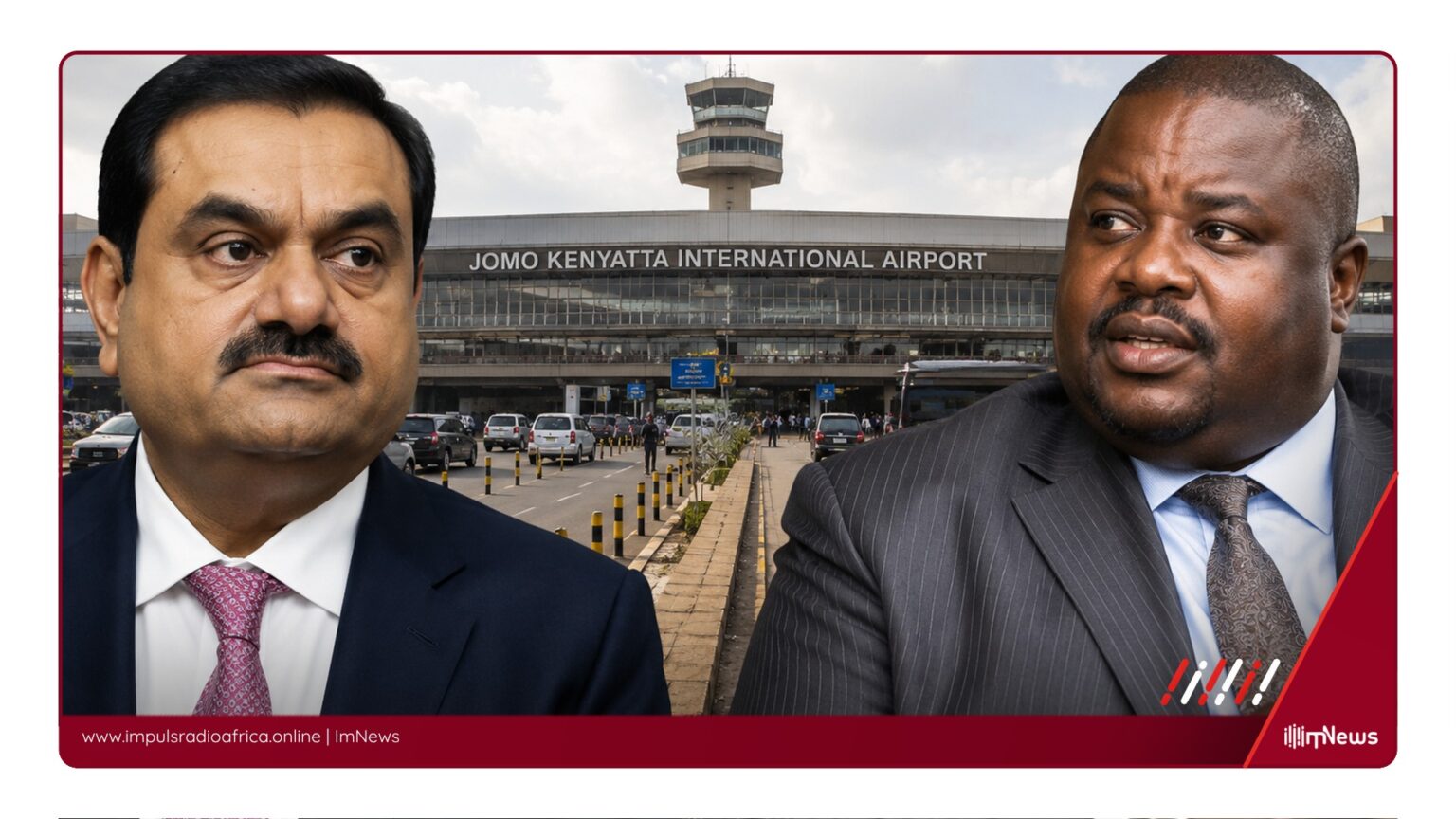
At the Center of the Dispute Is the Planned Expansion of Nairobi’s Jomo Kenyatta International Airport (JKIA), East Africa’s Busiest Aviation Hub.
The project has become the subject of competing claims over its cost, ownership structure and the companies involved. Since first being unveiled, the airport expansion has moved through a series of controversies, beginning with a proposed partnership involving India’s Adani Group, before shifting to a Chinese-led project and later becoming embroiled in claims linking a company associated with Chivayo to the development. DON’T MISS THIS: Court halts billionaire Adani’s proposal to invest in Kenya’s biggest airport Each phase has triggered fresh political debate, public scrutiny and government intervention, turning what was intended to be a flagship infrastructure upgrade into one of Kenya’s most closely watched projects.
From Adani’s exit to the Chivayo dispute The controversy first emerged in 2024 when the Kenyan government pursued a deal with India’s Adani Group to expand and operate JKIA.
The proposal, valued at about $1. 85 billion, faced strong opposition from labor unions, civil society groups and opposition politicians, who raised concerns about transparency, job security and the terms of the proposed 30-year concession. Legal challenges temporarily halted the project, and public scrutiny intensified after U.
S. Prosecutors indicted Adani Group founder Gautam Adani on bribery and fraud charges, allegations the conglomerate denied.
In November 2024, President William Ruto ordered the cancellation of the airport deal, citing new information from investigative agencies and partner nations.
The airport saga entered a new phase this year when reports emerged that a consortium led by China’s China Communications Construction Company (CCCC) had secured a contract reportedly worth $2. 9 billion (375 billion Kenyan shillings) to undertake the airport’s expansion. DON’T MISS THIS: Kenya turns to AfDB, China Exim for $2b airport expansion after dropping Adani deal The reports also claimed that IMC Construction Kenya, a company linked to Zimbabwean businessman Wicknell Chivayo, was part of the consortium, sparking fresh controversy and political debate in Kenya.
The reports gained traction partly because Chivayo is no stranger to controversy.
In Zimbabwe, he has frequently been linked to politically sensitive government contracts, including the $172 million Gwanda Solar Project and a contentious election materials procurement deal that triggered corruption allegations and investigations. Chivayo has consistently denied wrongdoing, but the controversies have made him one of Zimbabwe’s most closely watched businessmen. Kenya debunks Chivayo partnership claims However, the Kenyan government has strongly disputed both the reported contract value and Chivayo’s alleged involvement.
In a statement on Thursday, Transport Cabinet Secretary Davis Chirchir said JKIA’s expansion would cost no more than 154. 2 billion Kenyan shillings ($1. 2 billion), significantly lower than the widely reported 375 billion shillings.
He added that the project would be financed largely through credit from development finance institutions. “.
The company referred to in those reports (IMC Construction) did not participate in this procurement process as a bidder and has no role, involvement or association whatsoever with this project, “Chirchir. DON’T MISS THIS: Kenya picks Chinese firm for $2. 9 billion upgrade of East Africa’s biggest airport after scrapping billionaire Adani deal He further stated that all bidders were required to disclose members of their joint ventures and that “in none of them is the said entity part of. “.
Notably, while rejecting the claims surrounding IMC Construction, the minister did not identify the company or consortium selected for the airport expansion, leaving questions over the project’s final structure unanswered.
The conflicting narratives have added another layer of uncertainty to a project already marked by controversy. What began as a debate over Adani’s role has now expanded into broader questions about procurement, transparency and who stands to benefit from one of East Africa’s largest infrastructure upgrades.
*Additional reporting by ImNews | Sources consulted: 5*
—
This original article was produced by the ImNews editorial team
Source: Africa.businessinsider
Source: Solomon Ekanem