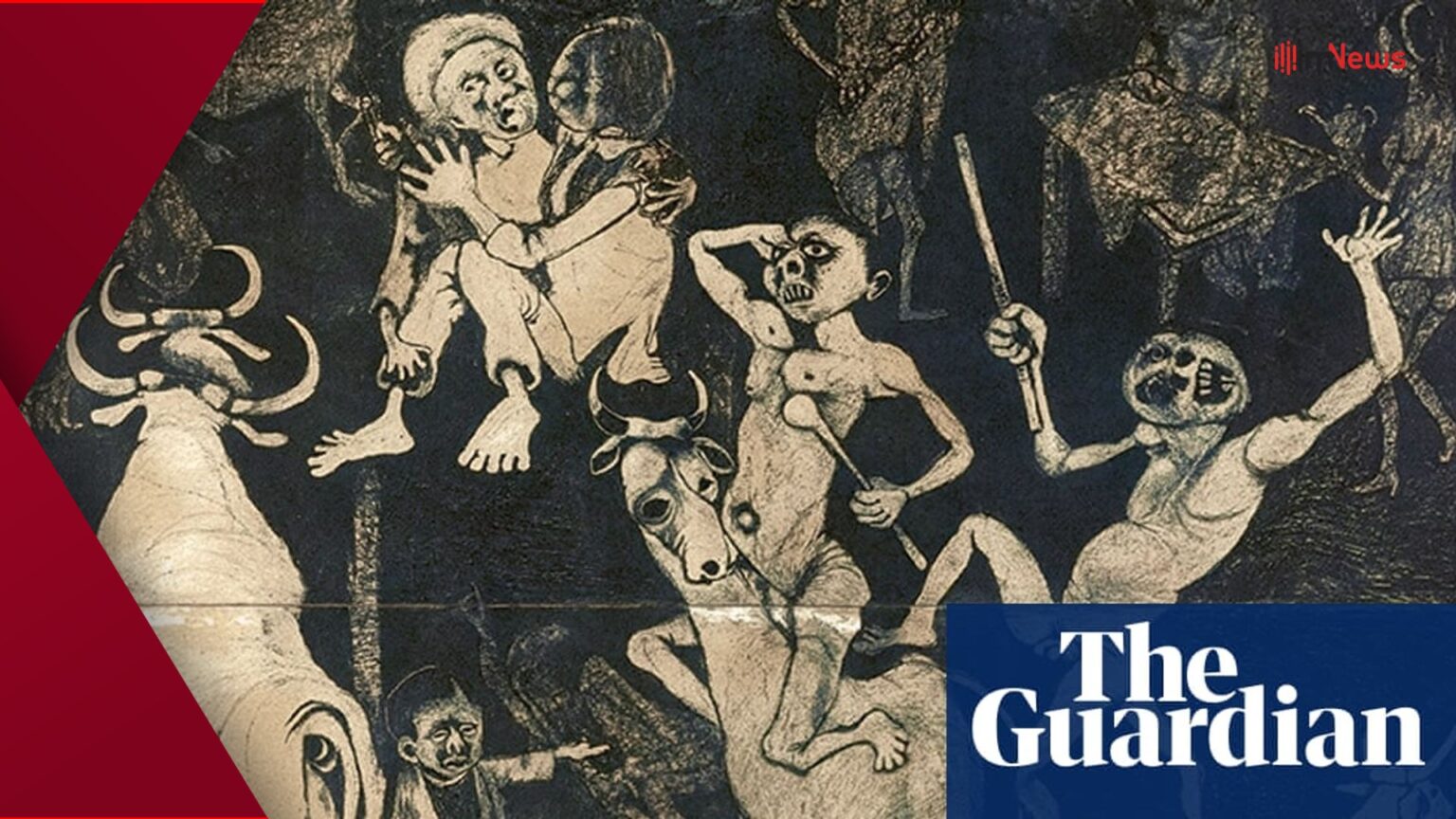
MADRID, SPAIN — The Reina Sofía museum in Madrid has unveiled a significant piece of African art history, “African Guernica, “by the late South African artist Dumile Feni. The artwork, which was drawn in 1967, is now displayed in the same spot where Picasso’s Guernica was first exhibited 34 years prior.
The drawing, which is the centrepiece of the museum’s new series of annual exhibitions titled “History Doesn’t Repeat Itself, But It Does Rhyme, “is a smaller, yet equally powerful, version of Picasso’s famous work. It depicts the harsh realities of apartheid in South Africa, with a three-legged man, a cow suckling a baby, and birds pecking at scraps, set against shadowy figures in the background.
The exhibition, curated by Tamar Garb, aims to juxtapose works from various cultural and geographical backgrounds alongside Picasso’s masterpiece. According to the Reina Sofía’s director, Manuel Segade, the initiative seeks to correct historical biases and promote dialogue between different art forms.
Feni, who died in 1991, was an influential artist known for his charcoal and pencil drawings that depicted the struggle against racial tyranny. His work, which has never been exhibited outside of South Africa before, is on loan from the University of Fort Hare.
Garb, a professor of art at University College London, highlighted the unique place Feni occupies in 20th-century art. “This is a modern artist using drawing materials at a scale almost unheard of globally at that time, “she. “If you look at drawing practices globally in the 1960s, there are very, very few artists who work at the epic and monumental scale.
African Guernica “serves as a powerful reminder of the struggle against racial tyranny and the resilience of the human spirit. Its presence in the Reina Sofía museum is a testament to the enduring impact of Feni’s work and the ongoing dialogue between African and Western art.
Source: The guardian