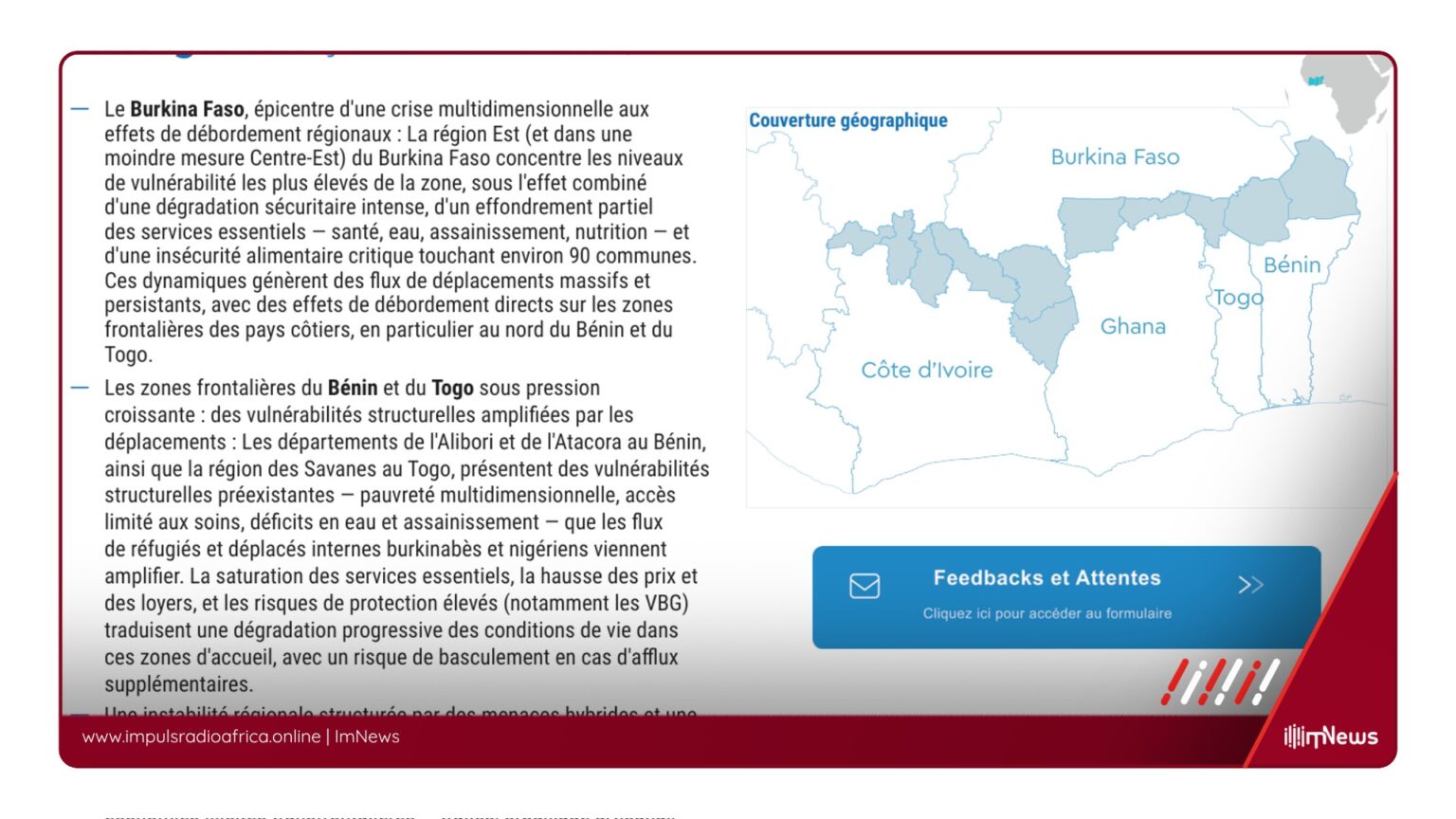
Refugee Crisis Deepens in West Africa as Benin Hosts Over 74,621 Individuals BODY: Accra, Ghana – The humanitarian situation in West Africa has reached critical levels, with Benin, Côte d’Ivoire, Ghana, and Togo facing a surge in displacement due to conflict, environmental disasters, and socio-economic challenges.
According to the United Nations High Commissioner for Refugees (UNHCR), as of March 31, 2026, Benin alone hosts over 74,621 refugees, highlighting the region’s growing vulnerability.
The Global Humanitarian Overview 2026 reveals a broader crisis, with 12.
7 million internally displaced persons (IDPs) and 3. 7 million refugees and asylum-seekers across West and Central Africa.
Women and children are disproportionately affected, with many forced to flee their homes due to ongoing violence and environmental degradation.
The International Organization for Migration (IOM) has published a report focusing on the protection and human rights of populations in Benin and the surrounding countries.
The report underscores the challenges faced by these communities, including access to basic services, education, and healthcare.
The region’s complex history of conflict, environmental disasters, and displacement is rooted in persistent socio-economic challenges.
The impact of the Atlantic slave trade and colonial history continues to affect the socio — economic landscape, exacerbating the current crisis.
The UNHCR’s data indicates a significant increase in the number of refugees and asylum-seekers in the region.
The IOM’s report highlights the need for a coordinated approach to address the root causes of displacement, including conflict resolution, environmental sustainability, and socio-economic development.
The situation in Benin is particularly dire, with the country’s coastal regions bearing the brunt of the crisis.
The IOM’s analysis reveals that the protection and human rights of the displaced populations are at risk, necessitating urgent intervention.
As the region grapples with these challenges, regional and international organizations are working tirelessly to provide assistance and support.
The African Union, United Nations, and UNHCR are among the key players involved in the humanitarian response.
The crisis in West Africa underscores the need for a comprehensive approach to address displacement and its underlying causes. While the immediate focus is on providing relief and protection to the displaced populations, long-term solutions must also be sought to address the root causes of the crisis.
As the situation continues to evolve, the international community must remain vigilant and committed to supporting the affected countries in their efforts to mitigate the impact of the crisis and ensure the well — being of the displaced populations.
*Additional reporting by ImNews | Sources consulted: 5*
—
This original article was produced by the ImNews editorial team
Source: reliefweb
Source: International Organization for Migration