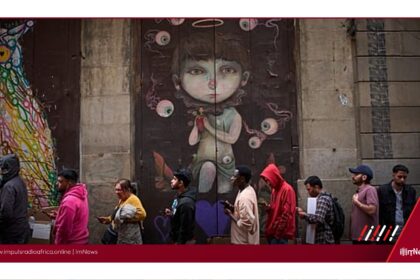
Africa Newsroom — Polling stations opened across Benin on Sunday, marking the beginning of a crucial election to select a new president. Finance Minister Romuald Wadagni is considered a front-runner due to his role in steering the country’s economic growth over the past decade, despite jihadist attacks in the northern regions. The election follows two consecutive five-year terms for outgoing President Patrice Talon, who has endorsed Wadagni as his successor.
With nearly eight million eligible voters, the outcome of the election will be closely watched, particularly given the lackluster campaign and voter apathy. Wadagni, supported by the two main ruling parties, faces a challenge from Paul Hounkpe, an opposition figure whose campaign has been subdued and required parliamentary endorsements to secure a spot on the ballot.
Political analyst Rufin Godjo commented on the lack of enthusiasm surrounding the election, noting the absence of debate and the belief in candidates’chances as contributing factors. The main opposition party, The Democrats, is not fielding a candidate due to internal divisions and a lack of parliamentary endorsements, leading to concerns about inclusivity and democratic competition.
Arnold Dessouassi, a 39-year-old teacher, expressed his disillusionment with the election, stating that it is not inclusive and lacks genuine democratic competition. The ruling majority attributed The Democrats’exclusion to internal divisions within the party, as several senior figures joined Wadagni’s campaign.
Benin’s next presidential elections were originally scheduled for 2023 but were postponed until 2033 following a constitutional reform passed last year. The reform extended the presidential term from five to seven years and synchronized all elections to take place in 2033.
A key question for many is the next president’s approach to civil liberties, following the authoritarian turn taken by Talon’s administration. Hounkpe has promised to release “political prisoners, “while Wadagni, as the architect of Benin’s economic growth, embodies continuity but faces challenges, including eradicating extreme poverty and stabilizing the country.
Benin has seen significant growth under Talon’s leadership, with GDP doubling and growth exceeding six percent each year. However, the benefits of this growth have not been evenly distributed, with an estimated poverty rate of over 30 percent. The country’s economic stability and security will depend on addressing the growing jihadist violence in the north, primarily carried out by Al-Qaeda’s Sahel branch, the Group for the Support of Islam and Muslims (JNIM). Wadagni is expected to benefit from the army’s loyalty if elected, as the military played a pivotal role in repelling a coup attempt against Talon in December.
Source: Africanews
Original author: Rédaction Africanews