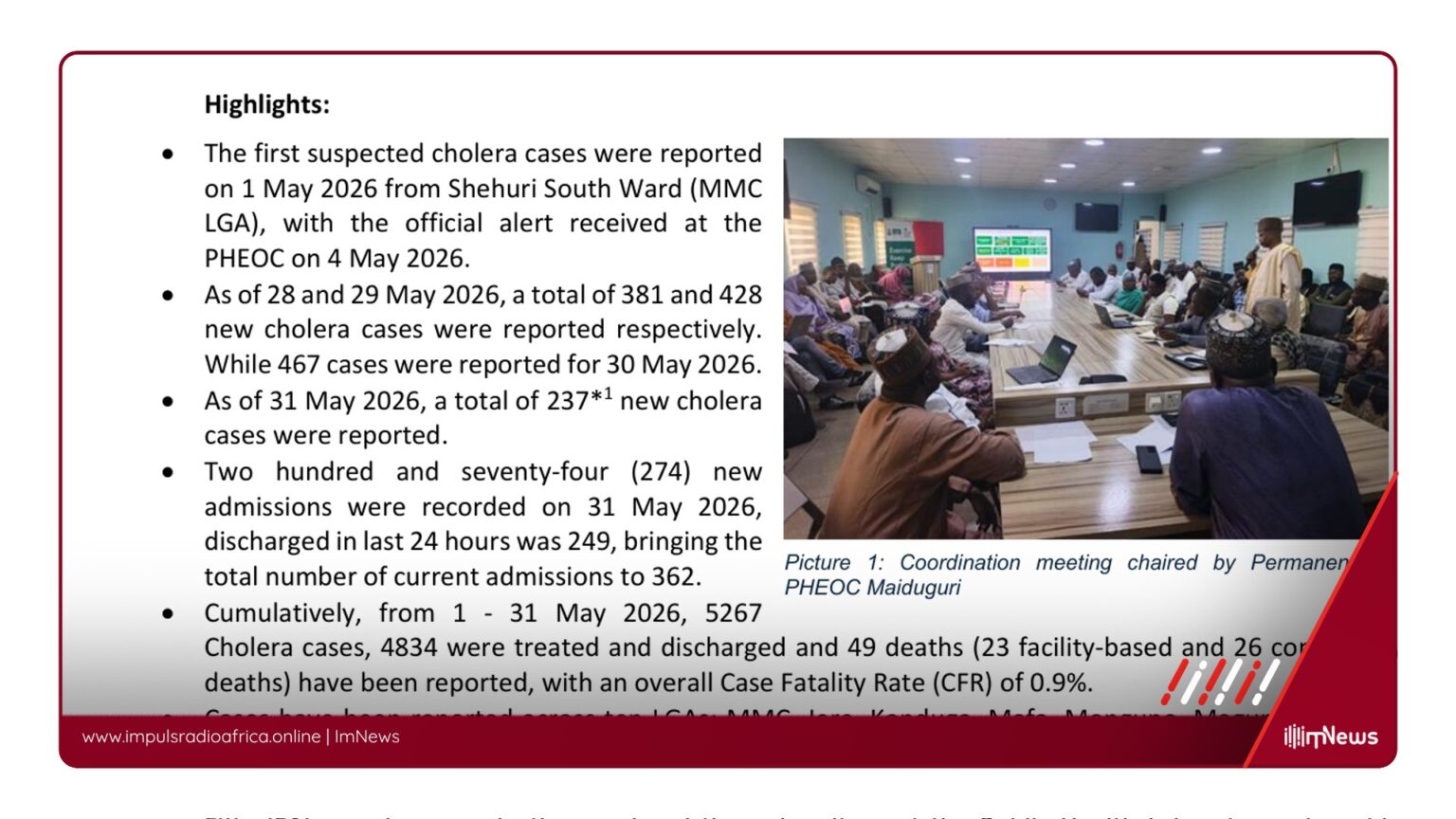
As of June 3, 2026, the State Ministry of Health reported 6,078 suspected cases and 65 deaths, marking a grim toll in a region already addressing the challenges of conflict and displacement.
The situation is particularly dire in Borno State, where the outbreak has been exacerbated by factors such as limited access to clean water, sanitation, and hygiene facilities.
The Health Cluster and the World Health Organization (WHO) have been closely monitoring the situation, providing updates on the response efforts and emphasizing the urgency of intervention.
International Medical Corps, one of the organizations supporting the response, has been active in seven of the 12 local government areas (LGAs) affected by the outbreak.
The organization has been working to provide essential healthcare services, including the establishment of Cholera Treatment Centers and oral rehydration points across the region.
The outbreak has also highlighted the importance of coordinated efforts among various agencies.
The Health Cluster’s coordinated response involves surveillance, laboratory testing, case management, water, sanitation, and hygiene (WASH) interventions, as well as risk communication and community engagement.
A systematic review on cholera in Lagos State offers a broader perspective on public health interventions that could be applied to the Borno State outbreak.
The review suggests that a One Health approach, which considers the interconnectedness of humans, animals, and the environment, is crucial in preventing and controlling infectious diseases like cholera.
Despite ongoing efforts, the scale of the outbreak remains a concern.
The Health Cluster’s Situation Report indicates that the response is ongoing, and additional resources and support are needed to address the crisis effectively.
The report also underscores the importance of community engagement in preventing further transmission.
UNICEF’s Humanitarian Flash Update on the cholera outbreak in Borno State emphasizes the particular vulnerability of children, who are at higher risk of complications from the disease.
The update highlights the need for targeted interventions to protect the most vulnerable populations.
As the outbreak continues to unfold, it is clear that a multifaceted approach is required to tackle the crisis effectively.
The situation in Borno State serves as a stark reminder of the challenges faced by regions affected by conflict and displacement, where the provision of basic healthcare services is often compromised.
The ongoing cholera outbreak in Borno State underscores the need for sustained efforts to improve access to clean water, sanitation, and hygiene facilities. It also highlights the importance of a coordinated, comprehensive response to infectious disease outbreaks, particularly in vulnerable populations.
As the toll of the outbreak rises, the international community and local authorities must continue to work together to provide the necessary support and resources to contain the spread of cholera and protect the health of the people of Borno State.
*Additional reporting by ImNews | Sources consulted: 5*
—
This original article was produced by the ImNews editorial team
Source: reliefweb
Source: Health Cluster