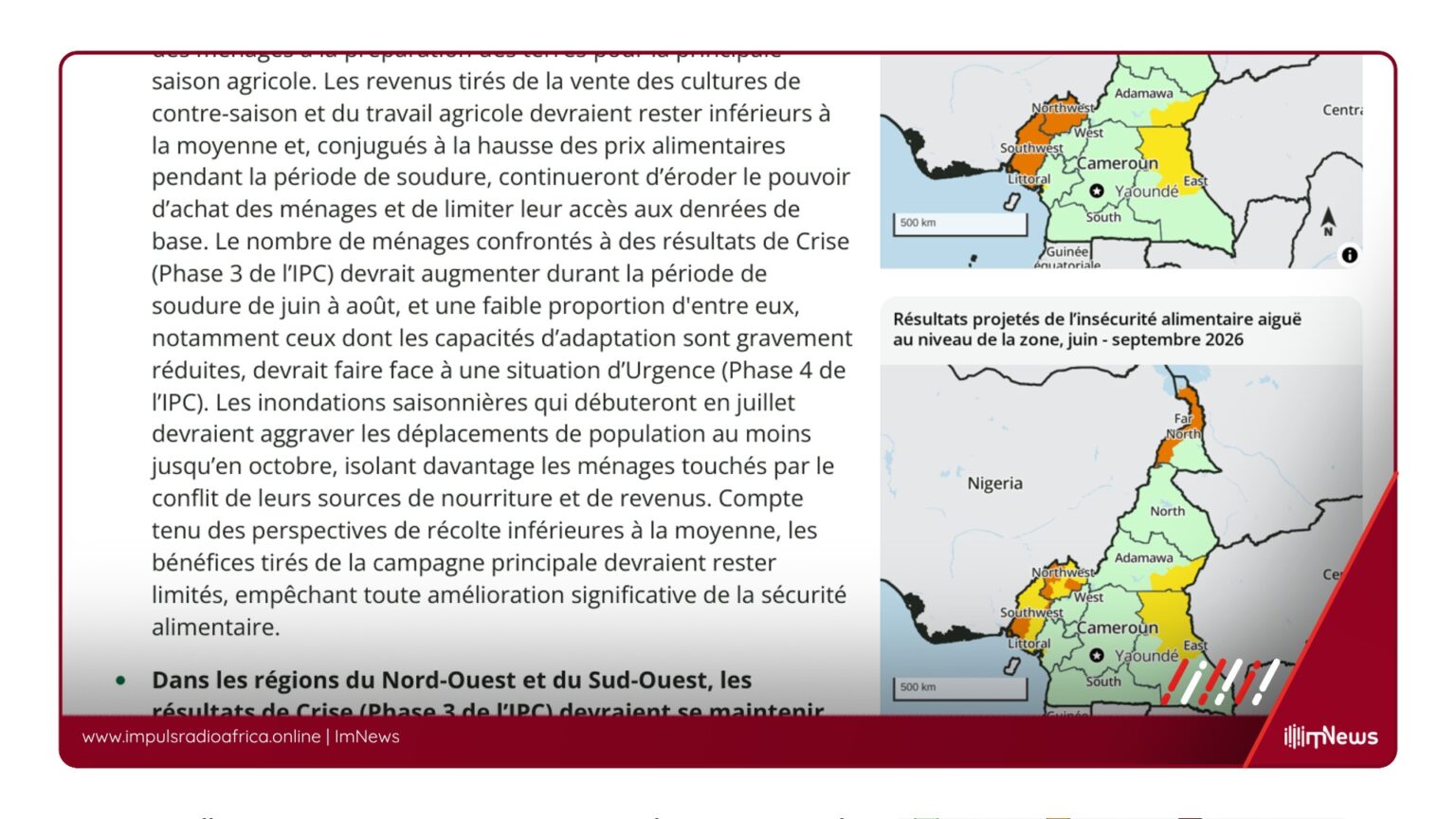
Lagos, Nigeria — The Far North Region of Cameroon is facing a protracted period of food insecurity, with predictions by the Famine Early Warning System Network (FEWS NET) indicating that the Crisis (Phase 3 of the IPC) will persist until September 2026 in the departments of Logone-et-Chari, Mayo-Sava, and Mayo-Tsanaga.
The situation is exacerbated by ongoing conflicts and insecurity, which have disrupted livelihoods and access to food, according to the Cameroon Food Security and Nutrition Analysis Unit (FSNAU).
The FSNAU reports that the Crisis (Phase 3 of the IPC) should remain widespread in the North-West and South-West regions until at least May 2026.
The World Food Programme (WFP) has been actively involved in relief efforts, assisting 103,850 people in May 2026, with 52% being female.
The organization distributed 238 metric tons of food, along with cash transfers amounting to USD 574,325.
However, the scale of the crisis is immense, with USD 41 million required in the next six months to meet the needs of affected populations.
The Cameroon Food Security and Nutrition Analysis Unit reports that the prices of basic cereals and legumes are currently 10 to 25 percent higher than last year and 20 to 50 percent above the five-year average. This increase, coupled with limited agricultural productivity, is eroding the purchasing power of households and restricting their access to basic foodstuffs.
The International Monetary Fund (IMF) has conducted an Article IV consultation with Cameroon, but the press release does not provide specific details on the findings or recommendations regarding the food security crisis. This lack of information raises concerns about the effectiveness of the government’s response to the crisis.
In the Far North, the situation is particularly dire, with FEWS NET predicting that the Crisis (Phase 3 of the IPC) will persist until September 2026.
The ongoing insecurity and recurrent Islamist violence are disrupting household participation in agricultural activities, further exacerbating the food insecurity situation.
The Cameroon Food Security and Nutrition Analysis Unit reports that the low prospects for the upcoming harvest will maintain households in a state of Crisis (Phase 3 of the IPC) in the conflict-affected areas. This is a concerning development, as the harvest season is a critical period for food availability and household livelihoods.
The international community, including the African Union, United Nations, IMF, and UNHCR, must provide robust support to the Cameroonian government and its people in their efforts to mitigate the crisis.
The food insecurity crisis in Cameroon’s Far North is a complex and multifaceted issue that requires a coordinated and comprehensive response.
As the situation continues to evolve, the urgency of providing emergency food assistance and addressing the root causes of the crisis cannot be overstated.
*Additional reporting by ImNews | Sources consulted: 5*
—
This original article was produced by the ImNews editorial team
Source: reliefweb
Source: Famine Early Warning System Network