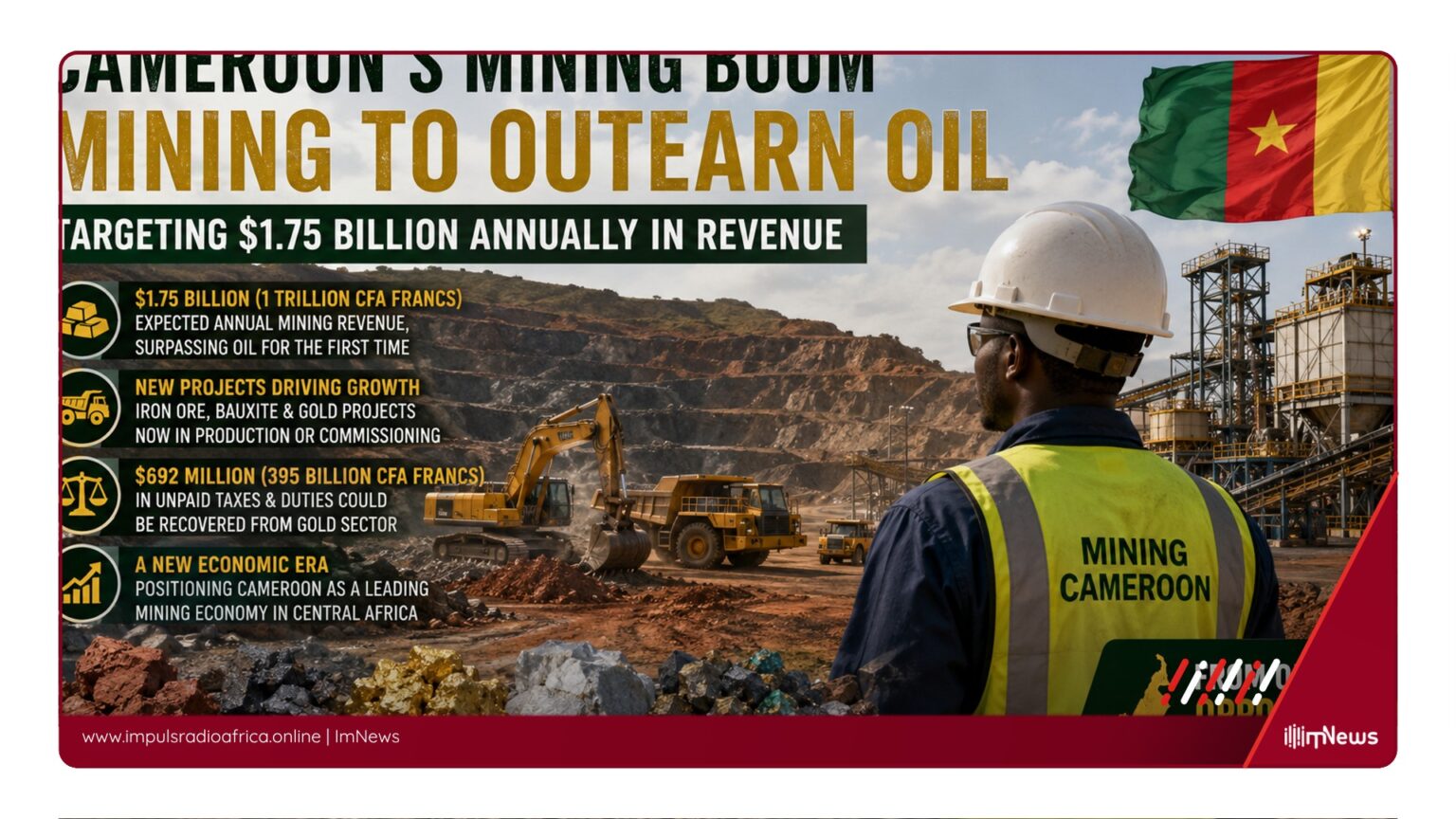
YAOUNDE, Cameroon — Cameroon aims to transform its mining sector into a primary revenue earner, with a target of surpassing the oil industry’s contribution to the national economy.
The government is counting on more than $1. 75 billion (1 trillion CFA francs) annually from new mining projects and efforts to formalize the gold trade. Currently, mining is a minor contributor to Cameroon’s economy.
However, if the government’s projections are realized, mining will become a more substantial source of state revenue than the oil sector, which has long underpinned government finances and foreign exchange earnings. Cameroon’s Mines Minister, Fuh Calistus Gentry, highlighted five key mining projects that are either in production or under commissioning. These include the Minim-Martap bauxite project, Bipindi Grand-Zambi and Kribi-Lobé iron ore developments, Bidzar marble project, and Colomine gold mine.
The government is also looking forward to advancing additional projects in iron ore and gold, set to take off in 2026. Among the most anticipated projects is Minim-Martap, a flagship bauxite development.
The mining agreement for the project was signed in 2024, covering an initial 20-year operation with a target to produce 99. 1 million tonnes of high-grade bauxite reserves annually. Simultaneously, the government is tackling the unregulated gold industry.
Authorities have identified over 200 illegal operators and initiated legal proceedings against 137 companies. They aim to recover gold that has been lost from official records, estimating that this could yield an additional $692 million (395 billion CFA francs) in tax and customs reassessments for 2026. Cameroon’s economic significance within the Central African Economic and Monetary Community (CEMAC) cannot be overstated.
As the largest economy in the six — country bloc, it accounts for over 40% of the region’s economic output.
The shift from oil to mining as a revenue source is vital, as the country’s fiscal revenue from oil has historically represented around 18. 4% of total fiscal revenue, despite the oil sector accounting for only about 2. 2% of GDP.
While the mining sector offers a promising alternative to oil, the challenges of ensuring full commercial production, reliable transport links, and effective enforcement of mining regulations remain critical to achieving the ambitious revenue targets.
*Additional reporting by ImNews | Sources consulted: 5*
—
This original article was produced by the ImNews editorial team
Source: Africa.businessinsider
Source: Ayodeji Adegboyega