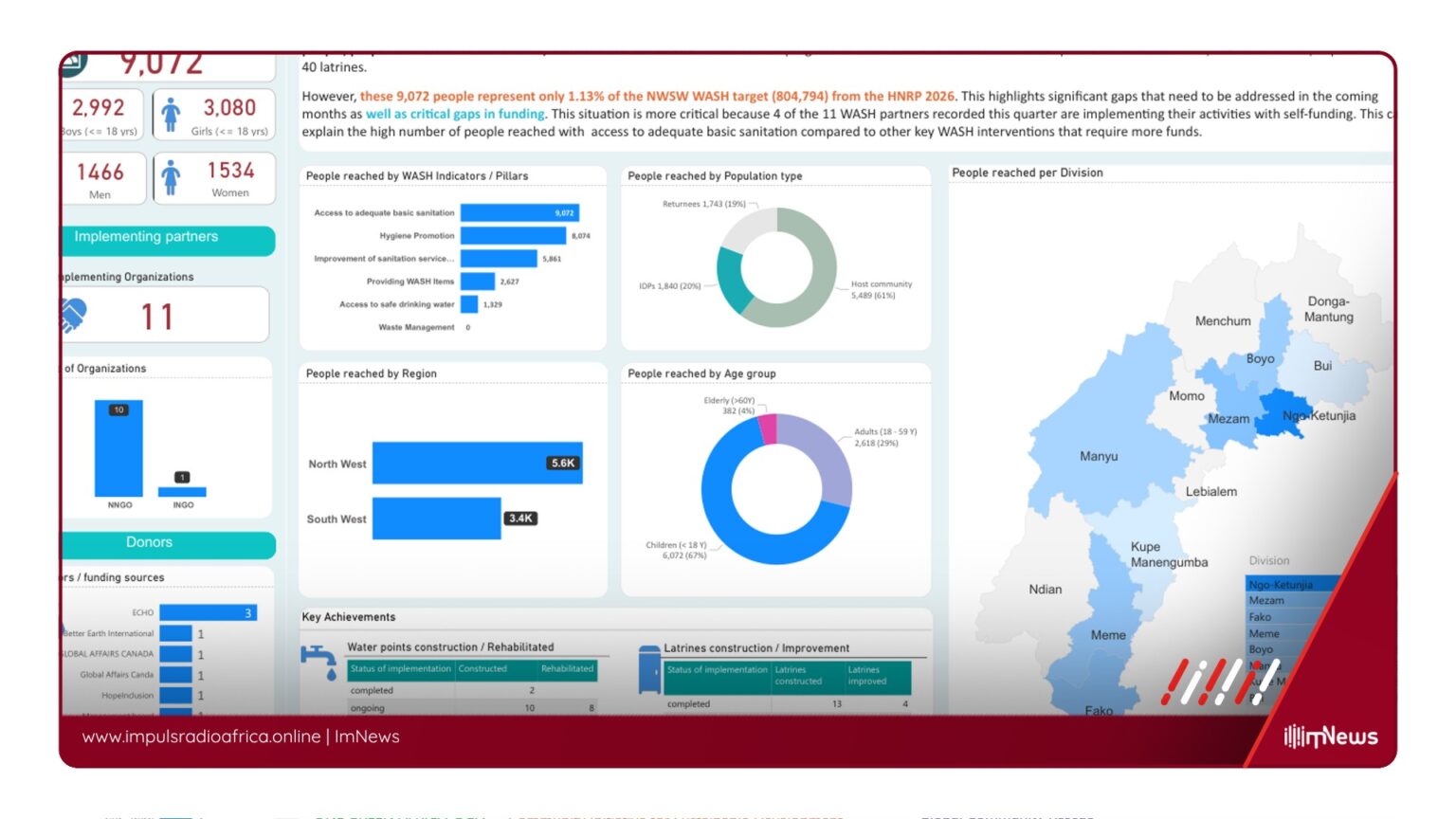
COTONOU, BENIN — The ongoing humanitarian crisis in Cameroon’s North-West and South-West (NWSW) regions has placed a critical emphasis on water, sanitation, and hygiene (WASH) needs, as indicated by the latest data from the WASH Cluster and the UN Children’s Fund (UNICEF). From January to March 2026, 11 WASH Cluster partners in these regions provided support to approximately 9,072 individuals, predominantly children.
The NWSW regions face severe WASH challenges, particularly in the realm of sanitation facilities and access to clean water.
In the North — West region, 25% of schools lack any sanitation facilities, with 55% of students and teachers utilizing open defecation, posing significant health risks, particularly for the most vulnerable.
The WASH Cluster’s efforts have focused on hygiene promotion, safe drinking water, and proper sanitation, including the rehabilitation of eight water points, the construction of twelve, and the improvement of forty latrines. Despite these interventions, the need for more substantial progress is evident, as these efforts reach only 1. 13% of the NWSW WASH target of 804,794 people, as outlined in the HNRP 2026.
The situation is further complicated by funding gaps, with four of the eleven WASH partners self — funding their activities. This reality underscores the critical need for increased financial support to expand WASH interventions across the region.
The WASH Cluster’s comprehensive approach is vital, yet it faces significant challenges in reaching all affected areas, particularly in the Momo division, where ongoing attacks on education hinder progress.
The broader humanitarian crisis in Cameroon, marked by conflict, violence, insecurity, climate — related shocks, and health emergencies, necessitates a more coordinated and comprehensive response from the international community.
The WASH Cluster’s commitment to providing assistance in the NWSW regions is commendable, but the scale of the crisis demands continued support. Sustainable solutions, including the construction and rehabilitation of sanitation facilities, are crucial to alleviating the WASH crisis and protecting the health and dignity of the affected populations.
*Additional reporting by ImNews | Sources consulted: 5*
—
This original article was produced by the ImNews editorial team
Source: reliefweb
Source: UN Children's Fund