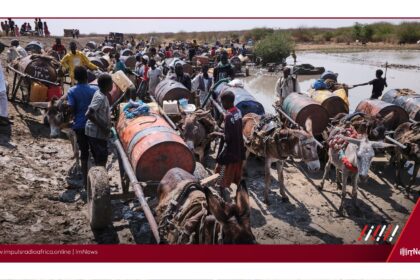


As of June 2026, over 1. 01 million people were internally displaced in the province, with the situation further exacerbated by the spread of the Ebola virus in the health zone of Miti-Murhesa.
The DRC has long been affected by conflict and humanitarian crises, particularly in the eastern part of the country.
The presence of armed groups like the Alliance Fleuve Congo/Mouvement du 23 Mars (AFC/M23) and ongoing violence have led to displacement and suffering for the local population.
The region has also been impacted by climate shocks and recurrent epidemics, further exacerbating the humanitarian situation. Humanitarian funding reports indicate a significant gap between needs and the resources allocated to meet those needs.
Currently, only 48% of the required funding is being met, leaving millions in need of assistance.
According to humanitarian funding statistics, approximately 18. 5 million people in the DRC are in need of assistance, with 10.
7 million targeted for support and 4.
3 million actually receiving aid.
The UN Office for the Coordination of Humanitarian Affairs (OCHA) has provided detailed reports on the situation, highlighting the challenges faced by various clusters, such as food security, health, and nutrition.
However, the actual impact of the reported aid and the effectiveness of these clusters are not explicitly compared across sources.
In the Sud — Kivu province, the situation is dire.
The ongoing conflict has forced tens of thousands of families to flee their homes, with many living in precarious conditions, taking shelter in schools, churches, or in the open.
The resurgence of conflict in the province has led to a sharp rise in grave violations against children, including killings, recruitment by armed groups, and sexual violence.
The Ebola virus epidemic, which extended to the Sud — Kivu province, has added another layer of complexity to the humanitarian crisis. Despite the absence of active cases, Médecins Sans Frontières (MSF) has maintained its prevention efforts, establishing two centers for Ebola treatment in the province.
The situation in the Sud — Kivu province underscores the need for a coordinated and effective response to the multiple challenges facing the DRC. While the UN and other humanitarian organizations are working to provide assistance, the gap between needs and resources remains significant. What happens next in the Sud-Kivu province remains to be seen.
The ongoing conflict, the Ebola outbreak, and the inadequate response to the humanitarian crisis require urgent attention and a robust, multi — faceted approach to ensure the well-being of the affected population.
*Additional reporting by ImNews | Sources consulted: 5*
—
This original article was produced by the ImNews editorial team
Source: reliefweb
Source: UN Office for the Coordination of Humanitarian Affairs