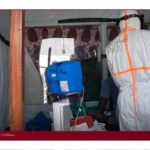
In the Democratic Republic of the Congo (DRC), an outbreak of Bundibugyo Ebola Virus Disease (BEVD) has been declared, with the Africa Centres for Disease Control and Prevention (Africa CDC) responding with interim guidelines for enhanced surveillance at points of entry.
The outbreak, which originated in the mining — intensive Mongbwalu Health Zone, has spread to neighboring provinces and across the border into Uganda, prompting the WHO to declare a Public Health Emergency of International Concern (PHEIC) and Africa CDC to declare a Public Health Emergency of Continental Security (PHECS).
As of 8 June 2026, the DRC reported 608 confirmed cases and 102 deaths, with 23 recoveries. Uganda has reported 19 confirmed cases and two deaths.
The Africa CDC’s guidelines focus on strengthening surveillance, infection prevention, and control measures at Points of Entry (PoEs), including airports, seaports, and land border crossings, to prevent the geographical spread of Bundibugyo EVD.
The guidelines emphasize standardized screening, timely case detection, contact tracing, and cross — border coordination as key components of the enhanced surveillance strategy.
The Africa CDC underscores the critical role PoEs play in curbing the spread of the virus, with efforts also including strengthening surveillance, contact tracing, clinical preparedness, supply delivery, and community engagement.
The situation underscores the importance of robust surveillance and rapid response mechanisms in combating infectious diseases.
As the Africa CDC and its partners implement the interim guidelines, the hope is that these efforts will help prevent further spread of Bundibugyo EVD and save lives in the region.
*Additional reporting by ImNews | Sources consulted: 5*
—
This original article was produced by the ImNews editorial team
Source: reliefweb
Source: Africa Centres for Disease Control and Prevention