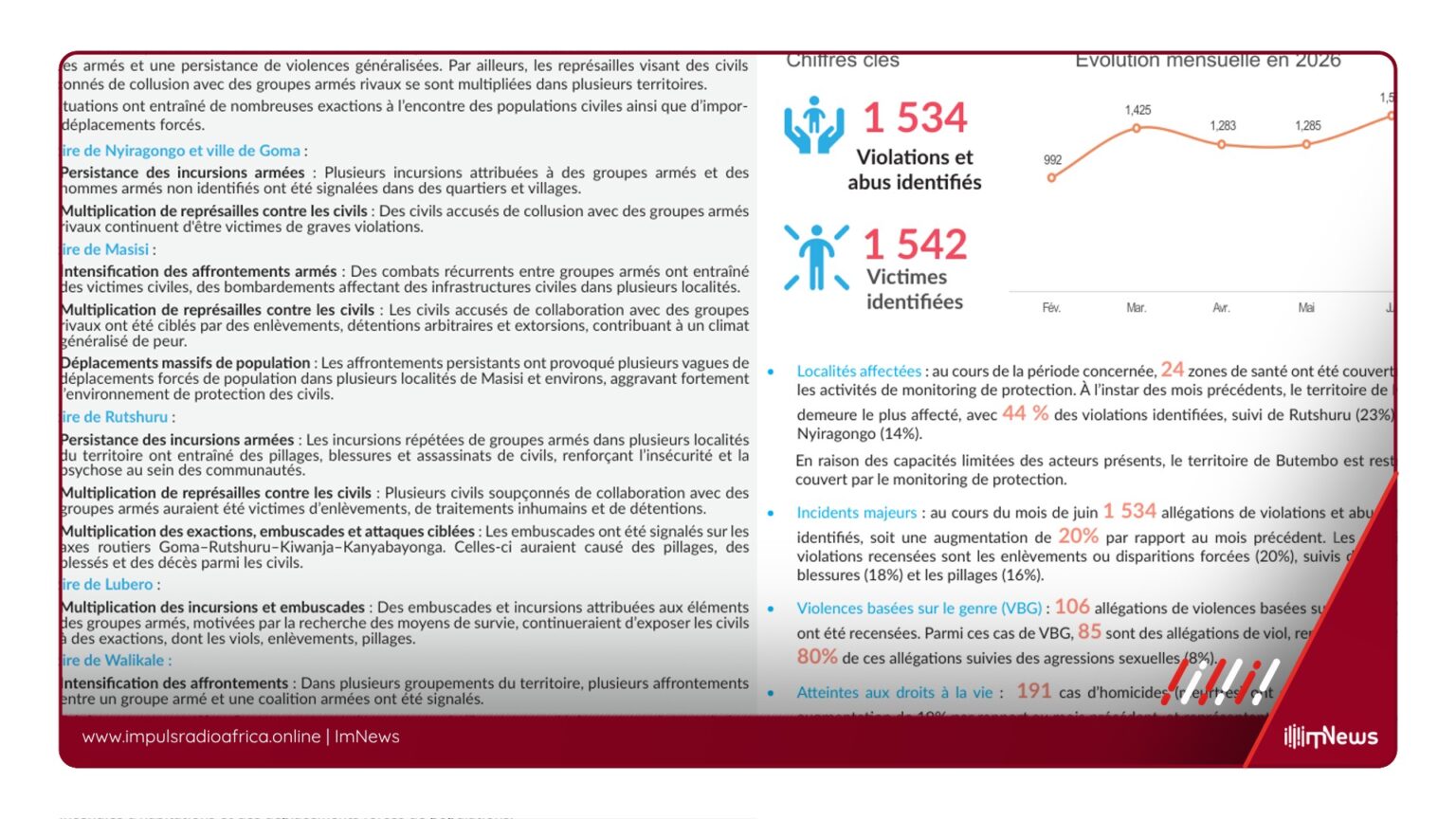
Kinshasa, DRC – July 16, 2026 – The Democratic Republic of Congo’s (DRC) Nord-Kivu province faced a concerning situation in June 2026, characterized by intensifying armed conflicts, civilian bombings, and forced displacements.
These developments have been accompanied by a rise in severe protection violations, including abductions, executions, arbitrary detentions, and sexual violence, predominantly targeting individuals suspected of aiding rival armed groups.
The ongoing violence has significantly curtailed access to livelihoods and essential services, deepening the humanitarian crisis in the region.
Armed conflicts have surged, involving factions such as the FARDC, AFC/M23, and community-based armed groups in Ituri, leading to bombings and forced displacements across several territories.
Protection violations, as detailed in the UNICEF report, emphasize the need for child protection amidst the Ebola epidemic, which has further compromised the protection environment in DRC.
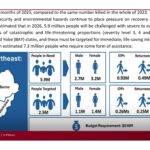
The HNRP 2026 report indicates a heightened risk of protection in Nord-Kivu, particularly for vulnerable populations, including those with disabilities.
Addressing the specific needs of these groups is crucial, as they are disproportionately affected by the ongoing conflict and humanitarian crisis.
The report calls for enhanced humanitarian assistance and protection measures, emphasizing the necessity of ensuring access to healthcare, education, and livelihood support.
The international community is urged to continue supporting the DRC government and humanitarian organizations in their efforts to assist affected populations.
As the situation in Nord-Kivu remains critical, the international community’s vigilance and support are essential to mitigate the impacts of the ongoing conflict and humanitarian crisis.
*Additional reporting by ImNews | Sources consulted: 3*
—
This original article was produced by the ImNews editorial team
Source: reliefweb
Source: Protection Cluster