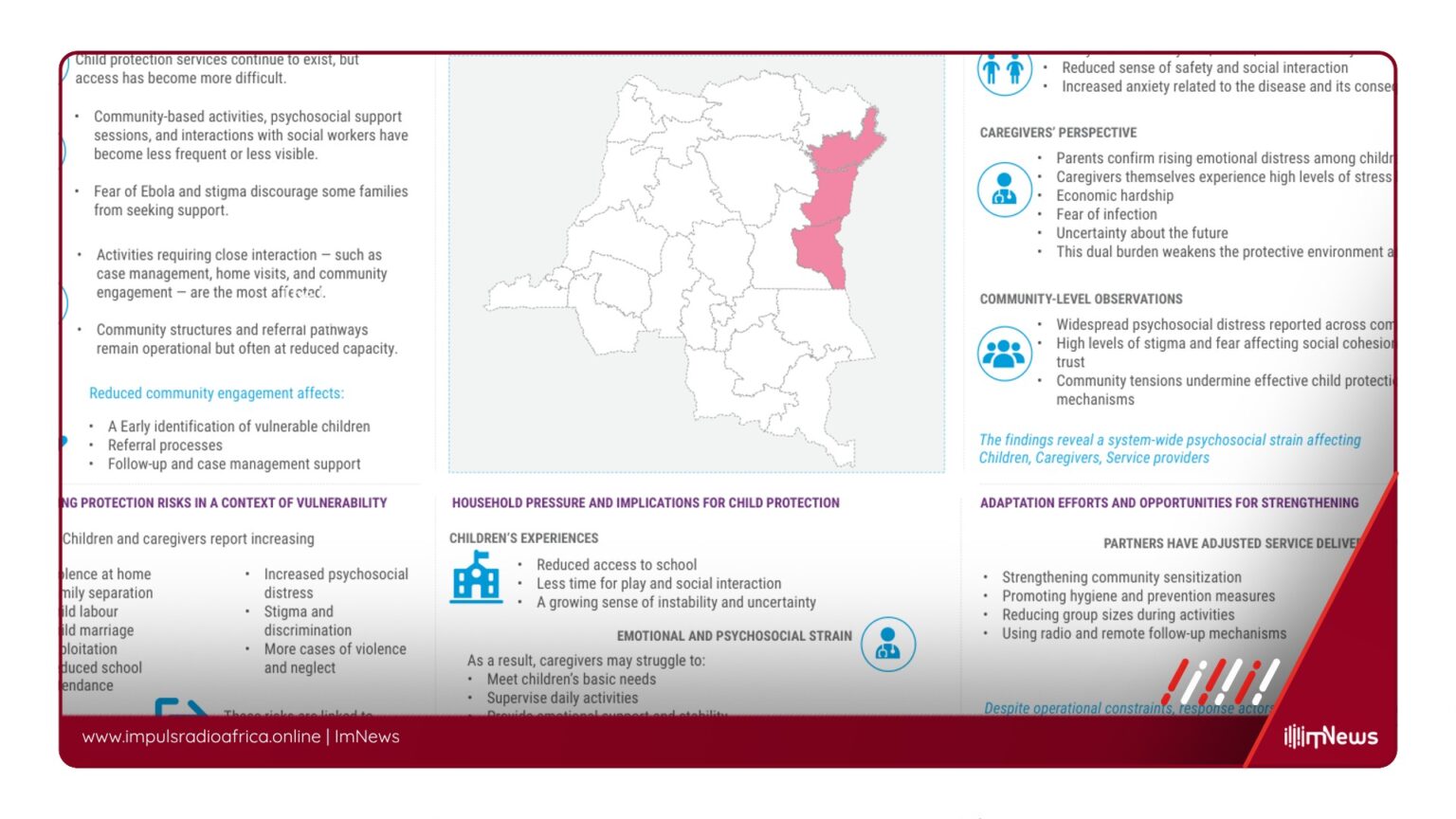
The Ebola outbreak, which has affected 29 health zones spanning approximately 1,000 kilometers from Aru in Ituri province to Miti Murhesa in South Kivu, has resulted in 676 reported cases and 136 deaths as of June 2026, according to DRC health authorities. UNICEF has warned that the high mobility of the population in the affected region and the increased vulnerability of children, many of whom are malnourished and unvaccinated, pose a critical challenge to child protection efforts. Save the Children reported at least two children who have lost both parents to the Ebola outbreak, emphasizing the heightened protection risks faced by children in the affected area.
The World Health Organization (WHO) has highlighted the scale of the outbreak, noting the need for community engagement to control the spread of the disease and protect children. UNICEF has further highlighted the vulnerability of children, who are not only at risk from Ebola but also face indirect consequences such as disruptions of essential health and nutrition services, loss of parents, and increased protection risks.
The response to the outbreak has been hampered by insecurity, access constraints, and community resistance, which continue to disrupt operations on the ground.
Safe and dignified burials remain difficult to organize, and recurrent security incidents and border closures keep disrupting both access and logistics. KICKER: As the Ebola outbreak in the DRC escalates, the urgency to protect and support children and families becomes more critical.
The situation underscores the need for comprehensive response strategies that prioritize child protection and ensure the continuity of essential services for vulnerable populations.
*Additional reporting by ImNews | Sources consulted: 5*
—
This original article was produced by the ImNews editorial team
Source: reliefweb
Source: Child Protection Area of Responsibility