Bunia, Democratic Republic of the Congo — In the midst of the world’s largest Ebola outbreak in the eastern Democratic Republic of the Congo (DRC), up to 20,000 people are being forced to rely on a single water source within an Ebola treatment center in Bunia. This desperate situation, as reported by Oxfam, highlights the severe lack of clean water and sanitation support at health centers, which are crucial in preventing the spread of the virus. Dr.
Manenji Mangundu, Oxfam Country Director for the DRC, warns, “Without clean water and functioning sanitation, the basic conditions needed to halt transmission of the Ebola virus simply do not exist. When families are forced to collect water from inside treatment compounds because there is nowhere else to go, this is no longer a public health crisis with a water problem. It is a public health crisis with a lit fuse. “.
The DRC’s Ministry of Health has confirmed over 2,011 Ebola cases with 754 deaths across 42 health zones in eastern DRC. Despite these alarming figures, the response to the outbreak has lagged behind, with around 70 new cases reported nearly every day.
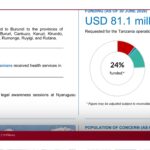
The virus is also spreading beyond the initial epicenter, reaching areas such as Tshopo, Haut — Uélé provinces, and Kisangani, a city of over 1. 6 million people. NGO community engagement activities, which are vital for containing the outbreak, have reached only 10 per cent coverage due to lack of funding.
This is a fraction of what is needed, according to the Centre for Diseases Prevention (CDC), which emphasizes the importance of community engagement and trust-building in the response. Oxfam is calling for urgent investment to restore safe water and better equip health facilities and communities.
The organization urgently needs €10 million in funding to restore basic water and sanitation services in affected health zones before the outbreak spirals further.
As the situation in Bunia underscores, the response to the Ebola outbreak in the DRC requires a comprehensive and community — centric approach.
The WHO and other agencies must continue to monitor the situation closely and work to address the immediate needs of those affected by the outbreak, ensuring that the most basic needs are met in areas where health facilities are overwhelmed and resources are stretched thin.
*Additional reporting by ImNews | Sources consulted: 5*
—
This original article was produced by the ImNews editorial team
Source: reliefweb
Source: Oxfam