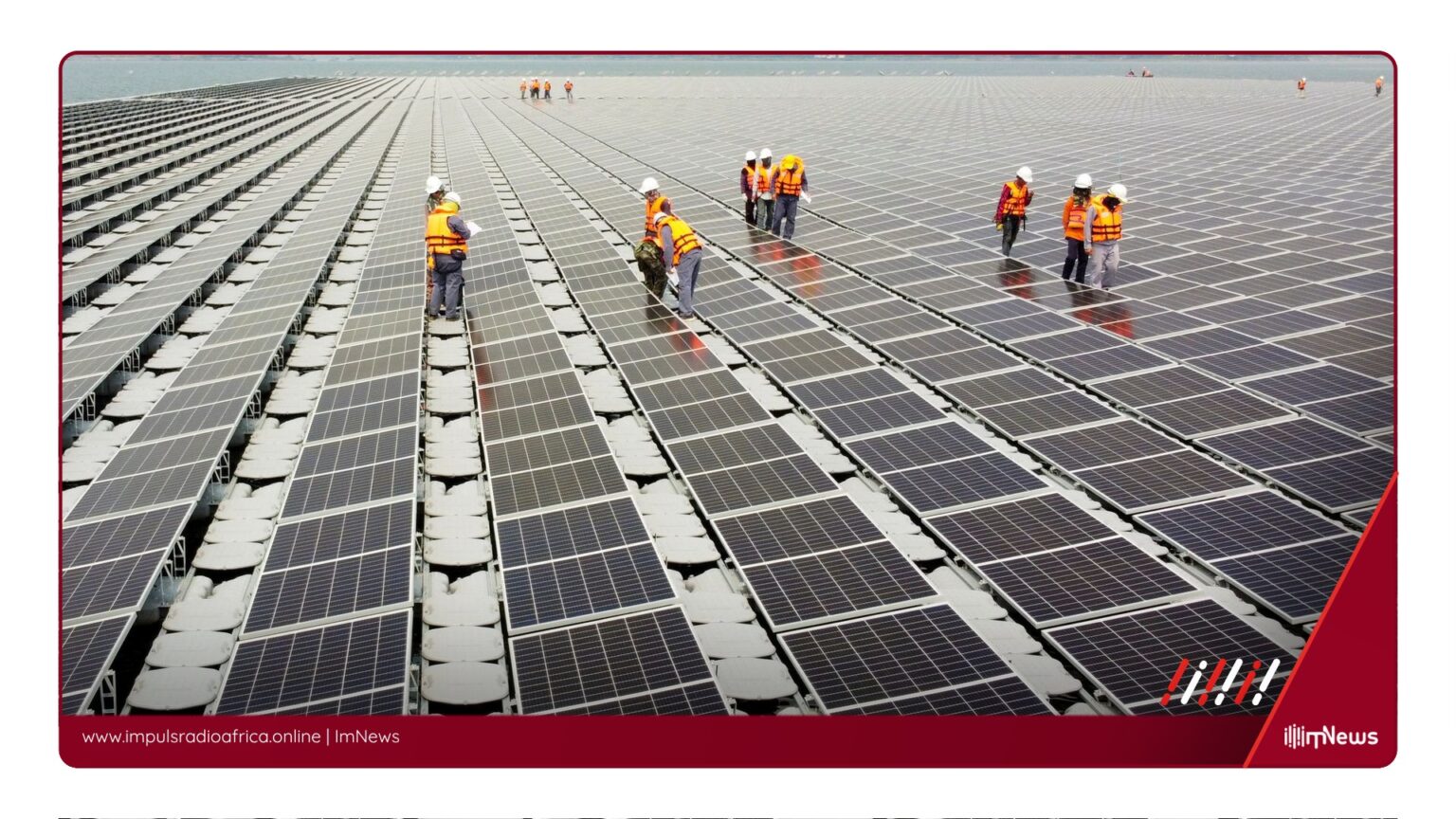
Behind the project is a mix of local and private — sector energy investors, led by Etavi Renewables, a Botswana-based renewable energy developer partly owned by Shumba Energy Ltd.
The company will develop the 100-megawatt Tati Solar Project, which is expected to begin commercial operations in 2027. Rand Merchant Bank, a unit of South Africa’s FirstRand Ltd. Acted as lead arranger for the $100 million financing package.
The project will sell electricity into the Southern African Power Pool, a regional market that allows utilities and independent power producers to trade power across borders. Regional power market The Southern African Power Pool serves about 360 million people across 12 countries, including Botswana, South Africa and Mozambique, and has an operating capacity of about 47. 7 gigawatts, making it one of Africa’s most important electricity trading platforms.
The pool is widely regarded as the continent’s most advanced regional power market and has significant untapped potential for variable renewable energy, including solar and wind.
The expansion of renewable power across southern Africa comes amid rising demand, drought — hit hydropower, ageing plants and weak grids, increasing the need for storage systems such as batteries and pumped hydro to stabilise supply and support grid reliability. For Botswana, the Tati project comes as the country works to ease pressure on its power system.
The Southern African country has faced supply constraints linked to ageing coal plants, generation shortfalls and reduced imports from neighbouring South Africa.
The project is therefore part of a broader effort to reduce dependence on imported electricity, diversify generation and position Botswana as a potential supplier into a power — hungry regional market. “We arranged and underwrote the entire financing package,” Siyanda Mflathelwa, RMB’s head of infrastructure sector solutions, said in an interview. “We found a financing structure that is commercially viable at utility scale for a pure market view into the SAPP and that’s great, because it increases the volumes that are now traded on the SAPP day-ahead market.
” Solar financing grows Botswana joins a growing list of African countries using solar financing to address electricity constraints. Across the continent, power shortages have pushed governments and lenders to back solar, storage and grid projects as population growth, mining, data centres and industrial demand increase pressure on electricity systems.
In Zambia, solar projects backed through the World Bank Group’s Scaling Solar programme have helped draw private investors into grid-connected generation, while the country has also turned to new solar capacity after drought weakened hydropower supply. Similarly, Egypt has attracted large-scale renewable finance, including African Development Bank backing for a 1-gigawatt solar plant with battery storage and a recent EU-backed package of up to €690 million to upgrade its electricity grid and connect 22 gigawatts of renewable energy capacity by 2030. South Africa, the continent’s largest solar market, has also relied on private investment after years of electricity shortages forced reforms that allowed companies to build generation capacity and sell power to the grid.
Still, Tati’s model differs from many renewable energy projects on the continent because it is being developed with a direct view into regional power trading, rather than solely to serve a domestic utility. “We are beginning to see investors convinced that there is sufficient demand to justify capital investments of this magnitude,” said Mflathelwa, citing the Tati Solar Project as an example.
A successful rollout could strengthen investor confidence in merchant — style renewable energy projects in Africa, where developers often face weak utilities, currency risks, high borrowing costs and limited transmission capacity.
*Additional reporting by ImNews | Sources consulted: 5*
—
This original article was produced by the ImNews editorial team
Source: Africa.businessinsider
Source: Olamilekan Okebiorun