
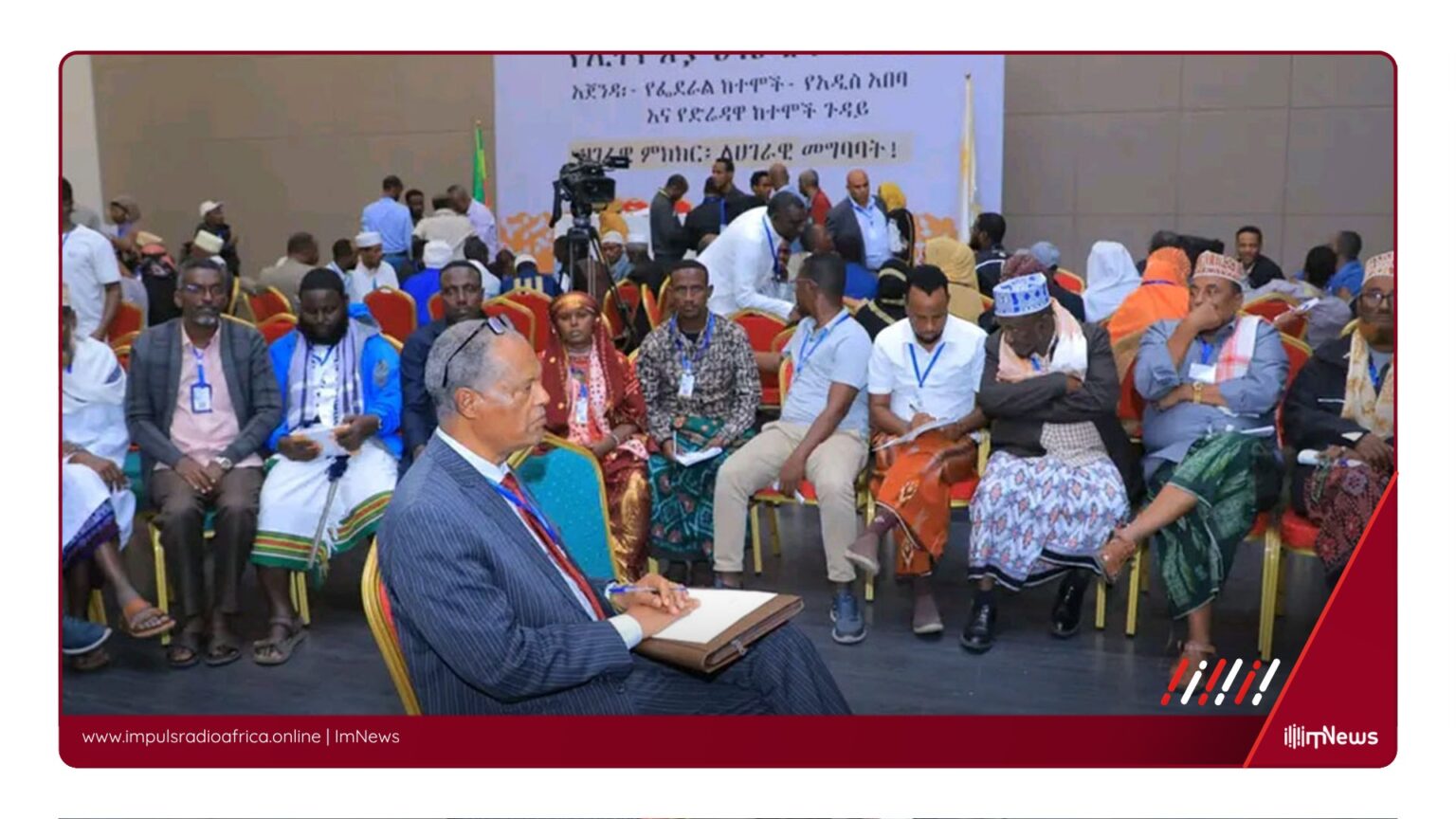
Addis Ababa, Ethiopia — The Ethiopian National Dialogue Commission (ENDC) has announced a significant breakthrough in its efforts to resolve long-standing issues affecting the nation. After months of discussions involving over 200,000 participants from various sectors of society, the commission disclosed that a consensus has been reached on all eight major agendas, including the contentious status of Addis Ababa.
The Addis Ababa question, which has been a point of contention for years, revolves around whether the capital city will serve as both the seat of the federal government and the seat of the Oromia regional administration.
According to the ENDC, participants achieved a consensus on this matter, signaling a potential resolution to a key issue that has contributed to the country’s political and social unrest.
In addition to the Addis Ababa question, two additional thematic working groups reached a consensus on their recommended proposals regarding government structure, form, political system, and corruption and good governance. This development suggests that the ENDC is making substantial progress in addressing a wide range of challenges facing Ethiopia.
However, the process was not without its setbacks. Officials commented on the matter.
The walkout, which was triggered by what delegates termed a last — minute attempt by ruling party officials to impose a pre-determined status for the capital, highlights the complexities and sensitivities involved in the national dialogue process.
Despite the challenges, the ENDC has made significant strides in its efforts to foster national unity and address the root causes of Ethiopia’s social and political unrest.
The commission’s announcement of a consensus on all eight major agendas is a positive development that could pave the way for a more stable and prosperous Ethiopia.
The consensus reached on the Addis Ababa question is particularly significant, as it addresses a long — standing source of tension between the federal government and the Oromia regional administration.
If implemented effectively, the agreement could contribute to a more balanced and inclusive governance structure in Ethiopia. Moving forward, the ENDC will work on refining the proposed proposals and recommendations to ensure that they are actionable and aligned with the needs of the Ethiopian people.
The success of this process will depend on the commission’s ability to navigate the complex political landscape and ensure that the voices of all stakeholders are heard and considered.
As Ethiopia continues to grapple with its challenges, the national dialogue process remains a critical tool for fostering dialogue, building consensus, and ultimately achieving lasting peace and stability.
The ENDC’s announcement of a consensus on the Addis Ababa question is a step in the right direction, and it is hoped that the commission will continue to make progress in its efforts to address the nation’s most pressing issues.
*Additional reporting by ImNews | Sources consulted: 5*
—
This original article was produced by the ImNews editorial team
Source: thereporterethiopia
Source: Nardos Yoseph