

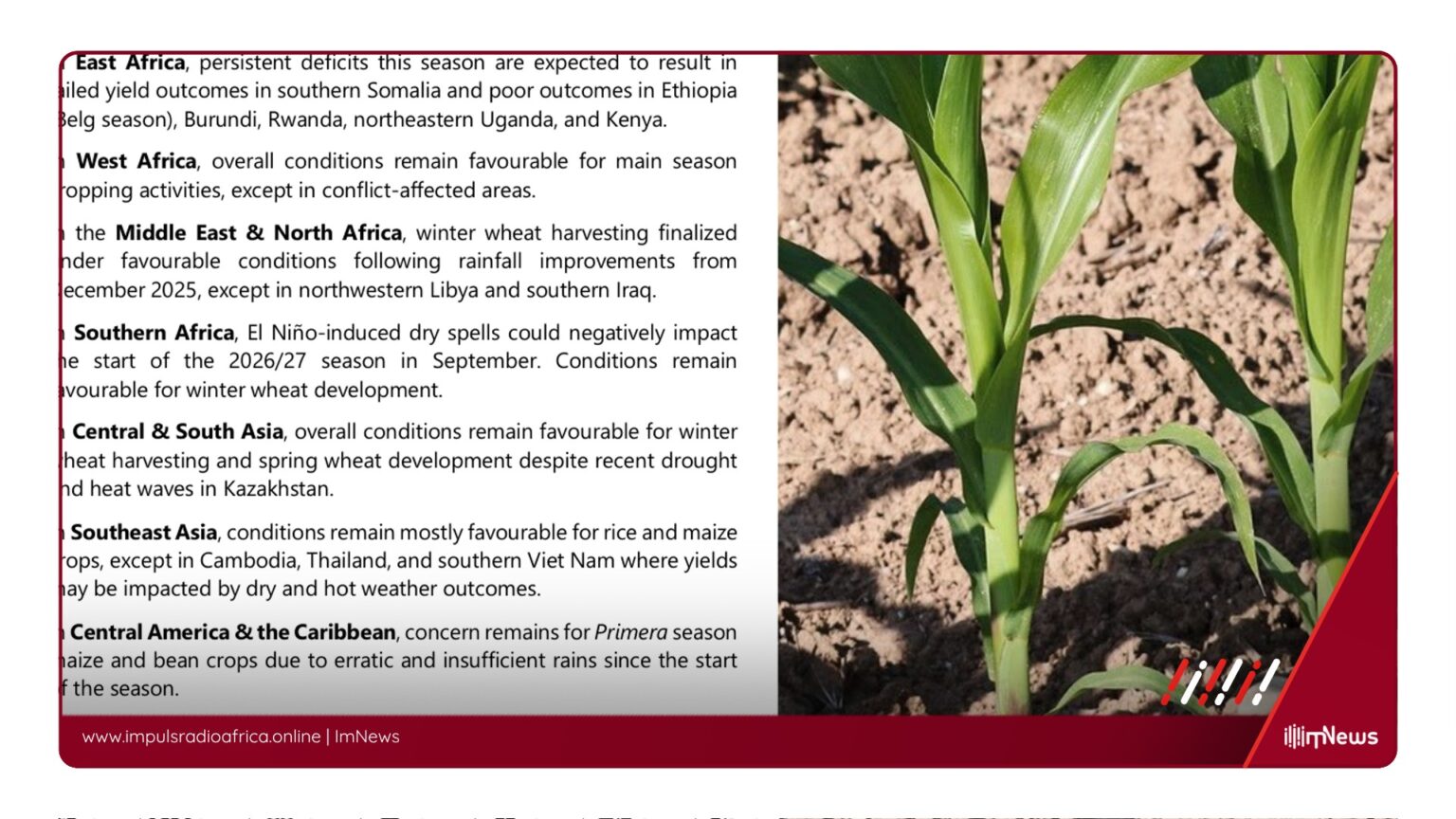
The GEOGLAM Crop Monitor has issued an urgent alert for East Africa, forecasting the failure of crop yields in southern Somalia and subpar outcomes in Ethiopia, Kenya, Burundi, Rwanda, and northeastern Uganda due to ongoing drought and excessive rainfall. These regions are addressing the repercussions of successive failed rainy seasons, casting a shadow over food security and agricultural productivity.
In a stark contrast, West Africa is witnessing favorable conditions for main cropping activities, though concerns persist in conflict — affected areas.
The Middle East and North Africa have completed the winter wheat harvest under favorable conditions, while Southern Africa is bracing for potential El Niño-induced dry spells that could disrupt the upcoming season.
The GEOGLAM report, released on August 6th, reveals that heavy rains in parts of northern East Africa have caused flooding, which in turn has disrupted crop development. Dry seasonal conditions in the south are anticipated to lead to low yields in Kenya and Somalia, intensifying an already critical situation.
In Somalia and Ethiopia, the impact of consecutive failed rainy seasons has been compounded by the current emergency, with over 6. 5 million people — approximately one in four Somalis — facing severe acute food insecurity, as reported by the Integrated Food Security Phase Classification (IPC).
The GEOGLAM Crop Monitor predicts that as of July 28th, 2026, the East African region will experience failed yield outcomes in southern Somalia and poor outcomes in the mentioned countries, due to the mixed impact of heavy rains in the north and dry conditions in the south.
In West Africa, the general agro — climatic conditions are supportive of successful harvests, a stark difference from the challenges faced by East Africa. This discrepancy underscores the varied effects of climate change on agricultural productivity across the continent.
The region’s poor yields could lead to a rise in food prices and shortages, affecting both the local population and global food security. East Africa’s role as a major producer and exporter of agricultural products makes the situation of particular concern on a global scale.
As the GEOGLAM Crop Monitor serves as a crucial tool for early warning on crop conditions and potential yield outcomes, it is clear that the current situation in East Africa underscores the imperative for urgent action. With the next harvest season on the horizon, stakeholders must collaborate to mitigate risks and safeguard the region’s food supply.
*Additional reporting by ImNews | Sources consulted: 5*
—
This original article was produced by the ImNews editorial team
Source: reliefweb
Source: GEOGLAM Crop Monitor