Humanitarian Partners’Presence in Eastern Chad Detailed in OCHA Infographic N’Djamena, Chad – The UN Office for the Coordination of Humanitarian Affairs (OCHA) has provided a detailed overview of the physical presence of humanitarian partners in Eastern Chad through an infographic released on May 4, 2026.
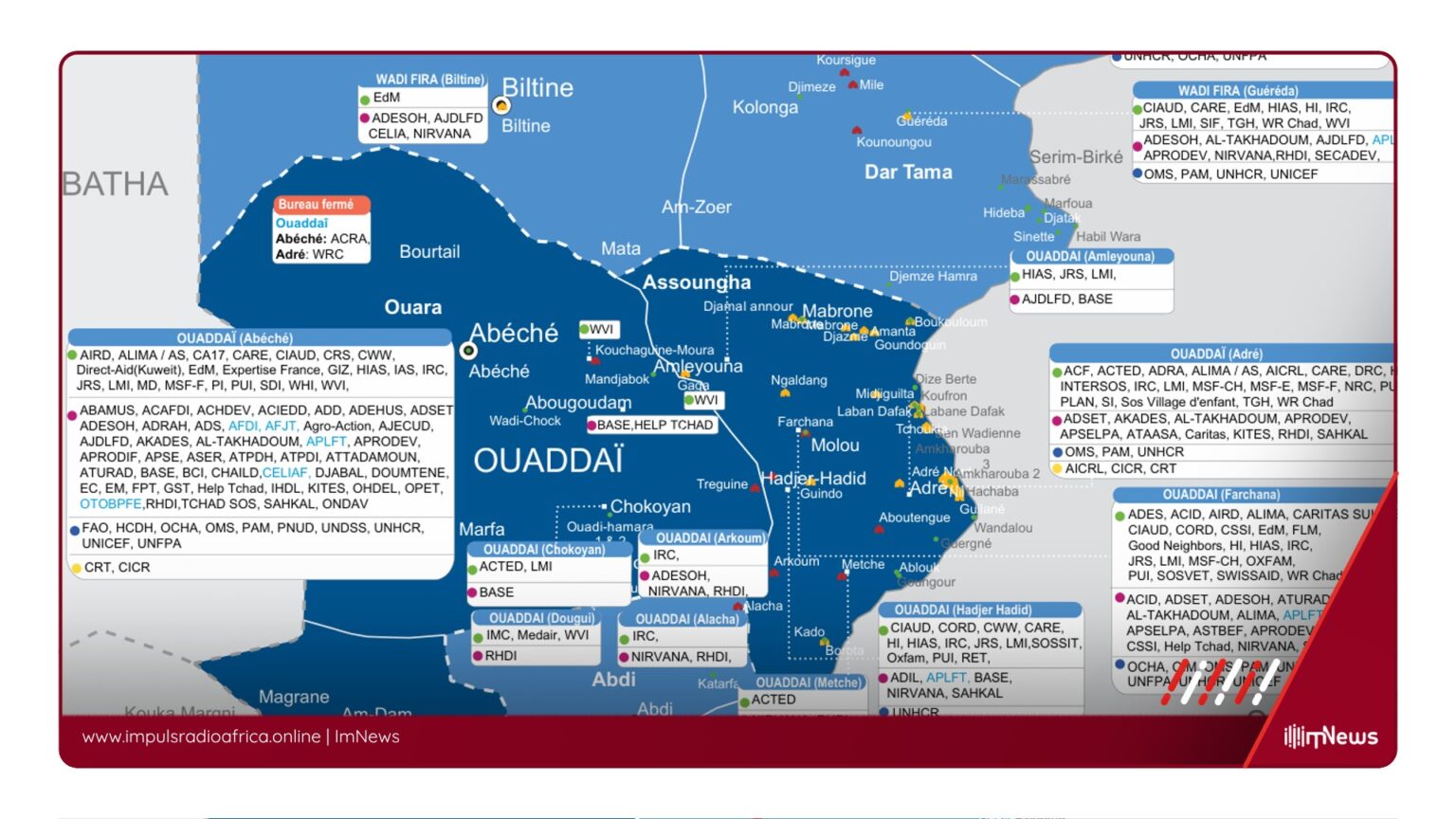
The infographic, titled “Tchad-Présence physique des partenaires à l’Est, “serves as a comprehensive guide to the locations of partner offices and the distribution of aid in the region.
The infographic highlights the ongoing humanitarian challenges faced by Chad, particularly in the eastern provinces.
The country has been addressing various issues, including conflict, food insecurity, and displacement, which have led to the need for extensive humanitarian assistance.
According to the infographic, the presence of humanitarian partners in Eastern Chad is crucial for providing aid and support to affected populations.
The map and information provided offer a visual representation of the distribution of these partners, which could be used to assess the effectiveness of aid distribution and coordination efforts.
The infographic indicates that the Office of the United Nations High Commissioner for Refugees (UNHCR) has been instrumental in assisting nearly 250,000 Sudanese refugees from the Darfur region, hosted in twelve refugee camps across the eastern regions of Chad.
The UNHCR has established its presence in eastern Chad since 2003, operating a head office in N’Djamena, a sub-office in Abéché, and six field offices in Bahaï, Farchana, Goz Beïda, Guereda, Iriba, Koukou, as well as one antenna office in Amleyouna.
Furthermore, the infographic shows that in 2026, approximately 4.
5 million people in Chad will require humanitarian assistance, a significant decrease from over 7 million in 2025. This decrease is attributed to a methodological revision focusing on the areas most affected by shocks rather than an improvement in the situation.
The infographic also points out the deteriorating food security situation in Chad, which is being exacerbated by the effects of the refugee influx and conflict.
In eastern provinces such as Ennedi — Est, Wadi Fira, Ouaddaï, and Sila, food insecurity outcomes are expected to persist, with refugees remaining largely dependent on food assistance, while host communities see their consumption deficits worsen.
The presence of humanitarian partners in Eastern Chad is essential for addressing these challenges.
However, the infographic does not provide any qualitative analysis or comments from the partners themselves, leaving the interpretation of the data to the viewer.
In conclusion, the OCHA infographic offers a valuable insight into the distribution of humanitarian partners in Eastern Chad. While it provides a clear picture of the aid landscape in the region, it also underscores the need for further analysis and dialogue to ensure that the aid provided is effectively reaching those in need.
*Additional reporting by ImNews | Sources consulted: 5*
—
This original article was produced by the ImNews editorial team
Source: reliefweb
Source: UN Office for the Coordination of Humanitarian Affairs