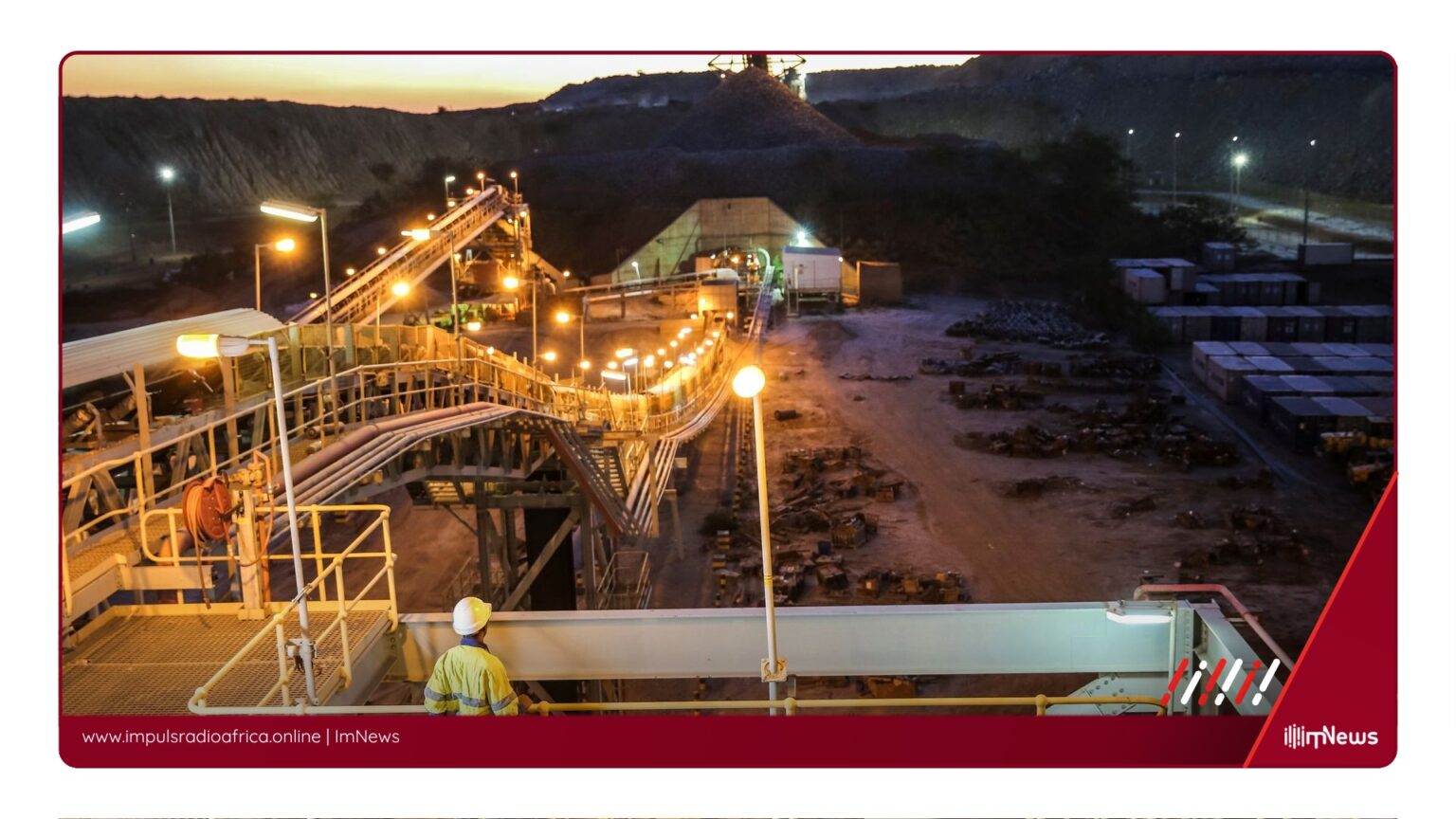
In a contentious battle over a $100 million gold project in Ghana, Engineers and Planners (E&P), a local mining company, finds itself locked in a fierce ownership struggle with international investors backing Azumah Resources. This conflict has garnered significant attention, particularly due to the leadership of E&P being helmed by Ibrahim Mahama, the brother of Ghana’s President John Dramani Mahama.
The standoff is not only a family affair but also a critical indicator of the safety of foreign investments in Ghana amidst the nation’s evolving mining regulations.
The conflict’s roots trace back to a 2023 agreement. E&P claims that Azumah’s owners proposed the purchase of the Black Volta asset for $100 million. To back this claim, E&P secured a $120 million loan from a West African development bank, specifically intended for the purchase.
However, Azumah Resources and its primary backer, the U. S. Private equity firm Ibaera Capital, dispute these claims.
They argue that E&P failed to meet the necessary promises for ownership transfer. Accusations of E&P unlawfully taking over the site and forging signatures have been levelled against the Ghanaian company, which it denies, calling these claims PR tactics.
The legal saga has escalated to international courts, as the original contracts were under English law, with disputes to be settled in the UK. Thus far, the foreign investors have secured legal victories.
In October 2025, the International Chamber of Commerce’s International Court of Arbitration in London issued a temporary order for E&P to cease trespassing or interfering with the Black Volta and Sankofa mine sites. Subsequently, the High Court of England and Wales ruled that E&P had not adhered to the arbitration court’s orders. Despite the legal warnings, E&P has refused to vacate the property, prompting further legal action.
Ghana’s mining sector is at a pivotal moment.
The government aims to secure long — term financial stability by revising mining rules, including a shifting gold royalty system and stringent local ownership requirements. These new regulations stipulate that surface mining must be entirely owned by Ghanaian citizens, with foreign mining companies facing penalties if they do not transfer operations to local workers by December 2026.
The Black Volta dispute has sparked concerns among foreign companies about potential favoritism and unfair advantages for political relatives, potentially deterring further investment.
A resolution is on the horizon. Both parties have confirmed that the International Court of Arbitration is scheduled to convene for a final hearing in September 2026, where a definitive decision on the ownership of the Black Volta project is anticipated.
*Additional reporting by ImNews | Sources consulted: 5*
—
This original article was produced by the ImNews editorial team
Source: Africa.businessinsider
Source: BI Africa Contributor