The Kenya Cash Consortium Has Reported Significant Improvements in the Livelihoods of Disaster — affected Communities in Dadaab, Kakuma, and Kalobeyei.
According to the Agency for Technical Cooperation and Development, ASAL Humanitarian Network, Concern Worldwide, and IMPACT Initiatives, the average monthly household income rose from KES 5,358 to KES 7,978 between the baseline and the endline survey conducted in February 2026. Despite this increase, 94% of households in the area still rely on humanitarian assistance as their primary source of income, highlighting the need for continued support in fostering self-reliance. While the income boost was evident, the report also indicated that households remained economically vulnerable.
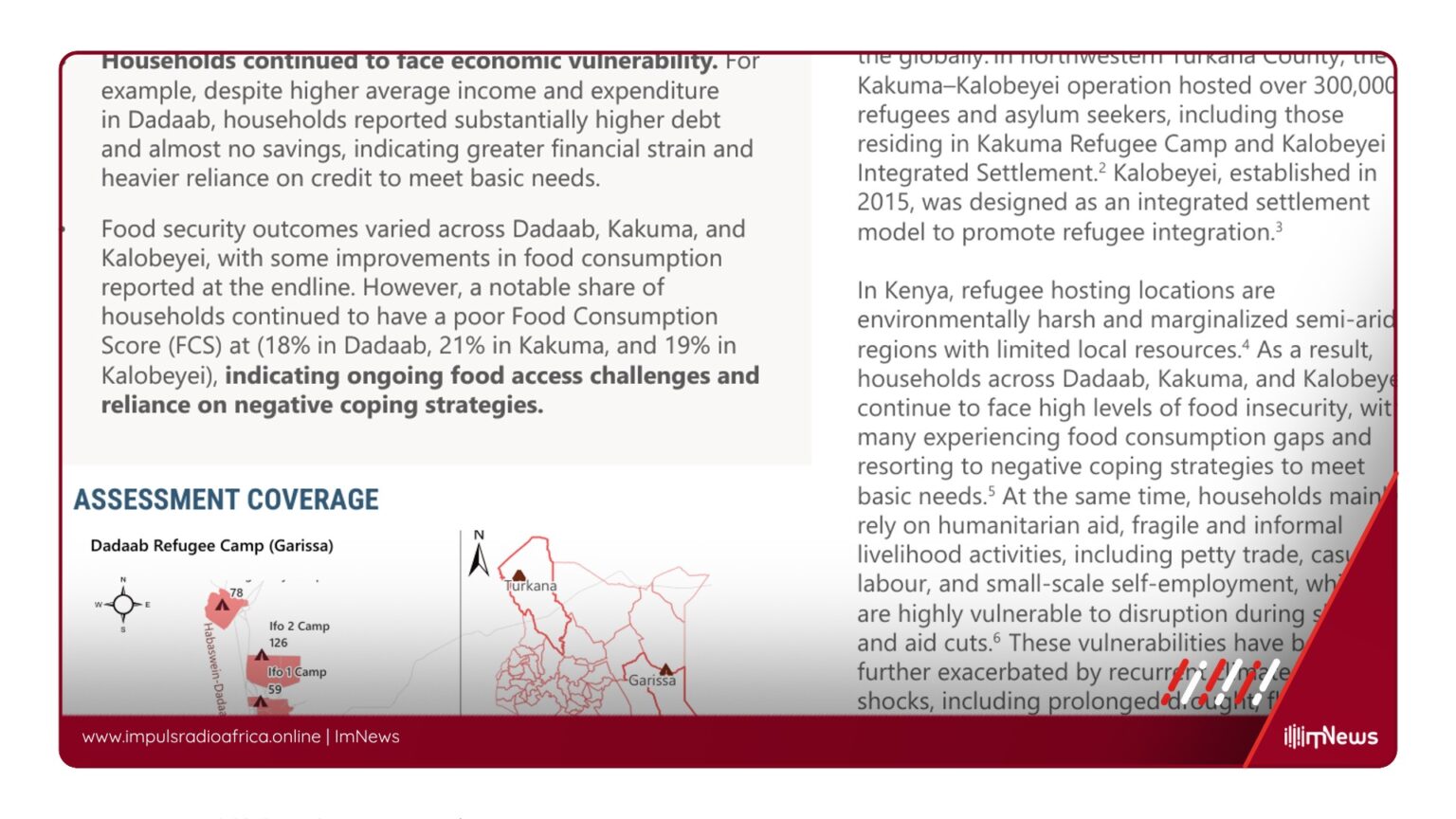
In Dadaab, for instance, despite higher average income and expenditure, households reported substantially higher debt and almost no savings. This suggests a heavier reliance on credit to meet basic needs, which may exacerbate financial strain in the long term. Food security outcomes varied across the regions, with some improvements noted in food consumption at the endline.
However, a significant portion of households in Dadaab (18%), Kakuma (21%), and Kalobeyei (19%) continued to face food access challenges, as indicated by their poor Food Consumption Scores (FCS). This underscores the ongoing need for strategies to address negative coping mechanisms and enhance food security.
The findings from the Kenya Cash Consortium’s endline survey underscore the complexity of supporting disaster-affected communities and refugees. While there has been progress in income generation, the persistence of economic vulnerability and food security challenges call for continued and targeted support to ensure sustainable livelihoods and self-reliance.
*Additional reporting by ImNews | Sources consulted: 5*
—
By This original article was produced by the ImNews editorial team
Source: reliefweb
Source: Agency for Technical Cooperation and Development