Humanitarian Aid Efforts Intensify in Mali Amidst Ongoing Challenges DATELINE: Bamako, Mali – July 1, 2026 LEAD As of March 31, 2026, Mali hosts 184 humanitarian actors, including United Nations agencies, NGOs, and governmental structures, working tirelessly to provide aid to vulnerable populations amidst a complex socio-political environment shaped by recent coups d’état and ongoing conflicts. NUT GRAF: The presence of these actors, spanning sectors such as food security, water, sanitation, shelter, and protection, reflects the profound humanitarian crisis in Mali, where over 5 million people require assistance due to conflict, insecurity, and climate shocks.
The humanitarian situation in Mali has been exacerbated by a series of coups d’état in 2020 and 2021, which have left the country under military rule.
The BTI Project rates Mali’s State Index at 3. 51 out of 10, indicating a challenging governance environment.
The African Development Bank Group’s Country Strategy Paper for Mali (2026-2031) outlines the bank’s support strategy for socio-economic transformation, aiming to address the underlying drivers of fragility.
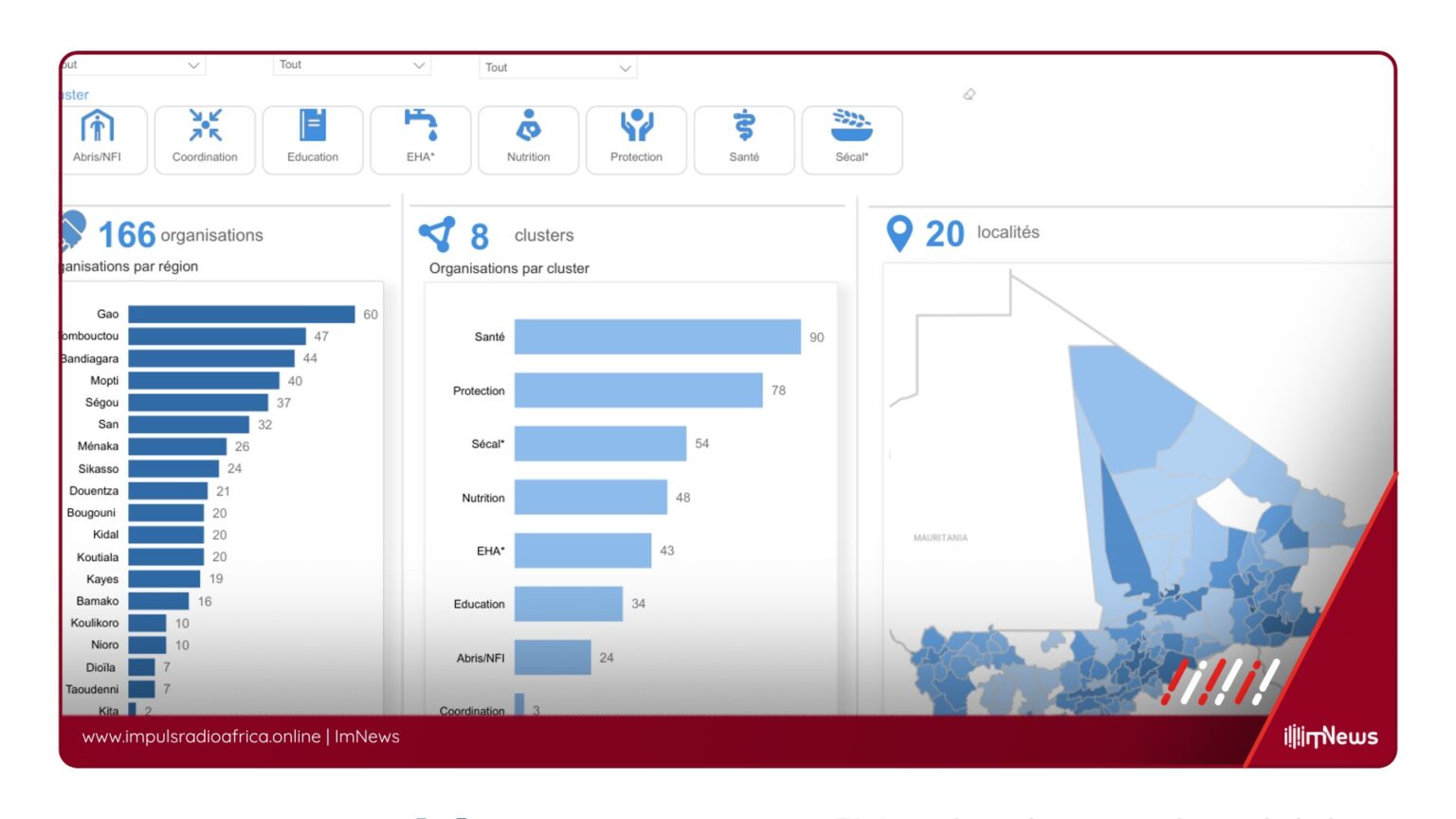
The interventions of the humanitarian actors are primarily targeted at the sectors of food security, coordination, water, sanitation and hygiene, shelter, and protection. Among these actors are 10 United Nations agencies, 69 international NGOs, 97 national NGOs, 2 Red Cross Movements, and 6 governmental structures.
The European Union has also been a significant donor, supporting vulnerable Malians in hard — to-reach areas with humanitarian aid.
The UK’s support to the African Development Bank Group is aimed at promoting sustainable economic development and poverty reduction in Africa, reflecting the international community’s commitment to Mali’s recovery. Despite these efforts, the situation remains precarious.
The International Organization for Migration (IOM) is playing a crucial role in delivering multi-sectoral humanitarian assistance, addressing the immediate needs of internally displaced persons, vulnerable populations, and affected communities.
The African Development Bank Group’s Country Strategy Paper for Mali (2026-2031) emphasizes the need for a comprehensive approach to socio-economic transformation, focusing on governance, economic transformation, and social transformation.
The bank’s support includes projects aimed at improving infrastructure, enhancing agricultural productivity, and promoting private sector development.
The humanitarian access situation in Mali has also been a point of concern.
The Mali Humanitarian Access Dashboard (August 2025) reported a decrease in access incidents compared to the previous month, but the presence of explosive devices and military operations continues to impact humanitarian activities. KICKER: As Mali grapples with its ongoing humanitarian crisis, the efforts of these 184 humanitarian actors are more critical than ever.
The international community’s support and continued commitment to Mali’s recovery are essential to address the complex challenges facing the country and its vulnerable populations.
*Additional reporting by ImNews | Sources consulted: 5*
—
This original article was produced by the ImNews editorial team
Source: reliefweb
Source: UN Office for the Coordination of Humanitarian Affairs