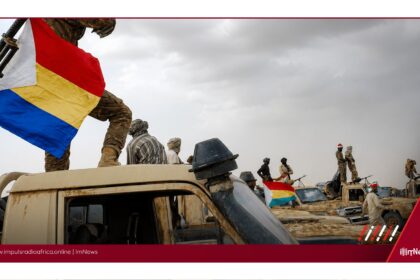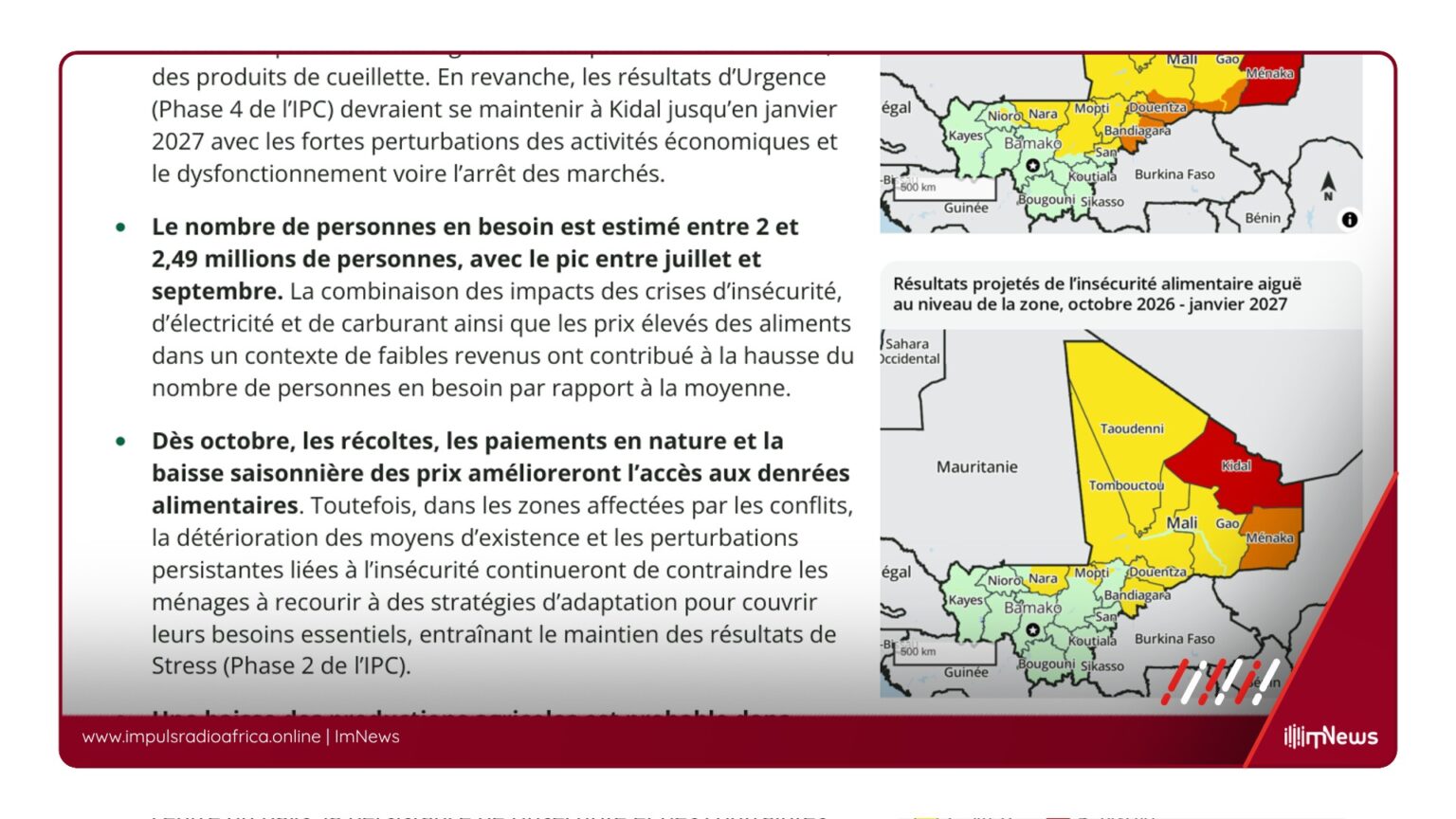
In Mali, the regions of Kidal and Ménaka are experiencing severe food insecurity due to ongoing insecurity that has significantly disrupted livelihoods, markets, and access to food.
The Famine Early Warning System Network reports that the situation in these areas is currently classified as Phase 4 of the Integrated Food Security Phase Classification (IPC), indicating an emergency level of food insecurity. While an improvement to Phase 3 of the IPC is expected in Ménaka from October, this is attributed to the availability of harvests and forage products.
However, Kidal is expected to maintain its Phase 4 classification until January 2027, with severe economic disruptions and market failures or closures contributing to the ongoing crisis.
An estimated 2 to 2. 49 million people are in need of assistance, with the highest number expected between July and September.
The combined impacts of insecurity crises, electricity and fuel shortages, and high food prices, especially in the context of low incomes, have led to an increase in the number of people in need compared to the average. Despite the expected improvements in October due to harvests and seasonal price drops, the persistent insecurity in conflict-affected areas will continue to constrain households to adapt their strategies to meet essential needs, maintaining IPC Phase 2 levels of stress. Agricultural production is also expected to decrease in some southern and western areas due to below-average rainfall, ongoing insecurity, and constraints in accessing agricultural inputs.
The challenges in Kidal and Ménaka underscore the complex interplay between food security and security issues in Mali, highlighting the need for comprehensive solutions to address both.
*Additional reporting by ImNews | Sources consulted: 4*
—
This original article was produced by the ImNews editorial team
Source: reliefweb
Source: Famine Early Warning System Network