
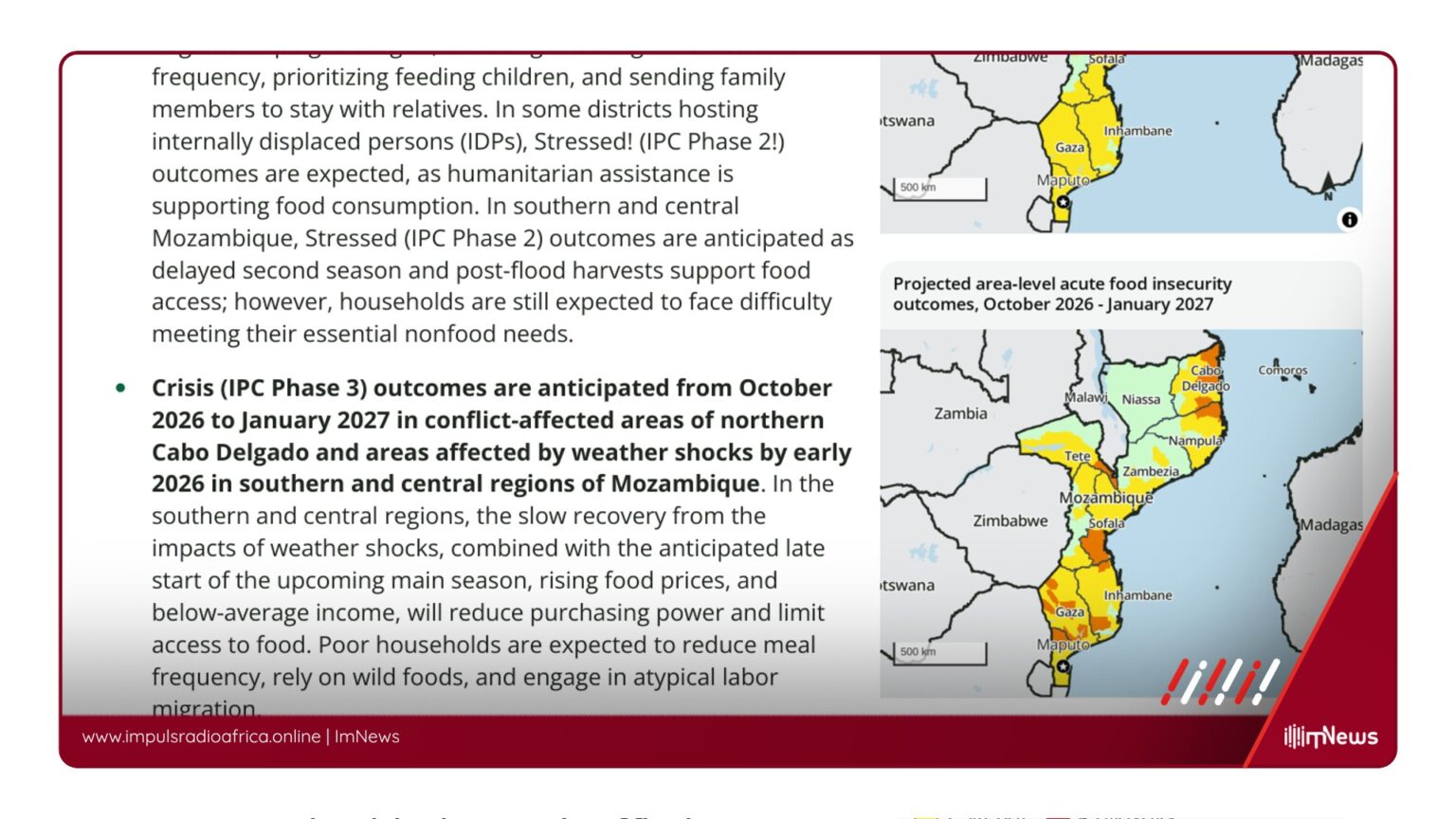
DATILINE: Johannesburg, South Africa – Mozambique is facing a severe food security crisis, with Crisis (IPC Phase 3) outcomes expected to persist in northern Cabo Delgado and southern and central regions through the end of 2026.
In northern Cabo Delgado, ongoing insecurity is disrupting livelihoods, limiting income-generating opportunities, and restricting market access, leaving the worst-affected households unable to meet their basic food needs. Poor households are likely to employ negative coping strategies, including reducing meal size and frequency, prioritizing feeding children, and sending family members to stay with relatives.
In southern and central Mozambique, delayed second-season and post-flood harvests are expected to lead to Stressed (IPC Phase 2) outcomes.
The impacts of flooding and dry spells, coupled with the slow recovery from previous shocks, are expected to constrain household access to food and income until second — season harvests begin in June and gradually improve local availability.
The Famine Early Warning System Network (FEWS NET) and ReliefWeb have provided detailed reports on the expected food security outcomes in Mozambique, indicating the severity of the situation and the need for humanitarian assistance.
The Mozambican government and international organizations are working to address the multifaceted challenges, but the situation underscores the need for coordinated efforts to address the complex interplay of conflict, climate change, and food insecurity.
As the country braces for the upcoming harvest season, the focus must be on providing necessary support to ensure that the most vulnerable populations have access to food and can rebuild their livelihoods.
*Additional reporting by ImNews | Sources consulted: 4*
—
This original article was produced by the ImNews editorial team
Source: reliefweb
Source: Famine Early Warning System Network