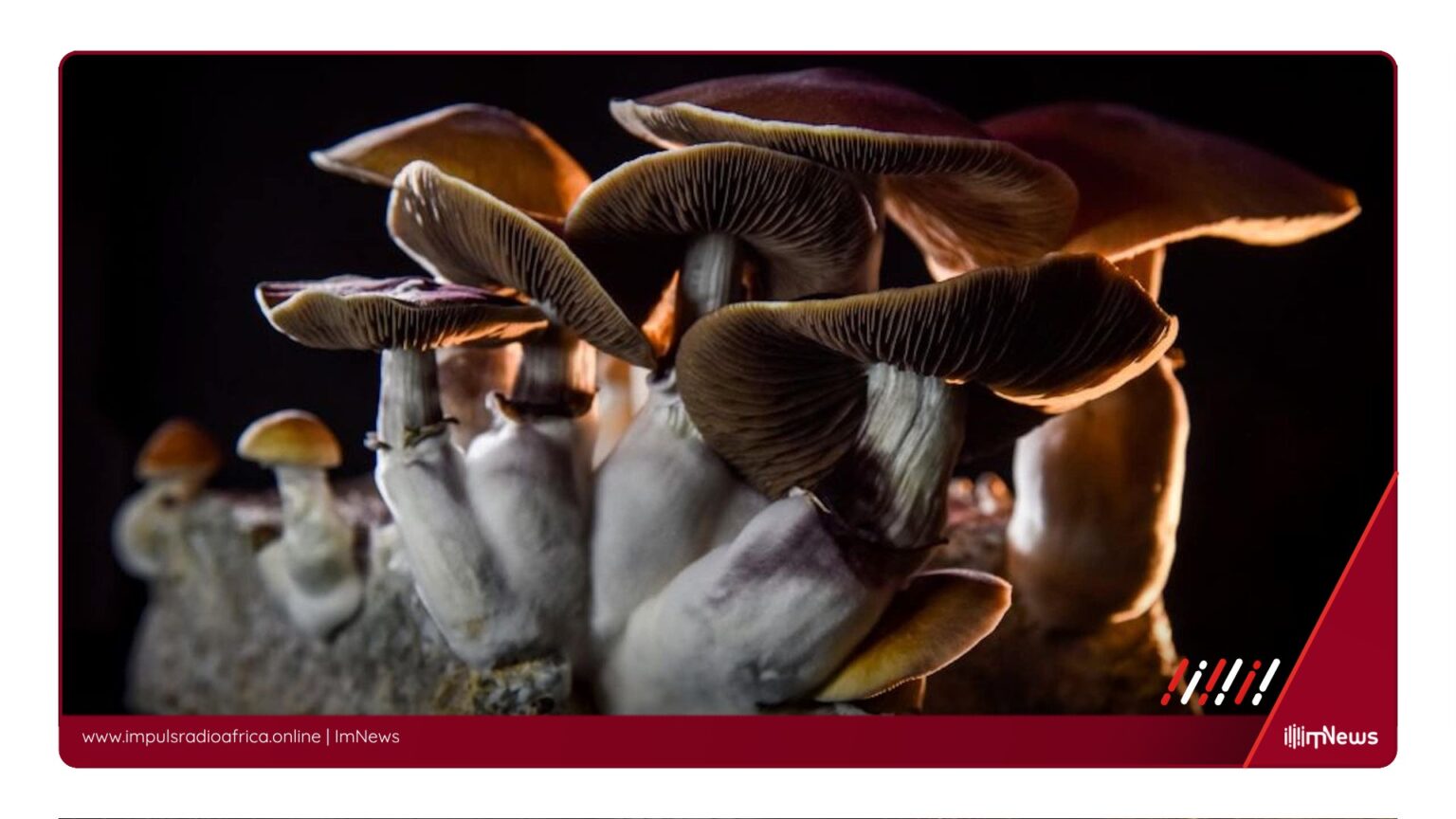
In the heart of Africa, nestled in the lush landscapes of South Africa and Zimbabwe, a new species of “magic mushrooms “has emerged, shedding light on the enigmatic origins of Psilocybe cubensis, a fungus renowned for its psychedelic properties. Named Psilocybe ochraceocentrata, this discovery has become a pivotal piece in the puzzle of the famous mushroom’s evolutionary history.
The quest to understand the evolutionary journey of Psilocybe cubensis has intrigued scientists for years. While the species is now globally distributed and easily cultivated, its origins remained a mystery. Mycologist Breyten Van der Merwe from Stellenbosch University and evolutionary biologist Alexander Bradshaw from Clark University have been delving into this mystery, utilizing a combination of mycology and evolutionary biology to unravel the past.
Fieldwork spanning decades, spearheaded by researcher Cathy Sharp in Zimbabwe, and subsequent observations in South Africa, yielded a trove of mushroom collections. Initially mistaken for Psilocybe cubensis or Psilocybe natalensis, these mushrooms were found to be superficially similar but distinct at a microscopic and molecular level. This discovery prompted a deeper investigation into the relationship between these species.
The research team employed a multifaceted approach, including field collection, genomics of museum specimens, molecular techniques, phylogenetics, molecular dating, and ecological niche modeling. These methods allowed them to reconstruct the natural history of Psilocybe cubensis and its close relative, Psilocybe ochraceocentrata. Their findings suggest that the two species may have shared a common ancestor approximately 1.56 million years ago, a time when grasslands were expanding and grazing herbivores were on the move.
To further explore the origins of Psilocybe cubensis, the researchers utilized data from the iNaturalist citizen science platform, employing mathematical modeling to hypothesize the past distribution of the species. The results pointed towards tropical and subtropical regions, where large animals roamed, as potential hotspots for the fungus’s evolutionary history.
The study proposed several scenarios for the global dispersal of Psilocybe cubensis, including natural disturbances like the migration of dung beetles carrying fungal spores across oceans, or the migration of species via the Bering land bridge between Eurasia and the Americas. These theories align with the hypothesis proposed by Mexican mycologist Gastón Guzmán that the fungus originated in Africa and was transported to the Americas during the European colonization of the 1400s and 1500s.
While the research does not conclusively resolve the evolutionary history of Psilocybe cubensis, it provides a roadmap for future studies. Africa, with its rich biodiversity, remains under-sampled for fungal diversity, particularly when it comes to Psilocybe species. Further research across the continent is crucial to describe and map local fungal diversity, enhancing our understanding of the ecology of the area and aiding conservation efforts.
Original author: Alexander Bradshaw