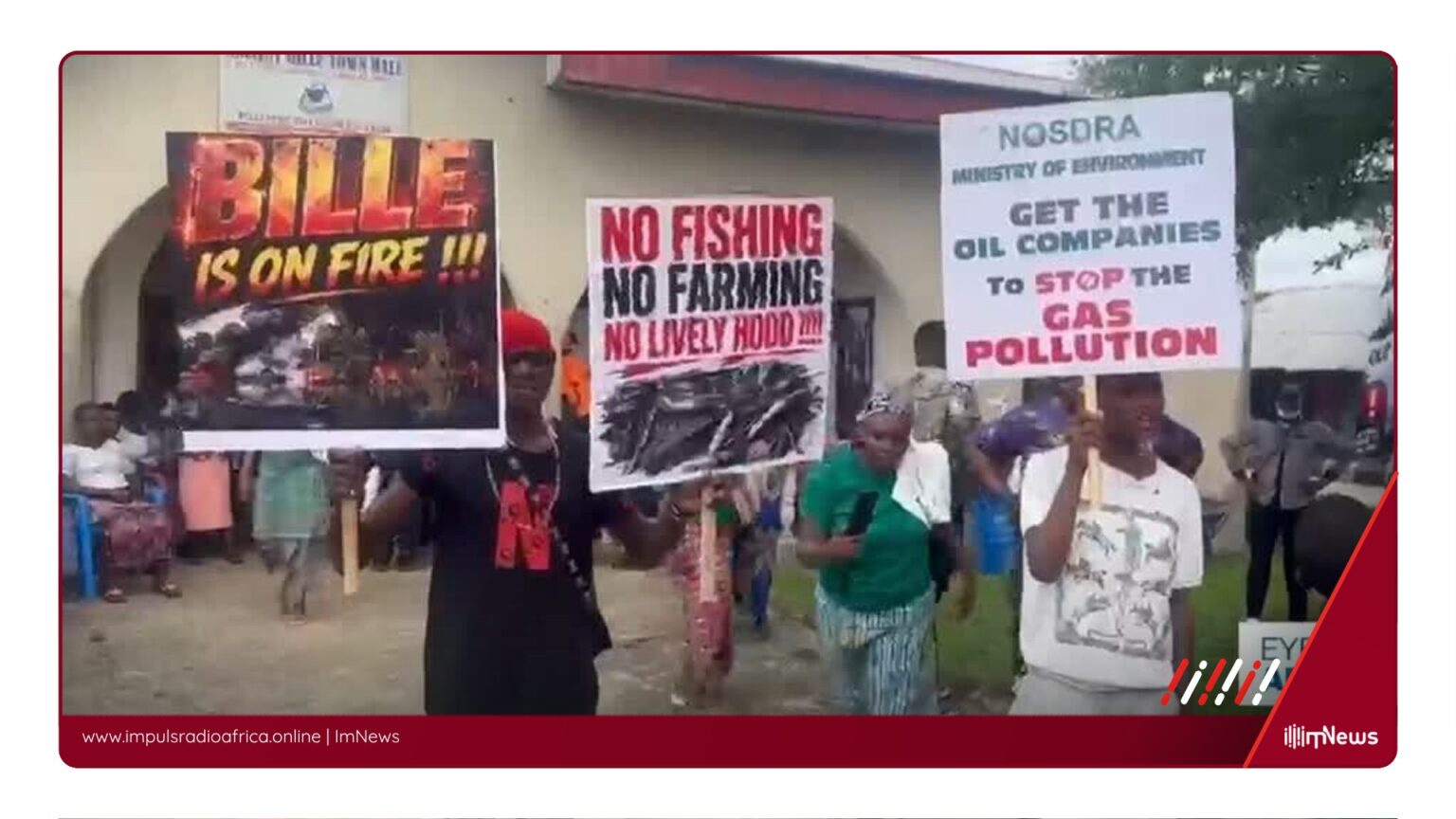
Toxic Gas Leaks Threaten Health in Nigeria’s Niger Delta DATELINE: Lagos, Nigeria – LEAD In the coastal town of Bille, Nigeria, residents are addressing a health crisis as methane gas leaks, reported since October 2025, have raised concerns about the safety of their environment and well-being. Lagos, Nigeria – The serene coastal town of Bille in Rivers State has become the focal point of a growing environmental and health emergency. Fishermen and residents have reported the mysterious bubbling of water accompanied by a strong, sulphurous smell in the mangrove swamps and rivers surrounding the town.
This phenomenon has sparked widespread alarm among the local population, who have begun to suspect a connection between these leaks and their deteriorating health.
The Nigerian government initiated an investigation into these methane gas leaks in December 2025, yet the findings have not been publicly disclosed. This lack of transparency has only deepened the community’s fears, with many residents expressing concerns about the potential health impacts of the gas leaks, including the smell of oil and the risk of fire.
Amnesty International has sounded the alarm, warning that the gas leaks in Bille pose a grave danger to local residents.
The organization has called for an immediate and thorough investigation into the situation, emphasizing the need for the Nigerian government to take urgent action to address the leaks and protect the community.
The Niger Delta region, where Bille is located, has long been synonymous with oil and gas operations.
However, these activities have also led to significant environmental degradation and health concerns for local communities.
The region is home to numerous oil wells and pipelines, which are often the source of leaks and spills, contributing to the contamination of water sources and the degradation of the local ecosystem. Fishermen and residents of Bille are particularly concerned about the long-term health effects of the gas leaks.
The persistent smell of oil and the risk of fire have raised fears about respiratory issues, skin diseases, and other health complications. While the exact health impacts of the gas leaks have yet to be fully documented and analyzed by health authorities in Nigeria, the situation is cause for concern.
The unanswered questions surrounding the gas leaks in Bille remain a matter of urgency.
What specific actions, if any, have been taken by the Nigerian government to address the leaks and mitigate the health risks to the Bille community? What are the long-term health effects of the gas leaks on the residents of Bille?
And what measures, if any, have been taken by oil companies operating in the region to prevent similar incidents?
As the community of Bille awaits answers and relief, the situation underscores the broader challenges faced by the Niger Delta region in balancing economic development with environmental protection and community health.
The crisis in Bille is a stark reminder of the need for robust regulatory frameworks and corporate responsibility in the oil and gas industry. KICKER: The fate of the Bille community hangs in the balance as they wait for the Nigerian government and oil companies to take decisive action.
The future of the Niger Delta region, and its people, depends on it.
*Additional reporting by ImNews | Sources consulted: 5*
—
This original article was produced by the ImNews editorial team
Source: france24 – Africa
Source: FRANCE24