Lagos, Nigeria — Humanitarian Aid Falls Short in Northeast Nigeria Crisis Lagos, Nigeria – Amid ongoing conflict and insecurity in the northeast states of Borno, Adamawa, and Yobe, the Nigeria Humanitarian Needs and Response Plan (HNRP) faces significant challenges, as funding and response efforts fall short of addressing the critical needs of millions of affected individuals.
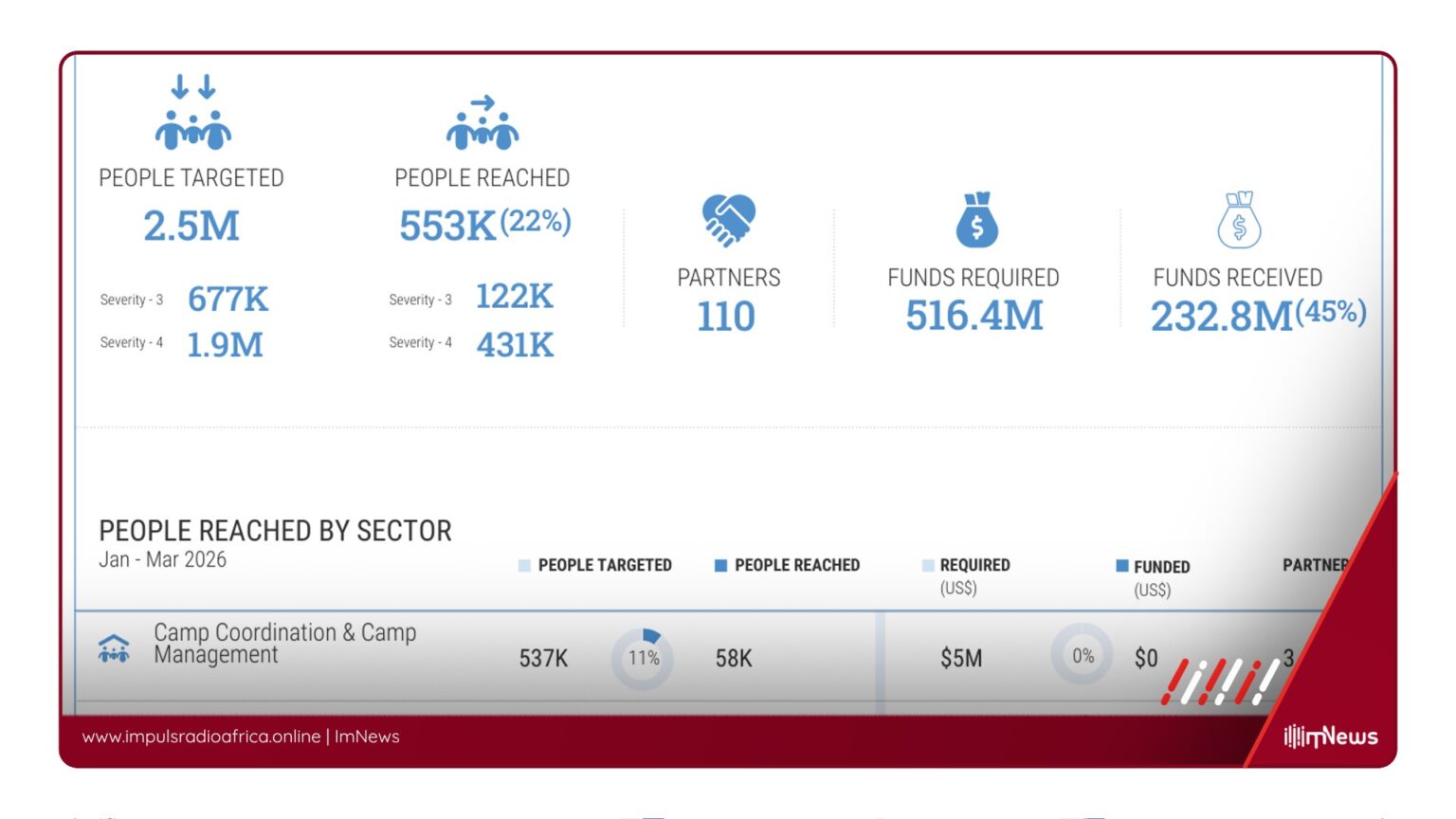
As of the first quarter of 2026, the HNRP has received only $232. 8 million in funding, accounting for approximately 45% of the $516.
4 million required to adequately address the humanitarian crisis.
The response efforts, however, have reached just 553,000 individuals, or roughly 22% of the targeted population of 5. 9 million people in need.
The situation in the northeast region has deteriorated over the past sixteen years, with a shift from military confrontations to predatory attacks on communities. This shift has resulted in a significant increase in civilian casualties, with the Humanitarian Dashboard indicating that the response to the crisis has become more challenging due to the evolving nature of the conflict.
According to the Inter — Sector Coordination Group, the humanitarian situation in the northeast is dire, with 5.
9 million people requiring assistance, of which 2. 5 million are considered hyper prioritized.
The International Organization for Migration (IOM) has outlined its vision for providing durable solutions to displacement issues by promoting social cohesion, disaster risk management, climate adaptation, and strengthening local capacities.
The response to the crisis has involved 110 partners, including four UN agencies, twenty-five international NGOs, seventy-three national NGOs, and eight government partners. Despite the coordinated efforts, the current funding levels and response capacity are insufficient to meet the scale of the humanitarian crisis.
The crisis in northeast Nigeria is not only a regional issue but also has Pan — African implications.
The situation underscores the need for increased international support and cooperation to address protracted conflicts and humanitarian crises in Africa.
The African Union (AU) and its member states must continue to advocate for sustainable peace and security in the region, as well as for increased funding and resources to support humanitarian response efforts.
The ongoing conflict has disrupted livelihoods, displaced hundreds of thousands, and cut off access to farmland and markets.
The impact of the crisis is felt not only by the affected populations but also by the broader Nigerian economy and the region as a whole.
As the situation evolves, it is crucial for all stakeholders to remain committed to finding solutions that promote peace, stability, and long — term recovery in the northeast states.
The international community must also step up its support for humanitarian efforts to ensure that the most vulnerable populations receive the assistance they desperately need.
In conclusion, the humanitarian situation in northeast Nigeria remains critical, with funding and response efforts falling short of meeting the needs of millions of affected individuals.
The international community must work together to address the complex challenges facing the region and support the Nigerian government in its efforts to achieve peace and stability.
*Additional reporting by ImNews | Sources consulted: 5*
—
This original article was produced by the ImNews editorial team
Source: reliefweb
Source: Inter-Sector Coordination Group